
07 February 2024
Value your rotations carefully
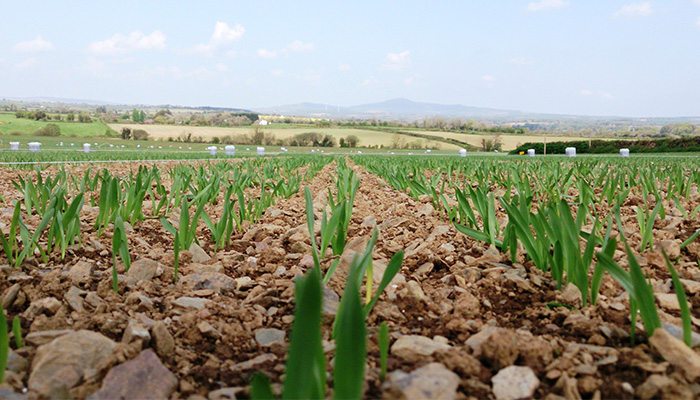
Tillage rotations not only play an important role in maximising crop yields and margins, but they also bring sustainability benefits, Dermot Forristal, researcher in Teagasc Oak Park, told the recent National Tillage Conference.
Although high levels of rainfall hampered the autumn establishment campaign for many, he urged farmers to strive to keep their rotation as structured as possible in 2024 and to keep the entry for the next crop in mind when planting this spring.
For instance, if growers failed to sow winter wheat or winter barley, a suitable crop might be either winter wheat, spring wheat or spring barley. In the case of winter oats, spring oats is an appropriate substitute. Where winter oilseed rape plantings did not take place, suitable crop options might be spring beans or spring oilseed rape.
The benefits of rotations
Presenting research work from Knockbeg, Dermot said that implementing a suitable rotation has been shown to bring yield benefits in the case of first crop wheats – with yield benefits of 11-19% recorded – occurring mainly due to a disease break.
He added: “Break crops also gives us different weed control advantages as well. The time of sowing of the different crops and their growth nature means you might have a different impact on the weeds that are there, but you can also use different chemistry on the weeds within the crop.”

Dermot Forristal speaking from the National Tillage Conference 2024
Other benefits come in the form of machinery inputs, workload, nutrient use efficiency when legumes are included within the rotation, and the potential to access more markets.
Dermot also advised farmers to assess the cost and value of the rotation based on the rotation itself, not on single crops within that rotation, adding: “We need to choose our crop mix carefully because the amount of break crops in the rotation – if you have a market for them and if your land is suitable – may have an impact on profit.”
Using data from the 2024 Teagasc Crops Costs and Returns and average yields obtained over the past seven years, the Teagasc researcher explained that yield benefits of 15% are seen from first wheats sown after a suitable rotation. For the wheat crop, as opposed to continuous wheat, this results in a margin benefit of 82%.
Additionally, when spring barley grown continuously is compared to a suitable rotation consisting of first-crop winter wheat, winter barley, oilseed rape, winter wheat and beans, additional margin benefits are observed when the average margins over a five-year period are compared.
“The difference between continuous spring barley and the rotation in this case is €203/ha, that’s how the rotation crops can be optimised – provided you have suitable markets and your ground is suitable for those crops,” Dermot said.
Concluding his presentation at the National Tillage Conference, Dermot reminded farmers to value rotation benefits carefully.
“In the short term, that’s looking at yield and profit. In the long term, you need to look at the sustainability factor, particularly in terms of some of the challenges we’re seeing with grass weeds and herbicide resistance, and where we’re adopting different crop establishment systems, the use of rotations is hugely important as part of a suite of measures of integrated weed management.”
For more information on Dermot’s presentation from the National Tillage Conference, click here.