
20 November 2023
How weeds adapt to your system
John Cussans, Weed Biology and Management Specialist at the National Institute of Botany (NIAB) in the UK, discussed how weeds adapt to agricultural systems on various levels at the recent Teagasc Enable Conservation Tillage Grass Weed Conference.
John’s discussion focused on the adaptation of weed populations to farming systems. He emphasised that while herbicide resistance is often the focus in discussions about weed adaptation, there are multiple layers to the issue.
“We do tend to obsess on herbicide resistance as a key way that weed populations are adapting to herbicide use. But actually, we see adaptation on a number of different levels,” John explained.
The first factor he explored was the adoption of minimum tillage and reduced cultivation intensity in the UK. This is part of a strategy that includes creating habitats for pollinators and protecting bird habitats and food sources. However, this seemingly positive change comes with unintended consequences.
John highlighted a growing threat from invasive weeds due to these changes in cultivation practices, leading to biosecurity concerns. Weeds traditionally not prevalent in the UK find hospitable environments in these habitats, becoming significant challenges.
Secondly, John spoke about the influence of different farming systems on different weed species. John focused on the example of blackgrass in the UK. He underlined how the spread of a specific farming system, rather than the weed itself, contributed to the proliferation of certain species.
“The system which encouraged the blackgrass spread to the north and to the west, and so the weed didn’t spread, the system spread,” John said.
The third factor John pointed to is the importance of understanding that within individual weed species, adaptation is not limited to herbicide resistance. Using ryegrass as an example, John illustrated how weeds can adapt to key elements of the system, becoming more problematic.
John also spoke about the push for a more diverse crop portfolio. He discussed the introduction of crops and the consequences of adopting these crops, such as the proliferation of specific weeds that find a niche within these systems.
He addressed the lack of regulation in the seed supply chain, leading to the unintentional introduction of problematic weeds onto farms in the UK, while he also urged farmers to be vigilant and proactive in dealing with these challenges. Additionally, the NIAB representative stressed the importance of botanical skills and awareness.
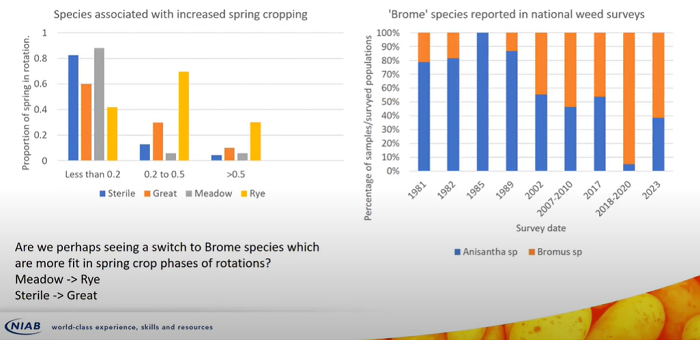
John then spoke about a survey showing shifts in weed species, focusing on rye brome and wild oat populations. John reveals a shift in the dominant species of wild oats and highlighted the role of different cultivation systems in encouraging the prevalence of certain weed species. He presented data on the evolution of rye brome species over time, emphasising the dynamic nature of weed populations and the ongoing need for adaptation in weed management strategies.
Figure 1: Encourage, different ‘native’ weed species – Brome Species
Source: John Cussans’ presentation from the recent Grass Weeds Conference
The final part of John’s presentation discussed the complexity of herbicide resistance within weed populations. Drawing on survey data from 2021, he discussed the alarming rise of resistance to pre-emergence residual herbicides, with 10% of the Italian ryegrass populations received having absolute resistance to flufenacet.
John also spoke about the challenges posed by evolving herbicide resistance, emphasising the need for a comprehensive approach that combines herbicides with non-chemical control methods.
He emphasised the importance of embracing diversity in weed management strategies, stating that the solution to the problem lies in understanding and working with the complexity of nature.
In summary, John said: “We are creating these new habitats, and this is bringing a significant risk for invasive weeds…The solution is the same as the problem, it’s about diversity.”
Watch John’s full presentation from the Grass Weed Conference below:
Also read: Farmers share their experiences of controlling grass weeds
Also read: Assesing the extent of grass weed problems on Irish tillage farms
If you were unable to attend the recent Grass Weeds Conference, a recording is available on the Teagasc Crops YouTube channel.