
09 November 2023
A good growing season for beet but Cercospora leaf spot causing leaf deterioration
While it’s still early in the season for harvesting fodder beet, early indications are that this year’s 9,300ha crop is yielding very well. Ciarán Collins tells us more.
Poor ground conditions are inhibiting harvesting but growers are managing to get enough harvested to satisfy customers before the big demand will come in the next few weeks.
Early reports suggest that yields of un tared fodder beet are in the mid 30’s from crops that were sown in April.
The weather pattern is 2023 has been excellent for April sown beet. Establishment was good and while rainfall in May and June was below average there was enough moisture in the soil to allow good growth in these critical months for fodder beet development. Above average temperatures in both May and June and above average sunshine hours in June are significant contributory factors in the good yield this year.
However yield in some later sown crops will be poorer. Later sown crops in May were caught by drier weather and are gappy with poorer weed control in some cases.
Leaf disease
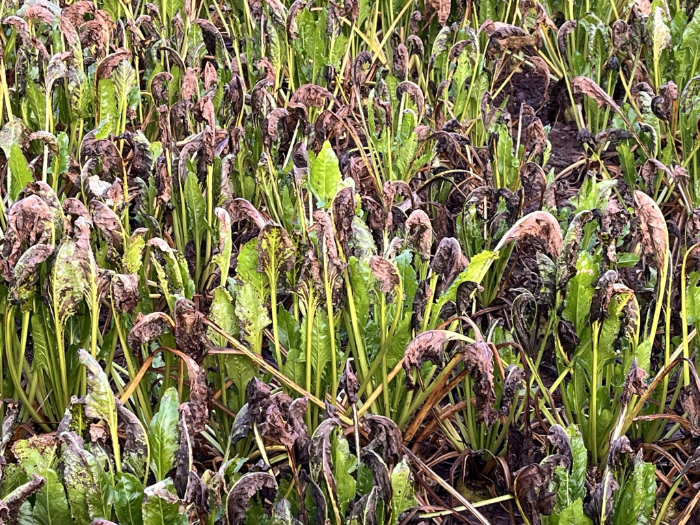
While the wet mild weather this autumn has been a positive for growth it has provided ideal conditions for foliar diseases. Cercospora leaf spot has overtaken rust and ramularia leaf spot as the predominant foliar disease in 2023.
Cercospora appears as small (2 – 3 mm) round grey spots with reddish margins and its development is favoured by high temperatures and high humidity that persisted this autumn.
Cercospora leaf spot from fodder beet in Cork
There are significant differences in varietal susceptibility to cercospora and growers with belt harvesters would be advised to prioritise affected crops for harvesting before further leaf deterioration occurs.
Fungicides have been very effective in slowing down disease progression and there appears to be a significant benefit to two fungicides over one application in terms of canopy health this year.