
22 September 2023
Planning for the autumn drilling season
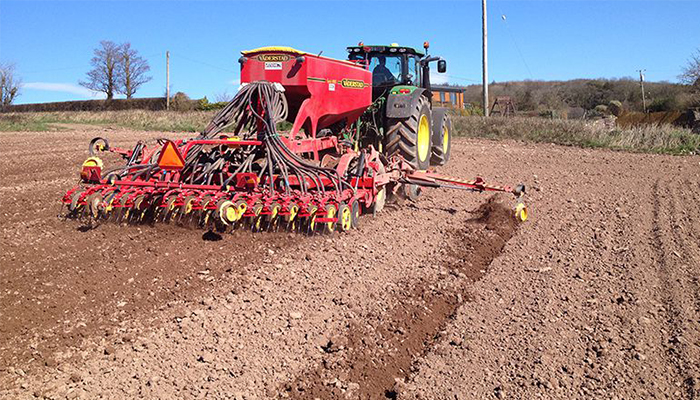
With the harvest of 2023 still not complete in some areas, we are now quickly approaching the start of drilling for the 2024 harvest. Now is a good time to sit down and plan out the necessary cropping plan, Shay Phelan tells us how.
One thing that has been obvious from this year’s harvest is that having a range of crops to harvest can certainly reduce the workload and stress at harvest, as well as spreading the risk. Research work from Teagasc has shown that, where good rotations are planned with appropriate crops being planted in suitable soils and suitable slots in the rotation, these are more profitable than continuous cereal cropping. Plan out the rotation to maximise the number of first cereal crops, reduce exposure to diseases such as take-all or BYDV, look for alternative markets or premium crops then and only then put in you seed orders.
Place orders for seed early as there will be a significant demand for winter cereal varieties and, while there should be sufficient seed, you may not get you choice of varieties if you leave it late. Avoid sowing all of one variety again to spread the risk; be aware that thousand grain weights are higher for barley than last year, so you may need more seed than previous years. Table 1 below gives an indication of the seed rates required for sowing in early October.
The recent wet weather has already delayed the start of drilling, so many farms may not start autumn drilling until early October unless the is a change in weather conditions next week.
Table 1. Seed rates for wheat and barley
| Planting date | October week 1 |
October week 2 | ||
| Barley | Wheat | Barley | Wheat | |
| Target plants m² | 280 | 250 | 290 | 260 |
| Sowing seeds m² | 350 | 313 | 387 | 347 |
| % Establishment | 80% | 75% | ||
| TGW | Seed Rate Kg/ha | |||
| 45 | 158 | 141 | 174 | 156 |
| 46 | 161 | 144 | 178 | 159 |
| 47 | 165 | 147 | 182 | 163 |
| 48 | 168 | 150 | 186 | 166 |
| 49 | 172 | 153 | 189 | 170 |
| 50 | 175 | 156 | 193 | 173 |
| 51 | 179 | 159 | 197 | 177 |
| 52 | 182 | 163 | 201 | 180 |
| 53 | 186 | 166 | 205 | 184 |
| 54 | 189 | 169 | 209 | 187 |
| 55 | 193 | 172 | 213 | 191 |
Winter oilseed Rape
Volunteer cereals and some grass weeds seem to be growing well at the moment and are competing with some crops, if they haven’t already been treated, any of the approved graminicides e.g. Falcon, Fusilade Max etc. can be applied now at ¾ to full rate depending on the weed issue.
Slugs are reported to be a problem in some crops, but not all, so assess crops before applying any pellets. Place bait traps and if there are any slugs found in the traps then consider treatment. Many of the early-sown crops are at lower risk as they are quite advanced now, but the later sown crops are more at risk.
Tillage Edge Podcast
On this weeks Tillage Edge podcast, in the first of a three part series, at a recent Signpost farm walk on Don Somers’ farm in Wexford, Michael Hennessy chats to Dr David Wall, a researcher in Teagasc, about the soils on Don’s farm and the best way to manage these soils for fertility, carbon storage and high yield.
At the same event Pat Power, a tillage advisor in Wexford, discusses straw incorporation, its benefits to soil but also how best to deal with straw volumes after harvest.
Listen to the Tillage Edge podcast