
14 September 2023
Sharing means saving
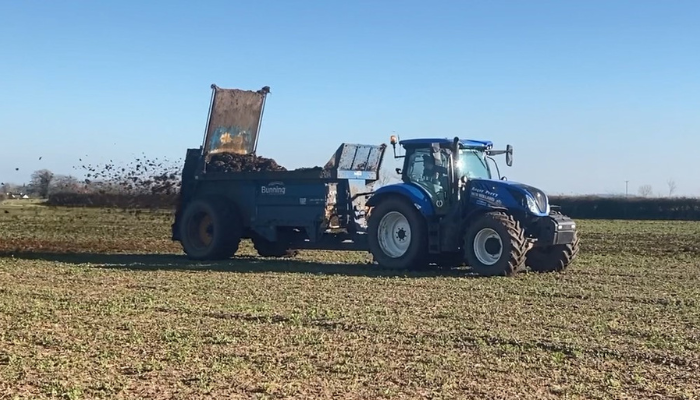
Reliable farm machinery is indispensable – finding the right ownership mix is key to keeping it affordable. Shay Phelan, Teagasc Tillage Specialist, tells us more.
This year’s yields and prices have not equaled last year’s stellar harvest. Basic Income Support Scheme payments are typically lower than from the Basic Payment Scheme. The increased investment ceiling in the new Targeted Agricultural Modernisation Scheme (TAMS 3) is welcome but it barely matches inflation. All this is leaving tillage farmers wondering how best to fund their machinery.
Renting, where available, is a possibility, but this is becoming more expensive. Second hand equipment is worth considering, but prices are also rising and reliability can be an issue. Nearly all contractors provide a professional service, but there can be issues around timeliness in broken weather.
Built into the contractor’s price are the driver, their expertise, and the in- creased efficiency so you are not just getting access to a machine – you are getting other benefits as well. Machinery sharing or ‘rings’ aim to offer affordable access to equipment. Machinery rings such as the CUMA in France are very popular and come with binding rules and commitments from the participants. Machinery rings are common in Scotland too and increasingly they are also providing labour.
Sharing machinery
In Ireland there are still relatively few situations where two or more farmers come together to share machinery and/or labour. Those who do have such arrangement in place find that there are many benefits. Access to labour is an obvious plus, but there are others such as increased efficiency, job sharing, access to more hi tech equipment if needed, shorter working time, and farm biosecurity. Probably one of the biggest is the sense of companionship between the parties when they are working.
Farmers who share machinery and who may also work together will often comment that they appreciate working with someone else in the field at the same time. For some jobs like drilling or harvesting it can be very satisfying to know that when you finish your task in the field, you can move on to the next one knowing the other party will complete their part of the job whether that be, for example, rolling the crop or baling straw.
Last year Teagasc launched a machinery sharing template as a guide to assist farmers in drafting arrangements on sharing the cost and use of different machines. The template, which could be used by contractors as well as farmers, gives a step-by-step guide on the different areas that an agreement should cover.
It provides a legal framework that all parties can use. And it can also be used as planning document where the parties can chose to adopt some aspects of the template while not using others. There are a number of factors in the template that we think that any agreement should contain. These include:
- Financing the investment
- Usage policy
- Repairs and maintenance
- Tax and insurance
- Replacement strategy
Possibly one of the longest, continuously running machinery sharing arrangement in Ireland, is that between two farmers on either side of Laois/ Kildare border near Athy. Cousins Tom Phelan and John O’Brien are continuing an arrangement which was started by their late fathers, Mick Phelan and Phil O’Brien, almost half a century ago in the 1970s.
When their original arrangement began, both Mick and Phil often commented that the cost of running a combine harvester on each farm was difficult to justify and so the idea of sharing a combine seemed a better idea. After purchasing their first combine together, a Claas Matador, the two farms have co-owned a combine ever since.
Crops
The current machine, a New Holland TX62, is owned on a 50;50 basis. It’s an ideal sized combine for the 100 hectares or so of combinable crops that they grow every year.
Back in the 1970s, spring malting barley, spring seed barley and sugar beet were the main crops, but this year crops grown on the two farms include spring malting barley, winter barley,peas, beans and gluten free oats. Other crops include beet, potatoes and grassland. “We saw that sharing arrangement in action when we were growing up,” says John.
“Our fathers were able to make it work so we always felt there’s no reason why we can’t. And we are not immediate neighbours. The two farms are on opposite sides of Athy, so the combine travels back and forth. We resist the temptation to use the combine to do some contracting,” says Tom. “By keeping its use to immediate family we keep the advantages of ownership – we can almost always cut in good time, while reducing the cost per acre.”
But what about the question of who gets priority?
“It can depend on something as basic as where the combine is located at the time,” says John. “We will discuss how best to approach each harvest and it generally balances out for both of us.”
The variety of crops grown means that the machine really isn’t under too much pressure at any time and it can cope comfortably with whichever crop is ripe at any time. This has proven to be very important in a harvest year such as 2023 when you literally had to take every available opportunity. Although both men use contractors for different jobs on the farm, both agree, that this was not a year they would like to have been dependent on others to cut their crops.
“Everyone’s circumstances are unique, but we think more farmers could benefit by including at least some sharing in their machinery strategy.” concludes Tom.
The bottom line on machinery costs for tillage farmers
The annual Teagasc Costs and Returns figures on machinery hire are based on a survey of contractor charges from around the country. While the totals do include drivers costs, they are still a good representative sample of the typical machinery costs on tillage farms. In 2018, Teagasc advisors conducted a survey of 139 tillage farms to assess machinery costs. The survey showed that 14% of farmers actually had higher machinery costs, not including labour costs, than the cost of employing a contractor.
Table 1. Average machinery costs Teagasc Costs and Returns
| Machinery hire Costs €/ha | Winter wheat | Winter barley | Spring barley | Winter oats |
|---|---|---|---|---|
| Plough, One-pass & Roll | 223 | 223 | 242 | 223 |
| Spray | 128 | 128 | 77 | 103 |
| Fertiliser spreading | 65 | 65 | 44 | 44 |
| Harvesting | 146 | 146 | 146 | 146 |
| Transport (€7/Tonne) | 77 | 70 | 56 | 63 |
| Total Costs | 640 | 633 | 565 | 578 |
Read Today’s Farm – September/October 2023 in full