
01 June 2023
Tillage advice: Fungicide treatments and grass weeds
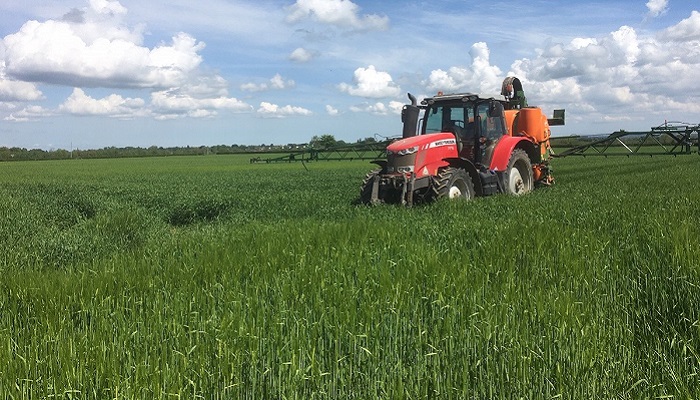
Early-drilled crops of spring barley are now at awns peeping stage, which is the ideal timing for the final fungicide. Shay Phelan, Teagasc Tillage Specialist, tells us more.
With the dry weather at the moment, many growers may opt to delay applying the final fungicide as they may believe that there is no risk of disease. However, trials have consistently shown that delaying this final application will reduce yield.
The reason behind this decrease in yield is that the delay allows the disease called ramularia to infect crops. In most seasons, it is ramularia which causes early senescence of crops and subsequently the reduction in yield. Currently all the chemistry that is available is preventative only, so it will not cure the infection once it has occurred.
If you think in terms of what the current bright sunshine will do to our skin if it is unprotected, we will get sun burned and we are advised to apply sun cream to prevent the burn. Similarly, we should apply the folpet plus the azole/strob/SDHI fungicides early to prevent damage to the leaves. Remember, bright sunshine will also be a stress on the crop, which will increase the level of infection occurring.
In the video below, Teagasc Ciaran Collins describes the perfect timing for the final fungicide in barley.
Looking at crops sown around Easter, we would expect that these crops would be at awns peeping (above picture) next week. Options for the final application include Folpet (Mirror, Stavento, Arizona etc.) 1.5L/ha plus 50% rate of an Azole mix (Siltra, Macfare Expro, Elatus Era, Decoy + Priaxor, etc.).
Grass weeds
Over the last two weeks, we have been contacted by many farmers to identify grass weeds on their farms. Unfortunately, we are seeing many cases now of the dreaded blackgrass on Irish tillage farms. However, it is encouraging to see that more farmers are aware of the issue now and are actively tackling the problem to prevent the spread to other fields on the farm and also to neighbours.
While many of the control options, such as desiccation, are painful this year, they should help to reduce the overall cost of controlling the problem in the coming years. Figures from the UK show that many farmers are spending over £150/acre per annum on herbicides to control the problem. From these figures, it is clear that this is not sustainable so a full suite of IPM measures including rogueing and preventing seed return are the only way to control the problem. Herbicides should be the last piece of the jigsaw.
Figure 1: Blackgrass has been identified on many farms this year
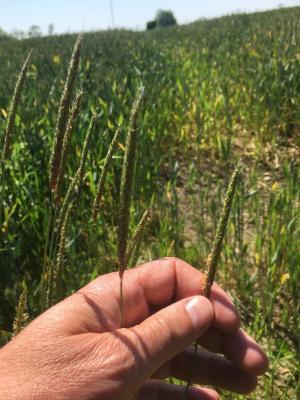
From now on growers should walk all crops to identify any problem grasses, not just blackgrass, and put in place a plan to control the problem for the future. Remember, that by 2030 we could have 50% less products available to control grass weeds, so it is better to start now to try to reduce the problem as soon as possible.