
14 May 2024
A reminder on silage bale stacking rules
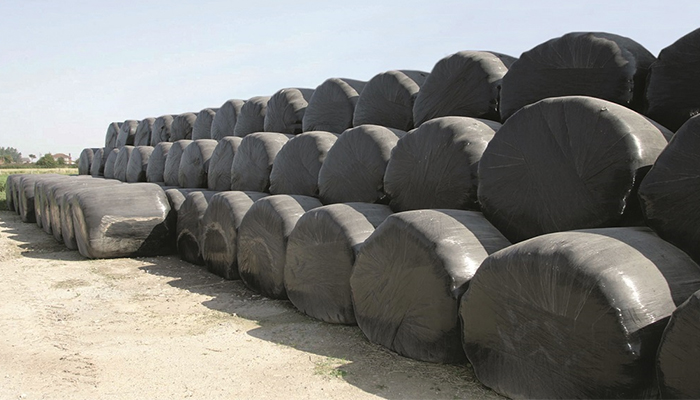
With the harvesting of first-cut silage crops edging ever closer, farmers need to make themselves aware of the Conditionality rules – the baseline requirements for farmers in receipt of CAP payments – relating to the stacking of silage bales.
Coming into force in 2023, the rules relating to stacking silage bales are contained within Statutory Management Requirement 2 (SMR 2) Protection of Waters Against Pollution caused by Nitrates.
Contained within this SMR, as detailed in the Explanatory Handbook for Conditionality Requirements 2023-2027, is: “Silage bales cannot be stacked more than 2 bales high or stored within 20m of a surface water or water abstraction point unless there are storage facilities in place to collect any potential effluent”.
This rule also applies to the storage of haylage bales, while farmers making low dry matter bales of silage, without appropriate storage facilities, should assess whether stacking two high is appropriate.
Silage effluent
Additionally, SMR 2 contains information on the handling of silage effluent. Such facilities will be required where bales are stacked more than two high or when silage is stored in a pit. In the handbook, the Department of Agriculture, Food and the Marine (DAFM) states that effluent produced from ensiled forage must be collected and stored, and all organic fertiliser storage facilities must be fit for purpose and free from structural defects. Additionally, prior to its application on land, farmers must collect and manage all organic fertilisers (including silage effluent) in a way that will prevent runoff or seepage, directly or indirectly, into groundwaters or surface waters.
If selected for an inspection as part of either Conditionality or the Nitrates Derogation, inspectors will complete measures and checks to ensure storage facilities are ‘fit for purpose’ and will check to see how silage bales are stored. If found to be non-compliant, farmers may face a sanction on their direct payments.
The Explanatory Handbook for Conditionality Requirements 2023-2027 is available on the DAFM website.