
22 March 2023
The benefits of grass measuring
Grass is the cheapest form of feed available, so the objective is to maximise the amount of grass in the animal’s diet, while conditioning the sward for future grazing. Eamonn Dempsey, Teagasc advisor in Tralee, discusses the benefits of grass measuring in this article.
When discussing good grassland management, we include: soil fertility; stocking rates; grass and clover varieties sown; rotation length; and grass measuring.
Farmers interested in grass measuring should use PastureBase Ireland (PBI), a web-based grassland management tool, which can be downloaded on your phone. The primary reason to use PastureBase Ireland is to calculate how much grass is grown in each paddock on the farm. This enables more precise short, medium and long-term grassland management decision making.
The three main practical methods to estimate the quantity of grass in a paddock are cut and weigh, plate meter and eye balling. For cut and weigh, a 0.5 m * 0.5 m quadrat is placed in an area that is representative of the amount of grass in the paddock. If the grass is wet, excess water is knocked off before cutting. The grass within the quadrat is cut to 4cm above the ground and an equation used to calculate the dry matter yield in the paddock.
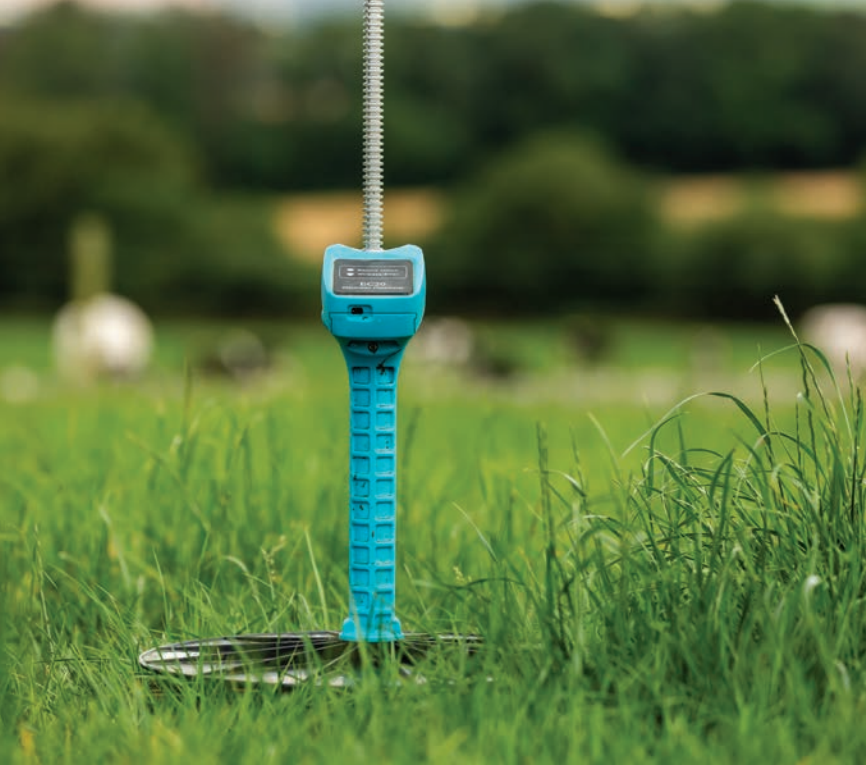
Using a plate meter, pasture heights are obtained across the entire paddock in a w or x pattern to ensure that the measurement is representative of the paddock. Substract the target post grazing sward height of 4 cm from the average grass height reading obtained for the paddock and multiply the figure by 250, as there is 250kg of dry matter in each cm working on a per hectare basis.
As you become more experienced with quadrat or plate meter, you may be able to estimate the quantity of grass in a paddock by eye balling. Weekly farm covers are needed when grass growth is high from May to August, whereas pasture covers obtained every two weeks will suffice outside this period.
After measuring the grazing fields and recording data on PBI, the programme will display a grass wedge, calculate the average farm cover, growth rate and number of days ahead. Study the grass wedge and calculate intake to make decisions such as fertiliser application or taking out paddocks for silage.
Once 20 to 30 farm covers are recorded over the year, PBI calculates the total quantity of grass grown in each paddock. This information gives the farmer the opportunity to investigate underperforming paddocks and help in choosing appropriate action such as reseeding or change in management practice to improve paddock production.
After using PBI for a few years, you will be able to determine how much grass is grown in an average year and set annual stocking rates accordingly. The overall aim using PBI is to increase annual dry matter production, which can only be done through grass measuring. Other tools on PBI in addition to grassland data, include a farm map, linking with soil laboratories, nitrogen management planning and farm weather data, all of which aid farmers to improve grassland management.
This article was originally published in the Corkman.
Also read: The variables to know to grow great grass
Also read: Hitting your grass targets