
17 April 2025
Biodiversity: Allow space for nature in your field margins
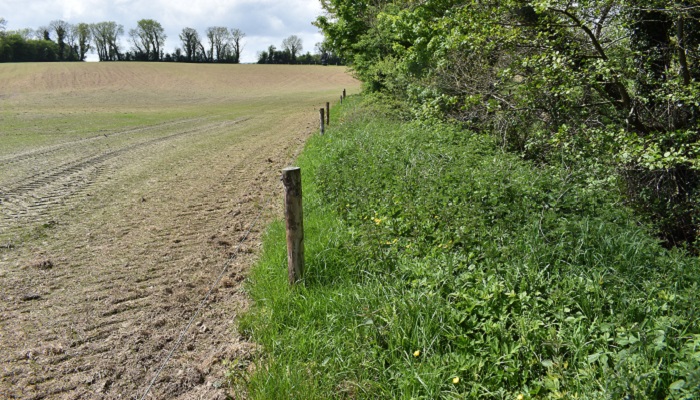
Field margins comprise rough grassland on the edge of fields of intensively managed farmland. Their linear nature provides corridors of movement and networks for nature through the countryside, as well as being habitats of high biodiversity value.
Their structural diversity, as well as the diversity of flora, contributes to biodiversity. Good structure is as important as species. Lumpy and bumpy is good. Vegetation flowers and produces seed.
Management of field margins
Field margins need management in order to be maintained as grassy margins. In the absence of management, scrub will take over with a loss of grassy field margins. In order to maintain the biodiversity value of field margins, it is essential not to cause harm to them, deliberately or accidentally.
Do
- Cut or graze in autumn to maintain as grassy margins to prevent evolving into scrub.
- Remove offtakes where possible to deplete soil nutrients to favour more diverse flora.
- Spot treat noxious weeds. Treat manually or spot spray. Watch out for invasive alien species and seek professional advice.
- Fence in intensively managed grassland to allow vegetation to flower and seed. Fencing is not required in species-rich grassland.
Don’t
- Cultivation disrupts soil biodiversity – it is better to allow natural vegetation to develop or sow grass to address problem weeds if necessary.
- Spray or allow spray drift, which kills vegetation and creates a vacuum for invasive alien species to colonise.
- Add nutrients. Lime, fertiliser and slurry alter soil conditions in favour of agriculturally favoured or aggressive species, eliminating indigenous vegetation.
- Sow – let it grow. Don’t sow ‘wild’ flowers as they are unregulated and can alter the genetics of species of local provenance.
The above first appeared in the Teagasc Environment Advisory Newsletter for April, edited by Catherine Keena, Countryside Management Specialist at Teagasc.