
21 October 2024
Farmers in ACRES CP: Monies available for Field Margins
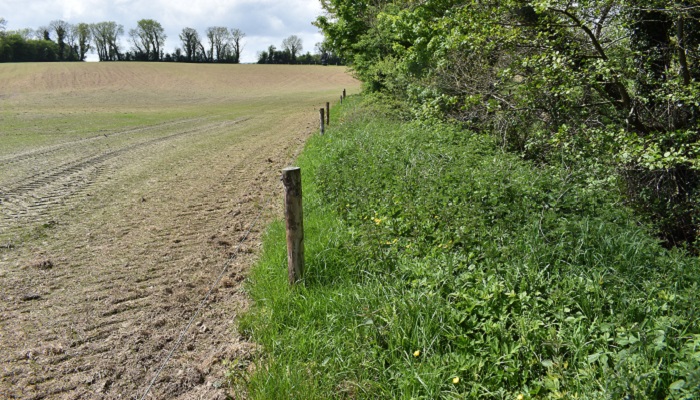
Catherine Keena and Michéal Kelly, Environmental Specialists at Teagasc, write on the opportunities Field Margins as a non-Productive Investment present to ACRES CP participants, and remind potential applicants that the deadline to apply is Thursday, October 31.
Are you one of the 20,000 farmers in ACRES CP? You may or may not be awaiting your balancing payment for the Results Based element of your ACRES payment. You may even have to repay some money if your interim payment for the Results Based element. If you are one of the 4,300 farmers who applied for Non Productive Investments (NPIs) at the end of 2023, you are still awaiting the go-ahead or your proposed actions may not have been deemed appropriate.
Notwithstanding all these issues, all 20,000 farmers can apply for Non Productive Investments of at least €3,500. Farmers who have been paid or are due less than €7,000 for the Results Based element can apply for more than €3,500 up to €10,500 per year. There are farmers in CP areas with all their land in productive ryegrass, which will not score or get any Results Based Payment, but these farmers can still get €10,500 per year by applying for Non Productive Investments.
One simple action worth consideration is Field Margins, if you have fields outside the CP area. You can get €2,725 for fencing off 500m of a 3m margin on your non CP land. It is highly unlikely that field margins would ever be an inappropriate action, so should be approved. The payment rate of €5.45 per m or €2,725 for 0.15 ha for the remainder of your ACRES contract is a good payment on this land, which is likely to be the least productive in the field and you can take pride in doing something very good for biodiversity on your farm.
Requirements
- Create a grass margin by erecting a permanent stock proof fence 3m out from the field boundary in a grassland parcel and must be maintained for the remainder of the ACRES contract.
- To create a grass litter layer, do not cut or graze the margin from when the margin is created by erecting the fence until 31 August the following year.
- In the second year after the grass margin is created, you must cut the margin between September and December but not below 10cm to ensure the litter layer is retained. Alternatively, margins may be managed by grazing, but this can only take place during the month of September and ensure that no poaching occurs, and the litter layer remains.
- Chemical or organic fertiliser or lime is not permitted in the field margin.
- Pesticides and herbicides are not permitted, except for the spot treatment of noxious/invasive weeds.
- Do not disturb the integrity of the existing hedgerow or field boundary when creating the field margin.
Ask your ACRES advisor
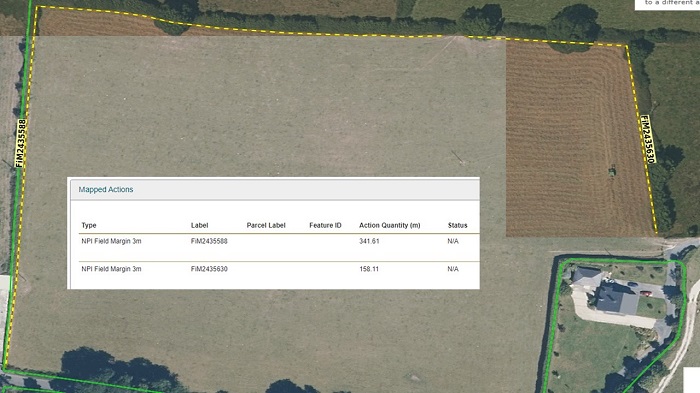
Your ACRES advisor must apply online on GLAMS for your proposed NPIs. The advisor will mark the exact location and length (metres) on the side(s) of the field(s) where you wish to create a Field Margin(s) as shown below in figure 1 below. Gateways must be excluded. Do not carry out the fencing until you receive written approval from the Department of Agriculture, Food and the Marine.
Figure 1: A proposed field margin mapped on the GLAMS system
Value of field margins
Field margins provide valuable habitat for flora and fauna side by side with productive farming. They are a valuable habitat comprising of rough grassland, missing from intensively managed farmland. Their structural diversity, as well as the diversity of flora, contributes to biodiversity. Their linear nature means they provide corridors of movement for wildlife throughout the countryside. They provide cover for mammals such as foxes, hares, bats and hedgehogs, as well as shrews and field mice, which in turn are prey for barn owls and kestrels.
Research has shown field margins to be most important for bumblebees, providing food and places for reproduction and overwintering. They are a habitat for overwintering predatory invertebrates. They are habitats for invertebrates such as Small Tortoise Shell Butterfly and the Spectacle Moth.
Field margins are habitat for grassland flora. In the absence of fertiliser and grazing, nutrient dependent flora such as ryegrass and nettles decline and are replaced by a diverse flora of traditional grasses, wildflowers and associated fauna. Grasses setting seed in field margins provide food for seed-eating birds such as the house sparrow, linnet and yellowhammer.
Management
Field margins need management in order to be retained as grassy margins. In the absence of management, scrub will take over and while scrub is valuable it is not wanted in a grassy field margins. It is recommended to leave an access point when erecting fence to facilitate management of margins. When margins are cut, it is recommended to remove offtakes to reduce the overall fertility of the margin.
Good structure is as important as vegetation composition. Lumpy and bumpy is good as can be seen in the photo below of small mammal holes in a rough grass margin with a litter layer.
Figure 2: Small mammal holes in 1m2 of rough grass margin where there is a litter layer >7 cm deep. Image source: The Barn Owl Trust
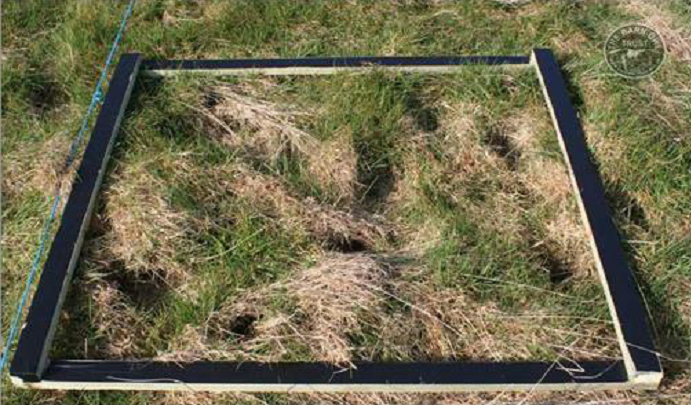
Appropriate management to create this essential litter layer is to allow the grasses to grow tall over summer in year one by not cutting or grazing, so that this grass will then collapse in the autumn. Fresh grass will grow up through this and the following summer, most of the first year’s growth will have died back and formed a litter layer. Depending on the height of the litter layer after year one, you may need to cut higher than 10cm.
Let nature take its course
Sowing ‘wild’flower margins is NOT recommended – retaining existing vegetation is much better, even if ryegrass. As soon as fertiliser and intensive grazing is removed, ryegrass will not persist and diversity will increase in the vegetation.
- Promotion of sowing ‘wild’flowers gives the wrong message that what is growing wild naturally is not good. When people ask for ‘wild’flower seed and have sprayed off the ‘rubbish’ – the answer is it would be better to retain the ‘rubbish’
- Biodiversity conservation must be based on science – not individual uninformed preference or what is perceived to be aesthetically pleasing to the human eye.
- Sowing ‘wild’flower seed can interfere with the provenance of naturally occurring wildflowers growing locally if they, hybridise with local plants.
- ‘Wild’flower seed is not certified for purity or germination – can introduce Blackgrass or Invasive Alien Species
- When creating a new habitat such as field margins, it is important not to disturb soil biodiversity and soil carbon by cultivating.
- Nature does take over and sown ‘wild’flowers don’t persist but may have caused damage to biodiversity in the meantime
- The high cost of ‘wild’flower seed leads to unscrupulous marketing campaigns. These should be confined to gardens and NOT target farmland or the wider countryside.
Location of Field Margins
This action will have greater benefits if used to link up existing habitats on the farm, such as hedgerows and wooded areas.
Figure 3: A Field Margin adjoining a hedgerow
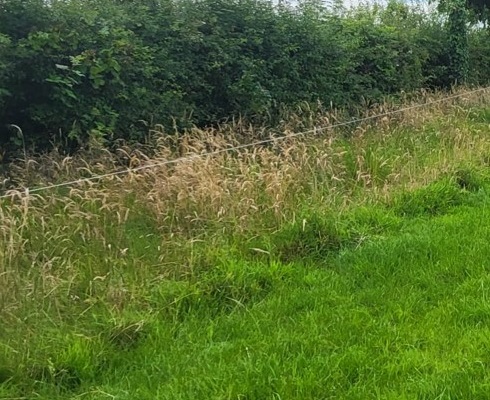
A field margin strategically placed in an area prone to runoff and erosion further up a slope may be beneficial in addition to a Riparian Buffer Strip or Zone closer to the watercourse. Do not install in close proximity to a badger sett.
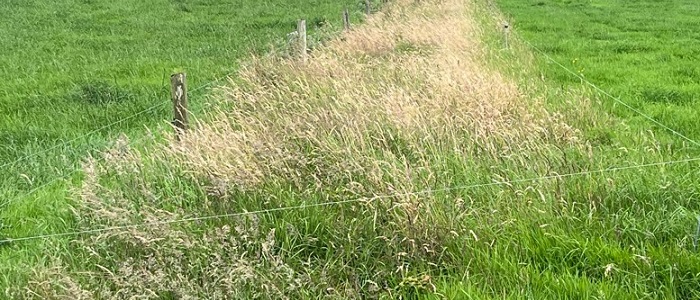
Figure 4: A Field Margin intersecting two grass parcels
In conclusion, severe declines in biodiversity have been well documented for many groups including plants, invertebrates, birds, and mammals due to intensification of agricultural practices. The creation of a rough grassland field margin provides an important habitat, which acts as a refuge for wildlife and a corridor to help connect habitats across a landscape.