
01 September 2024
Coppicing and hedge laying actions under ACRES
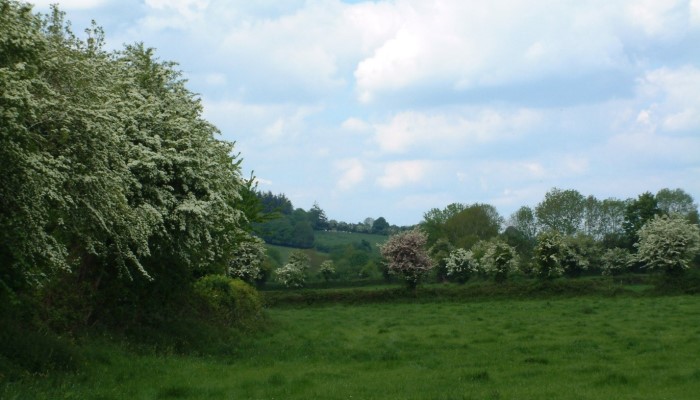
Along with establishing new hedges, there are two further hedge actions under the Agri-Climate Rural Environment Scheme (ACRES) – coppicing and the laying of hedges.
It is important to understand what is involved in each action and the ongoing work required over the course of the scheme. Catherine Keena, Teagasc Countryside Management Specialist, has details.
The selection of appropriate hedges for coppicing and laying is essential. It is important to improve biodiversity rather than cause damage to existing habitats.
Coppicing in ACRES
Up to 400m of hedge can be coppiced with a payment of €2.87/m/year for five years. A minimum of 10m applies. It is critical that appropriate hedges are selected and it is very difficult to see hedge structure until leaf fall in winter, as most hedges look good with vegetation hiding poor structure. Best practice coppicing is critical to improve rather than destroy biodiversity and reduce carbon. Old wire embedded in hedges must be removed before coppicing, as it damages saw blades and becomes a lethal weapon, flying far away from the machine.
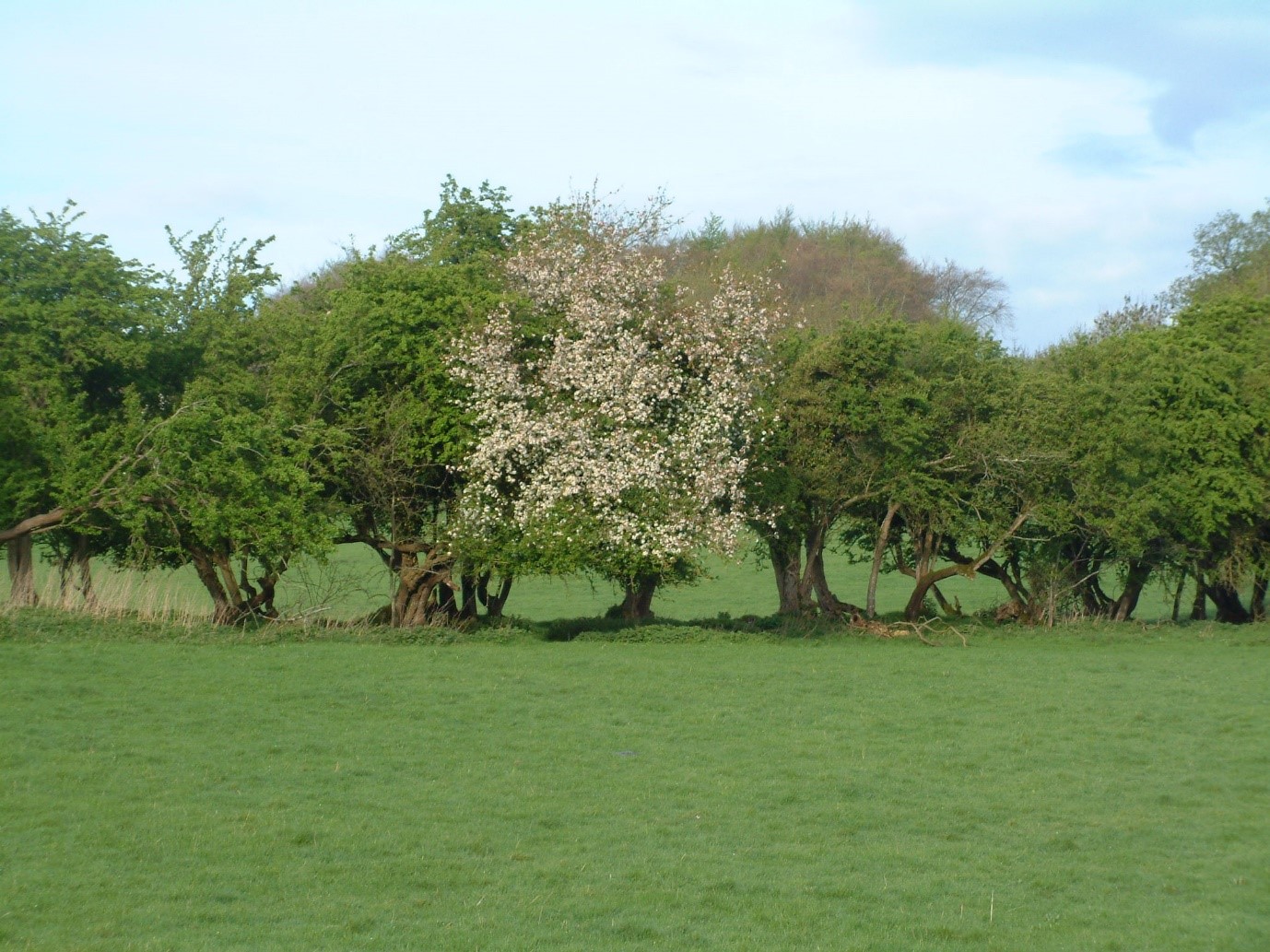
This hedge (photo above) is too valuable for biodiversity and carbon to justify coppicing. Best practice is to retain these ancient shrubs by fencing off both sides, allowing natural regeneration of shrubs and ground flora.
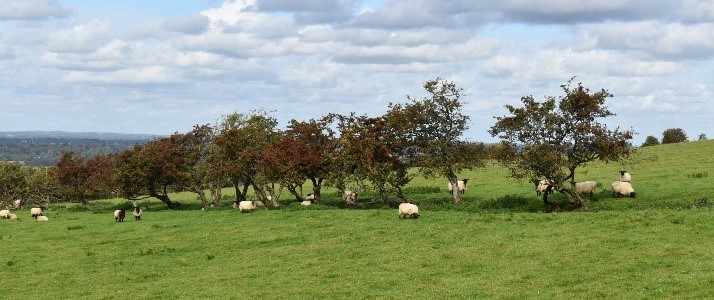
This hedge (photo above) has too few shrubs for successful regeneration. It is also and too valuable for biodiversity and carbon to justify coppicing. Best practice is to retain these ancient shrubs by fencing off both sides, allowing natural regeneration of shrubs and ground flora.
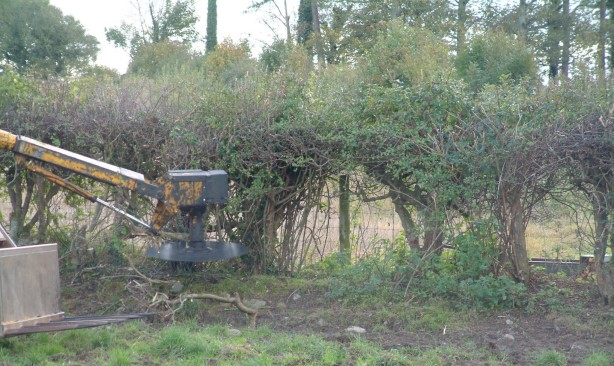
This ‘upside down toilet brush’ hedge (photo above) of low biodiversity and carbon value will die out if topped to the same level continually with a stump containing a fringe of hedging on top for support. This hedge could benefit from coppicing. It contains thorn shrubs, which will rejuvenate well when cut at the base and it contains enough thorn stems, one every metre, so in planting is not necessary. In planting is unlikely to succeed in existing hedges due to the dry conditions, competition from vegetation and thorn sickness.
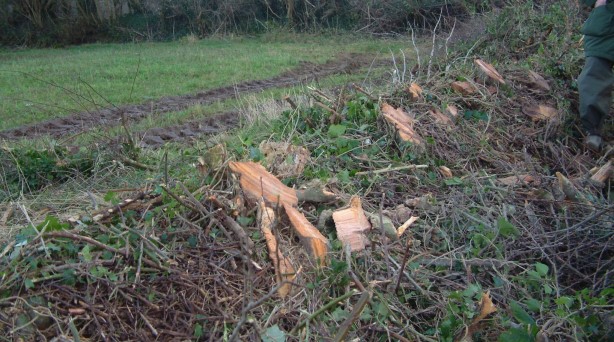
Best practice hedge coppicing (example above), where an appropriate hedge was chosen, which was similar to the ‘upside down toilet brush hedge in the background. The stems were cut at ground level with clean sloping cuts. There were sufficient stems, so no infilling is required. A profusion of new shoots will come from each stump, which should be trimmed annually, slightly above the previous cut to generate multiple shoots each time, allowing the hedge to grow up in layers of dense growth.
Hedge laying in ACRES
Up to 400m of hedge can be laid in ACRES, with a payment of €5.47/m/year for five years. A minimum of 10m applies. It is critical that appropriate hedges are selected. It is very difficult to see hedge structure until leaf fall in winter, as most hedges look good with vegetation hiding poor structure. Best practice laying, which is highly skilled work, is critical to improve rather than destroy biodiversity and reduce carbon. It is critical that diggers or heavy machinery are not used.
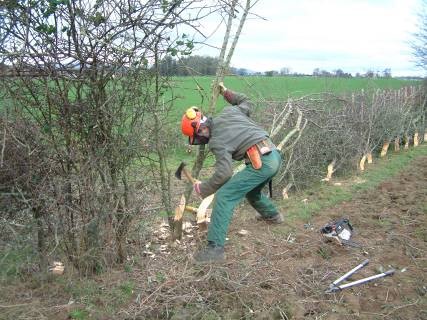
Example of best practice hedge laying with Neil Foulkes.
The hedge stems are cut three-quarters of the way through, with a long sloping cut at ground level to create a long hinge. This can be twisted to position in the right place. The heel or stump is cut off at a sloping angle to encourage re-growth and allow water to run off.
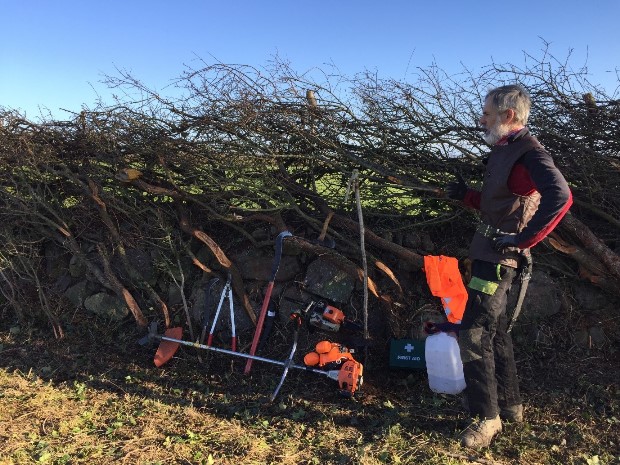
Eoin Donnelly showing the skill involved in laying a hedge and the equipment used.
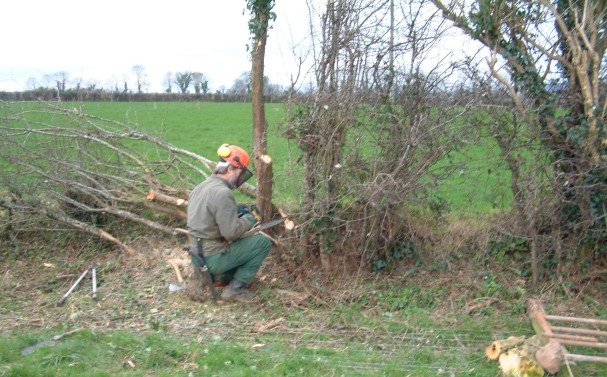
Individual thorn tree selected for retention within laid hedge by Neil Foulkes.
This thorn tree will benefit birds and bees by providing flowers and fruit as well as acting as a song post and perching post above the body of the laid hedge.
This article was published as part of Hedgerow Week 2024, an initiative between Teagasc and the Heritage Council.
Find out more about Hedgerow Week 2024 here.