
02 August 2024
Everyone benefits from cleaner water
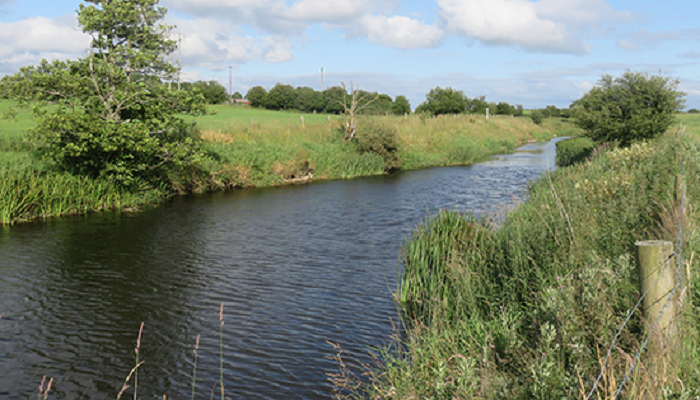
The new Farming for Water European Innovation Project (EIP) includes a €50m budget (until 2027) to fund a range of on-farm measures to improve water quality, writes David Webster, ASSAP advisor, Teagasc Mullingar.
The main objective of the Farming for Water EIP is to reduce loading of phosphate, nitrate, sediment and pesticides entering our rivers and streams through ‘diffuse’ or ‘point’ sources associated with farming. The Dysart/Lough Ennell Priority Action Area (PAA) in county Westmeath is an important catchment as it is a spawning ground for brown trout and Lough Ennell is a bathing lake. Water quality has been an issue in Lough Ennell for a number of years.
The Dysart stream has been classed as good in the upper part of the catchment decreasing to moderate as it enters Lough Ennell. The main issues affecting water quality in the stream and lake from an agricultural point of view are cattle access points along the stream, land spreading of agricultural wastes (E coli), and nutrient runoff by ‘diffuse’ pollution.
The Farming for Water EIP will assist farmers to address issues in the catchment and will improve water quality when changes are implemented. David Fay from Dysart, Co Westmeath and Shane Pearson from Balrath, Co Westmeath, are taking part in this new Farming for Water EIP.
David is farming a 50 hectare owned farm in conjunction with 30 hectares leased long-term. The land has been farmed organically since 2023 and is in year two of conversion. The farming system is suckler to beef, spring calving using Angus bulls. David has engaged with the ASSAP programme since 2020. “Before the ASSAP programme, I was not fully aware of the water quality on the farm or the factors affecting it,” says David. “When it was explained to me, I wanted to know how my farming could be changed to benefit water quality, the farm and the wider community.”
Over the last two years David has closed all cattle access points to Dysart stream and has installed a solar water pump to supply water to livestock from drinking troughs only. This has had many benefits for the stream. It has reduced the loading of nutrients into the river and cut sediment loss as the riverbank is now more stable. “The solar water pump has been a ‘game changer’ for me as my grazing management is no longer governed by the location of the drinking point,” says David. “I can now split fields and improve grazing infrastructure.” His slurry spreading is now completed by dribble bar instead of band spreader. “We no longer apply slurry in sensitive areas of the farm that are prone to runoff,” he adds.
The new Farming for Water EIP will assist David to deliver further protection measures on the farm. He is introducing additional stream fencing and increasing management of critical source areas. All drains on his farm will be fenced off from livestock thereby giving increased protection to the stream and assisting in improving water quality in the Lough Ennell/Dysart PAA.
David says: “We are all in the one river catchment and if all farmers change their farm practices a little, we will help deliver improved water quality in our local area. I would strongly encourage farmers to take part in the ASSAP programme and the Farming for Water EIP, as it promotes best farm practice and can deliver improvements on your farm with funding that you may not be in a position to take on yourself.”
Shane Pearson farms 60 hectares in Churchtown, Ballinea, Mullingar in the upper part of the Dysart Lough Ennell PAA. “As a child I used to swim in Lough Ennell and I feel that it would be a huge loss if we could no longer use this great facility,” he says. As a farmer within the catchment, he says he wants to play his part in protecting and improving water quality in the catchment. His farming system is weanling to beef. Shane has engaged with the ASSAP service since 2020.
“Some of our land is sensitive to Phosphorus(P) losses from application of nutrients. I’m now more aware of these areas, and have altered my farm practices, so we are even more careful when applying slurry/ chemical fertilisers.”
Minimal risk
“I only apply fertiliser when there is active growth and good ground conditions with minimal risk of losses of nutrients to water. The ASSAP programme highlighted these areas of the farm and gave me advice on how to manage these areas better.”
Shane has applied to the Farming for Water EIP to fund additional measures on his farm. These include stream fencing, a solar water pump, water troughs and management of critical source areas.
When these additional measures are implemented, stock will have no access to Dysart stream or other drains on the farm along with improved management of critical source areas on-farm. These measures will have a positive impact on water quality in the Lough Ennell Dysart PAA.
Taking part in the ASSAP programme and Farming for Water EIP will benefit his farm. There will be increased protection for Dysart Stream with better grassland management.
Shane says: “As farmers, we need to act together and all do our little bit collectively. This Farming for Water EIP gives us the push we need to do the right things in the right places.”
David and Shane say they encourage all farmers to get involved in the ASSAP programme. “The programme gives good advice which is specific to your farm,” says David.
Shane adds: “You have the benefit of applying to the Farming for Water EIP for extra funding to help with the costs of implementing farm specific measures to improve water quality on your farm. Your ASSAP advisor will help with advice and will help apply for the funding on your behalf if necessary.”
This article was first published in Today’s Farm. Read more from Today’s Farm here