
14 July 2024
Growing Wild: Yellow Rattle, Bog asphodel, Devil’s bit scabious and marsh fritillary butterflies
Catherine Keena, Teagasc Countryside Management Specialist, takes a closer look at some of our native Irish biodiversity, focusing this time on Yellow Rattle, Bog asphodel, Devil’s bit scabious and marsh fritillary butterflies.
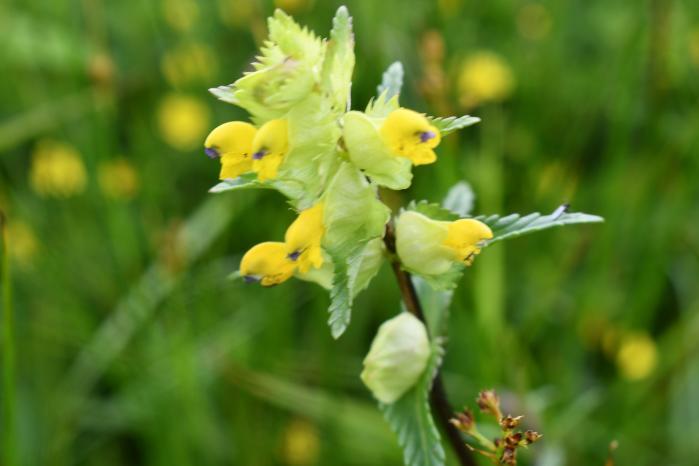
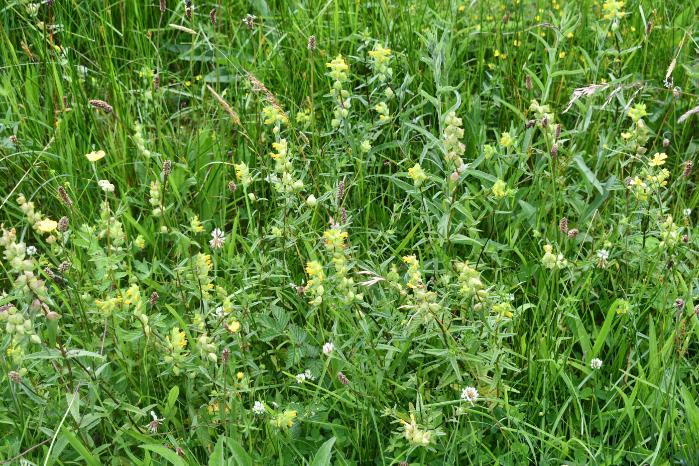
Yellow Rattle
Look out for yellow rattle with small yellow flowers. They have an upper overhanging lip and a lower lip with two purplish flaps protruding in between. Flowers emerge from large green pouches. As flowers fade and plants dry out, seeds rattle inside the pouch, giving the plant its name. Toothed leaves are shaped like spear-heads and held in pairs directly on the stem. The green leaves do photosynthesise but yellow rattle is also parasitic with its roots latching on to the roots of grasses to absorb nutrients, reducing the vigour of grasses and enabling it to compete.
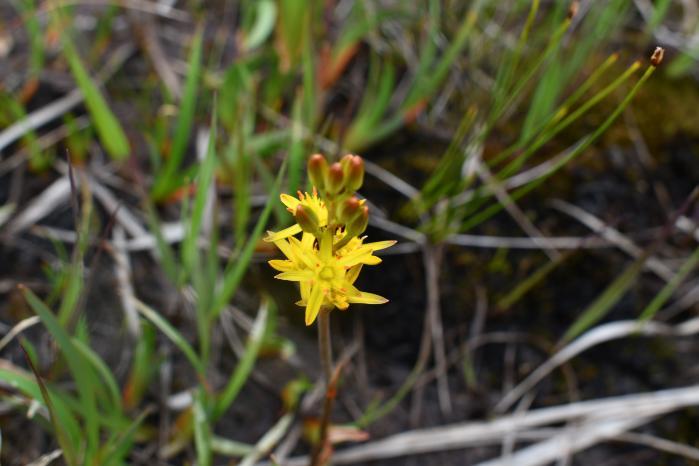
Bog asphodel
Look out for bog asphodel, a positive peatland indicator plant in ACRES. It is a short plant with bright yellow flowers arranged in short spikes. In the centre of the star-like arrangement of petals are conspicuous furry stamens with orange anthers at the tips. Leaves are slightly curved narrow blades held in very flattened bunches. They turn orange in autumn before falling off. Although it has no nectar, its scent attracts invertebrates. Its latin name ossifragum meaning bone breaker, a name that comes from the belief that the bones of animals that fed on it became brittle. Bog asphodel nó Sciollam na Móna is part of our native Irish biodiversity.
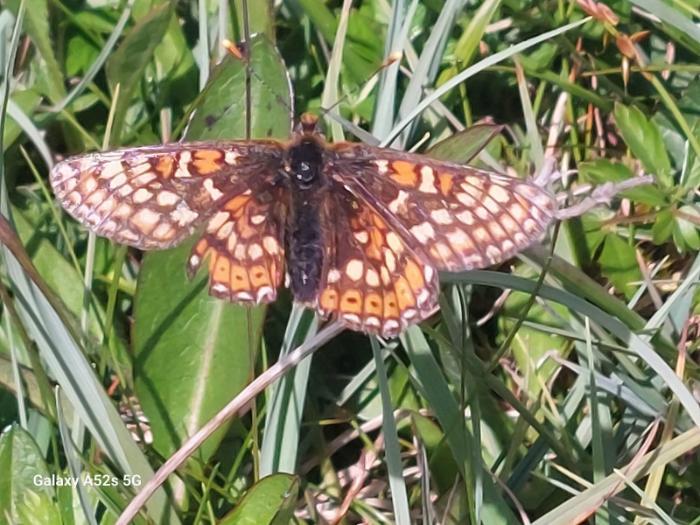
Devil’s bit scabious and marsh fritillary butterflies
Look out for devil’s bit scabious and marsh fritillary butterflies as pictured on the farm of Phil and Eleanor Cussen in Tipperary. Females lay hundreds of eggs on the underside of leaves. Larvae hatch and spin a web forming a protective silk sheet and feed on the leaves. Tiny yellowish brown larvae with conspicuous black heads change into darker larvae with conspicuous bristles and into brown larvae with a band of whitish speckles. Because they need move to adjoining plants, females don’t lay on isolated plants. Marsh fritillary butterfly is rare on the Red List and is dependent on devil’s bit scabious.
Read more from the Growing Wild series, to learn more about our native Irish biodiversity.