
08 July 2024
An overview of the Teagasc Climate Centre
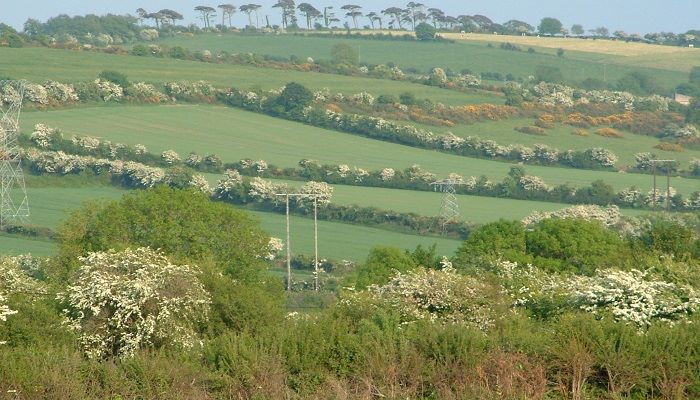
The Teagasc Climate Centre, established in December 2022, is a virtual centre to co-ordinate agricultural climate and biodiversity research and innovation across Teagasc, Dr Karl Richards tells us more.
It will accelerate efforts to develop and implement technologies to reduce greenhouse gas emissions and enhance biodiversity. The Climate Centre will support and facilitate the Irish agriculture sector to meet its commitments in reducing greenhouse gas emissions and restoring biodiversity. The Climate Centre has expanded the research infrastructure and human capital in Teagasc to meet the increased demand for practical, effective and affordable solutions for farmers. The centre is working with national and international organisations and institutions to create effective and trusted partnerships.
In its first year, the centre has produced a new Marginal Abatement Cost Curve (MACC) report for the agriculture, land-use and bioenergy sectors. This report identified a pathway for Agriculture and Land-use to achieve the sectoral targets set in the National Climate Action Plan. A roadmap for the implementation of the MACC is being considered by Government for the Agriculture and Land-use, Land-use change and Forestry sectors in the Climate Action Plan 2025.
Climate Centre objectives
- Enhance Ireland’s international reputation as a leader in sustainable agriculture research and innovation.
- Produce high quality research and innovation in the area of climate change and biodiversity to enable the Irish agriculture sector meet its commitments.
- Provide a central independent focal point in Ireland for the co-ordination and dissemination of agricultural climate change research and innovation.
- Inform policy makers with the required robust science and technology to be more responsive to the emerging needs associated with climate change.
- Collaborate with both national and international institutes in the area of climate change and biodiversity research and innovation.
- Build research infrastructure and human capital to support the agricultural sector meeting the National climate and biodiversity commitments.
Climate Centre structure
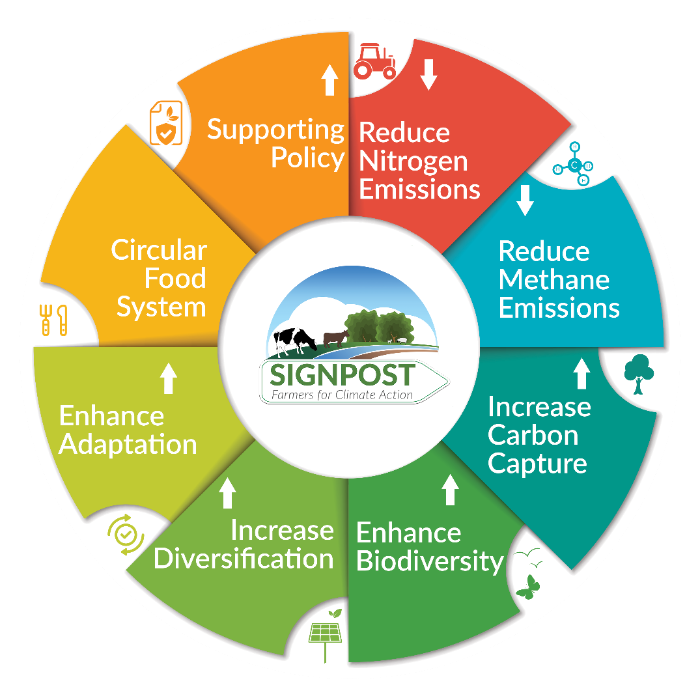
The Climate Centre has eight Research Pillars surrounding the Signpost Programme focusing on Knowledge Transfer to increase mitigation measure adoption at farm level (Figure 1). Each of these pillars focuses on reducing overall greenhouse gas emissions, enhancing carbon sinks and enhancing biodiversity on Irish farms.
Figure 1: The structure of the Teagasc Climate Centre
There is considerable research underway within the Climate Centre on reducing carbon dioxide (CO2) emissions and enhancing Carbon (C) sinks on Irish farms. The Centre has established four new national infrastructures to support the research programme.
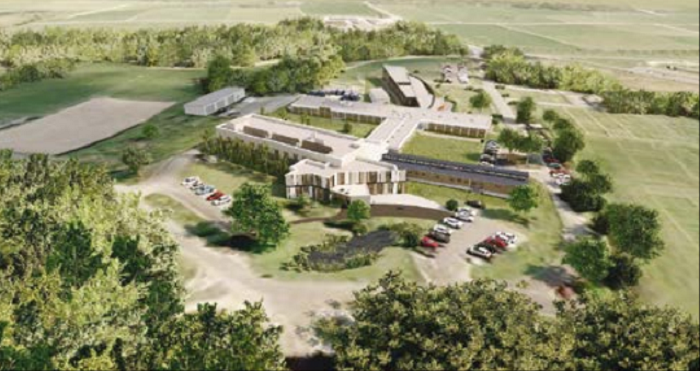
- The National Agricultural Sustainability Research and Innovation Centre based at Johnstown Castle (Fig. 2). This is a multi-million euro investment in state of the art research facilities to support the environmental and climate research programme across Teagasc.
- The National Agricultural Soil Carbon Observatory: Network of 28 eddy covariance towers that are established across a wide range of soil types, land-uses and land management practices.
- The SFI funded National Soil Greenhouse Gas Test Platform, which is a high resolution, automated infrastructure to examine the efficacy and derive emission factors for a range of fertilisers and additives to soils.
- A large number of Green Feeds, across the organisation, for the quantification of enteric methane emissions from ruminants to evaluate the effect of feed type, feed additives, genetic variation and other management practices on emissions.
Figure 2: The New National Agricultural Sustainability Research and Innovation Centre currently under construction.
Researchers within the Climate Centre are currently conducting a wide range of research projects across Teagasc to reduce emissions, identify opportunities for diversification and increasing resilience to climate change, enhancing biodiversity and improving the sustainable circular food system. The centre works collaboratively with all Irish universities and an increasing number of universities and research institutes across the world. Working together and co-creating with farmers in collaborative multidisciplinary teams, increasing the development and adoption of measures and management practices to address the global climate and biodiversity emergency.
Further information on the Teagasc Climate Centre is available here.
This paper was first published as part of the Teagasc Carbon Conference ‘Counting Carbon Science and Practice’. For more information on the Counting Carbon Conference, click here.
Also read: Teagasc Counting Carbon Conference
Also read: Enhanced afforestation rates required to help meet climate targets
Also read: Soil carbon of Irish farms is very high compared to EU soils
Also read: Farmer awareness and preferences for GHG mitigation measures