
03 July 2024
Farmer awareness and preferences for GHG mitigation measures
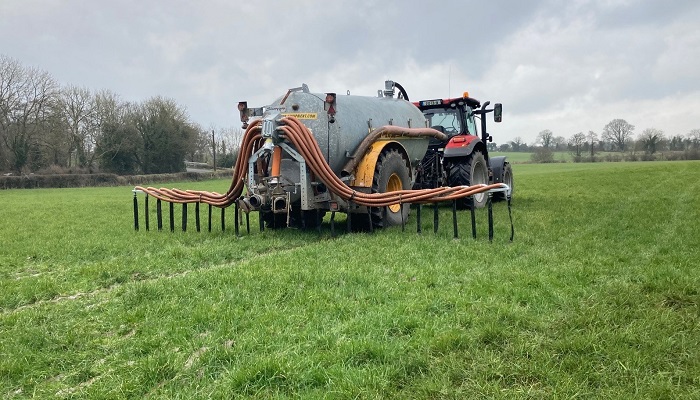
Based on a survey of 400 farms contained within the National Farm Survey (NFS), the awareness and willingness of farmers to adopt a range of greenhouse gas mitigation measures were drawn out.
Dr Cathal Buckley, Research Officer at the Teagasc Agricultural Economics and Farm Surveys Department, tells us more.
In the Republic of Ireland, the agricultural sector accounted for 38.4% of total greenhouse gas (GHG) in 2022. A climate action law was enacted in Ireland that set down a binding 25% reduction target for GHG emissions from the agricultural sector by 2030 (from a 2018 base) and movement towards climate neutrality by 2050.
Teagasc published a strategy document based on marginal abatement cost curve analysis in 2023, which sets down the most cost-effective pathways to reduce GHG emissions at farm level across Ireland. Previous iterations of this strategy were published in 2012 and 2018 yet uptake of proposed mitigation measures by farmers has been mixed. This analysis explores the awareness and willingness of farmers to adopt a suite of mitigation measures that could reduce farm level GHG emissions as proposed under the Teagasc 2023 MACC report.
Based on a survey of 400 farms contained within the Teagasc National Farm Survey (NFS), the awareness and willingness of farmers to adopt a range of mitigation measures was elicited. Technologies examined include feed additives, slurry additives, low emission slurry spreading, sexed semen based artificial insemination, protected urea fertiliser, clover and multispecies swards as well as more established practices like forestry and hedgerow planting, organic farming, liming and reduced livestock numbers.
The awareness of these as mitigation measures and there likely future uptake by farmers was assessed via Likert scale type questions, where farmers were asked how aware they were of the measure (1=unaware & 5=very aware) and how likely they were to adopt in the future under certain conditions (1=very unlikely & 5=very likely).
Preliminary analysis indicates a higher level of awareness among farmers of the mitigation potential of more traditional practices such as liming, clover, LESS and hedgerows (mean awareness score of circa 4 and above). There was however a lower level of awareness of more emerging technologies such as slurry and feed additives.
In terms of likely adoption, measures such as covering slurry stores, LESS, liming and sowing cover crops were the most likely to be adopted, followed interestingly by the emerging technologies (slurry and feed additives).
The bottom three measures in terms of likely adoption revolved around reductions in agricultural activity namely reducing livestock numbers, converting agricultural land to forestry and re-wetting soils. However, results vary by farm system type and farmer profile and additional analysis is required to explore this in detail.
Acknowledgements
This research is based upon works conducted with the financial support of Science Foundation Ireland in partnership with Microsoft Ireland under Grant number (SFI 20/SPP/3705). Teagasc gratefully acknowledges this support.
This paper was first published as part of the poster session at the recent Teagasc Counting Carbon Conference. Find out more about the Counting Carbon Conference.
Also read: Soil carbon of Irish farms is very high compared to EU soils
Also read: Enhanced afforestation rates required to help meet climate targets