
19 June 2024
Measuring the impact of extreme weather events on water quality
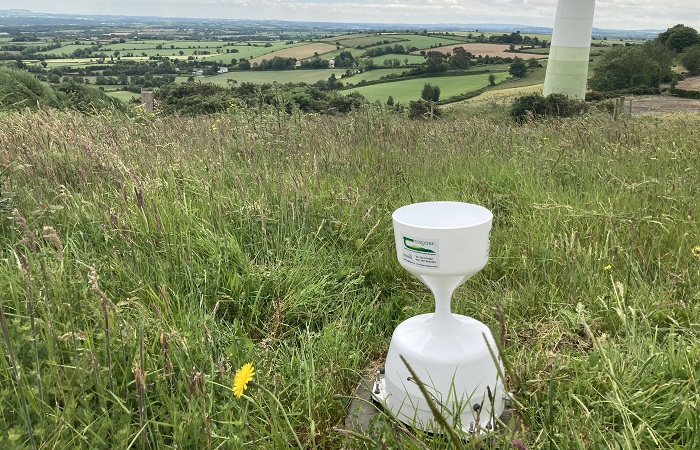
With extreme weather events becoming more frequent, David Ryan, technologist on the Agricultural Catchments Programme, details results of water monitoring from the Castledockrell catchment following a torrential rainfall event in late May.
On Tuesday, May 21 this year, there were very localised torrential downpours in Co. Wexford. One such shower occurred in Castledockrell, which is one of six areas in the country being closely monitored by Teagasc’s Agricultural Catchments Programme (ACP). The catchment area of 1,200ha has numerous pieces of automated equipment that continuously monitor rainfall, river flow and nutrient content, and there is now over 15 years of data collected.
Many people are surprised to hear the amount of phosphorous (P) that we measure which is lost to our rivers and streams. From an agricultural perspective it is very small, but is often significant from an ecological impact in rivers and lakes.
In Castledockrell for example, phosphorous losses are small and concentrations are usually below that required under environmental regulations (WFD). The average amount of P measured per year in the stream is 0.37 kg/ha. But what is the impact of very heavy rainfall? How much P was washed out after the downpour on that Tuesday afternoon?
Just over 32mm of rain fell on that day (www.acpmet.ie), most of it over a very short period of time. Some 20mm fell in 20 minutes and the remaining 10mm over the following 40 minutes. In the following 12 hours, the flood event took with it 0.61 kg/ha of phosphorous, close to twice what would normally leave in a year! This level of detail would not be achievable without the up-to-date and functioning equipment installed in the catchment with the co-operation of over 300 farmers across the six locations. The ACP would like to acknowledge the funding from the Department of Agriculture, Food and the Marine which enables this research to take place.
Find out more about the Teagasc Agricultural Catchments Programme here.
Also read: Farm and field specific plans needed to improve water quality
Better Farming for Water Campaign
In late May, Teagasc launched the Better Farming for Water Campaign, which will build on the progress made through existing water quality programmes such as ACP, ACRES, ASSAP, Farming for Water EIP, Waters of LIFE, Blue Dot Catchments, Slaney project and others to improve water quality.
Eight actions for change have been identified that farmers can take on their own farms which will lead to improvements in water quality. These 8-Actions are in three critical management areas, namely: Nutrient management; Farmyard management and Land management.
This campaign brings together farmers, advisors, researchers, agri-food industry, community and government in a collective sectoral effort to support farmers to implement solutions to address the quality of the water in their local stream or river. The campaign is being delivered at farm, catchment and regional scale, and is part of a wider whole-of government approach to improve water quality.
Find out more about the Better Farming for Water Campaign here.