
19 October 2022
The Soil is Alive & Willing to Help
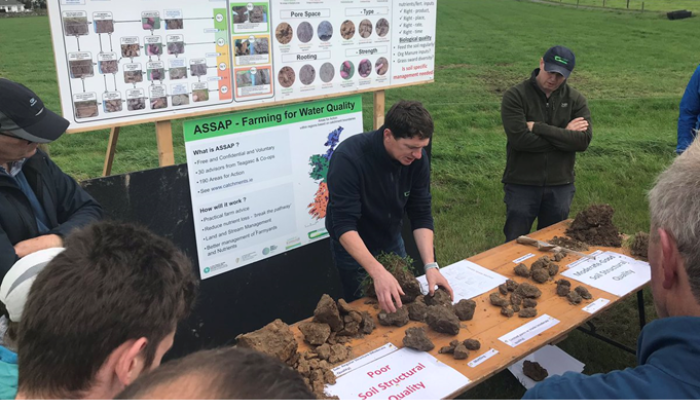
“To be a successful farmer one must first know the nature of the soil.” (Xenophon, 430 – 354 BC). Cathal Somers writes about the soil microbiome and how to safeguard it.
Farming has come a long way in the last fifty years, with huge improvements in how we grow our crops and rear our animals. These days farmers are constantly finding ways to become more efficient and have become very aware of environmental challenges.
‘It’s in our DNA’
Farmers are always drawn to soil, I think it’s in our DNA. I had great chats about compaction, soil type and farmers looking to solve specific problems in relation to production or ponding on land. But what really interested people was hearing about the life in soil and all the hard work that goes on behind the scenes underneath our feet 24 hours a day, 365 days a year carried out by the soil microbiome.
‘There are more organisms in one tablespoon of healthy soil than there are people on earth’
A microbiome is all of the microorganisms within or associated with a particular environment, you would often hear of the human microbiome in relation to products you can buy to improve digestion and health. The soil microbiome is much more complex and it does vital work for farmers in helping to produce food.
The soil microbiome consists of a diverse community of micro-organisms such as bacteria, archaea and fungi. Each group consist of millions of different species that carry out different functions in our soils such as releasing nutrients, cleaning water, storing carbon and a home for biodiversity. Lots of farmers know earth worms are a great sign in land but we also need to be aware of the huge amount of microbes doing other vital jobs for us such as rhizobia bacteria for example who work with white clover to produce free nitrogen for us to grow grass. In order for us to ensure our soil is resilient enough to deal with the pressures our management puts on it we must look after it to the best of our ability.
Soil is a living, breathing ecosystem and one of the most complex structures known to mankind. It gives us clean air, filters our water, and provides us with our food, forests and wildlife. Presenter Aoibhinn Ní Shúilleabháin meets Sara Vero and David Wall at Teagasc’s Soil Research Centre in Wexford to find out about some of the 213 different types of soil we have here in Ireland. Digging a cross section into the ground, they discuss the conditions that soil needs to thrive and feed the planet, the problems created from compaction, and the crucial role earthworms play in running a healthy farm.
Top tips for safeguarding your soil biology
- Avoid physical damage (compaction) to soil as much as possible
- Return organic matter to soils (dung & slurry), in particular to arable land and silage ground
- Optimise fertility and pH
- Diversify your crops and crop rotation (mixed species swards/cover crops/green cover)
- Reduction in chemical fertilizers & agri chemicals, only use what the crop needs
- Check your soil health, take out the spade and have a look for yourself
Find out more about Signpost Sustainability Week 2022
Subscribe to the Signpost Programme e-newsletter
Subscribe here