
16 June 2023
Silvicultural characteristics of oak and beech
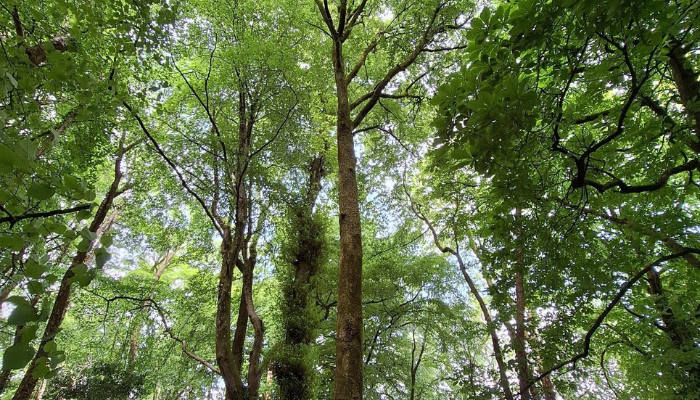
Silviculture is the cultivation of trees for the production of timber. In this article, Kevin O’Connell, Teagasc Forestry Development Officer, looks at the silvicultural characteristics of oak and beech.
The silvicultural characteristics of a tree are the special features of the growth and site requirements of a species which affect its use in silviculture.
Pedunculate Oak (Quercus robur L) and Sessile Oak (Quercus petraea (Matt.) Lieb)

Pedunculate Oak and Sessile Oak are both native to Ireland. Their characteristics are quite similar and in some areas it is common to find hybrids of the two species. Both species will grow over a wide range of site conditions. Pedunculate Oak prefers well-aerated, deep, moist, fertile, heavy soils (pH 4.5 – 7.0) and can tolerate some water logging. Sessile Oak is intolerant of flooding, preferring the better drained acid brown earths (pH 4.0 – 6.0). Both species are strong light demanders. Sessile Oak can tolerate more shade up to thicket stage. It can survive for longer periods underneath the shelter of old trees, but this usually results in poor growth and crooked stems.
Both trees can reach heights of up to 40m, but 30m is average. Pedunculate Oak, on reaching maturity, tends to have a wide spreading crown, whereas Sessile Oak usually keeps a straight monopodial structure and are very wind firm. Both species are very susceptible to late spring frost and generally flush late to avoid these frosts.
Flowers are monoecious, their appearance coincide with leaf flushing and are pollinated by the wind. Pedunculate Oak produces acorns singly, whereas Sessile Oak produce them in clusters. The age of the first good seed crop is around 40-50 years, with mast years occurring every 3-7 years – depending on weather conditions. The acorns ripen in October and are dispersed by gravity, birds and mammals. They are able to produce a radicle immediately but not a shoot, which must await a period of winter chilling. The young seedlings will tolerate shade for a number of years, but require light to grow.
Beech (Fagus sylvatica L)
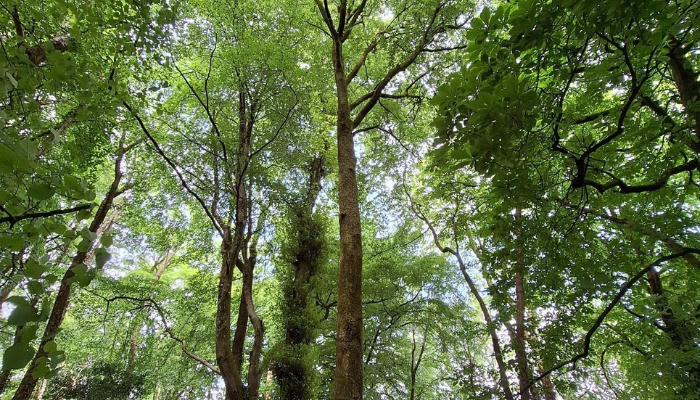
Beech is not native to Ireland and was probably introduced in the late 16th century and formed a substantial component of estate plantations for aesthetics and commercial use during the 17th century. It is now naturalised throughout Ireland.
Beech will grow over a wide range of soils, but only grows well on certain soils. It grows best on moist, free-draining soils of pH 6.0–7.5 with a moderate to good fertility, but it will tolerate a lower pH level if the moisture regime and nutrient status are adequate. Beech is very sensitive to late spring frosts, it flushes early and the risk of damage is very acute. Delayed hardening-off in autumn can also result in frost damage. Young beech are shade tolerant, however severe shading (less than 25% daylight) reduces total biomass and causes flattening of side branches, though it usually survives and eventually breaks through the overhead cover.
Beech can reach heights of about 30m. Its lifespan is relatively short in comparison to Oak and rarely exceeds 350 years. Under favourable conditions beech is wind firm. Beech flush from mid-April to mid-May.
Beech is a monoecious species with separate male and female flowers on the same tree. Flowering is induced by very warm dry weather in July/August, when the new buds are formed. Mast years rely on climatic conditions of the previous year’s summer. The age of the first good seed year is around 50-60 years with mast years occurring every 5-10 years, depending on weather conditions. Seeds ripen in September to October and fall up to November. Dispersal is mainly by gravity, but can be assisted by mammals and birds. Seeds germinate in spring after a winter chilling period.