
09 June 2023
5 steps to understanding your forest’s potential
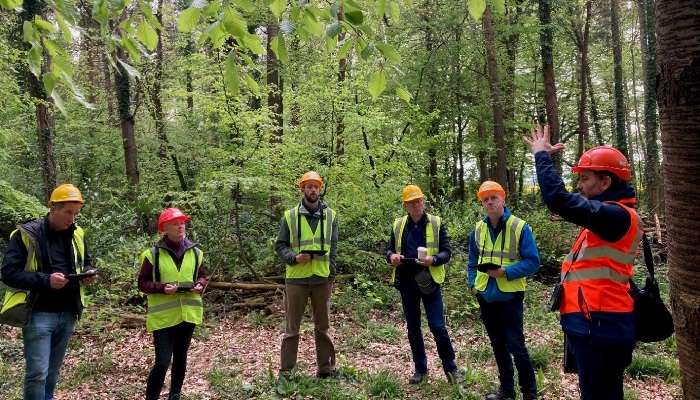
Frances McHugh, Teagasc Forestry Development Officer, sets out five ways a forest owner can develop their knowledge about their own forest and how to manage it in order to achieve multiple objectives.
Many private forest owners feel they do not know much about their forest or how to manage it. Traditionally, there is not a forest culture or tradition among farmers. However, if we are to optimise the benefits from our growing forest resource, owner interest and involvement is essential. Planting of forests on privately-owned land in Ireland increased dramatically in the 1990s and has continued to this day, resulting in a very productive, diverse and valuable resource.
As privately-owned forests grow, so too does the knowledge of their owners. This knowledge grows through first-hand management experience, forest owners learning from each other, the availability of resources and tools specific to these young productive forests and the opportunities to see other forests through events and demonstrations.
The following sets out five ways a forest owner can develop their knowledge about their own forest and how to manage it in order to achieve multiple objectives:
1. Establish access into the forest
Looking at a forest from the outside won’t tell you much. As land changes from agricultural use to a forest, both the growth of trees and other vegetation can physically challenge accessing the area. In a young forest, a working style / properly hung gate etc. all help to maintain access. As conifer trees grow, the branches of trees meet and limit access into the forest. In order to re-establish access to the forest before the forest is thinned, inspection paths can be cut. The forest can then be measured and management decisions can be made. Inspection paths are not needed in broadleaf forests.
In the below video, Teagasc’s Forestry Development Department offers advice on the importance of inspection paths in conifer trees:
2. Avail of the many forestry services from Teagasc
Teagasc’s Forestry Development Department provides advice, training and research on forestry and related matters. This is a free service and allows forest owners and potential forest owners to learn about creating a new forest or the management of an existing one. There are many ways to get in touch:
- Contact your local forestry development officer: teagasc.ie/forestrystaff;
- Sign up to our forestry e-newsletter teagasc.ie/forestrynews;
- Attend one of our many Teagasc forestry events: teagasc.ie/forestry;
- Follow Teagasc Forestry on Facebook, Instagram, Twitter and on the Teagasc Forestry YouTube channel.
3. Engage a forester
Whether it is a once off grant application, management plan, coordinating a harvest, or an agreed ongoing management contract, professional foresters are available to provide a broad range of forestry services. A growing forest, especially large areas, have the potential for high value financial returns. It important that time and resources are invested into their success. Services from a professional forester work best with the interest and involvement of the owner.
4. Develop basic skills to learn about your own forest
Simply walking through and making observations about tree growth and quality allows the owner develop an opinion on management and the future potential of the forest.
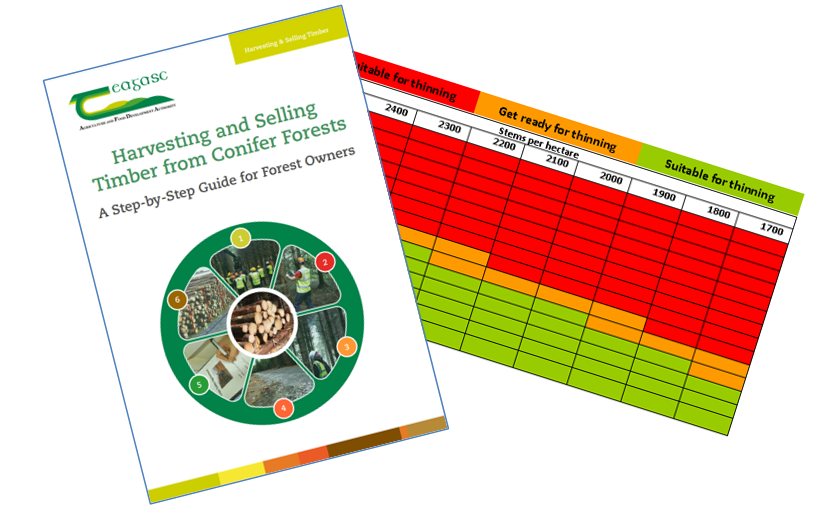
There are many resources available to forest owners to develop forest management skills. Teagasc run field days and workshops on forest measurement, tree selection and timber harvesting. There are also useful booklets and guides for owners e.g. the Teagasc conifer thinning ready reckoner, the Harvesting and Selling timber from Conifer Forests Guide which can be found here: www.teagasc.ie/crops/forestry/advice/timber-harvesting
Also, why not check out some of the forest management videos on YouTube. These include:
- Preparing for Second Thinning – conifer forest management;
- 10 simple ideas to make your forest ecologically more diverse;
- Firewood production from thinning broadleaves;
- First Thinning of Broadleaves;
- Potential Crop Trees in Broadleaves.
5. Meet with fellow forest owners
Whether it’s meeting your neighbour who manages a forest or attending a forest event, exchanging ideas and experiences of forest management is invaluable. The Department of Agriculture, Food and the Marine run the Forestry Knowledge Transfer Group (KTG) Scheme, which aims to increase the level of forest management activity amongst participating forest owners and allows forest owners meet with other forest owners in their own area to discuss and learn about forest management. Forest owner groups are another way of meeting forest owners with the added opportunity to learn, work together and to build scale in forest management.