
30 December 2022
The role of trees and forests on farms
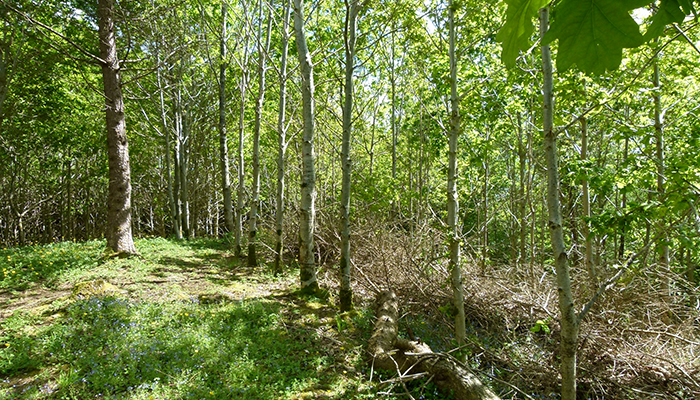
Can agriculture and forestry be compatible land uses? Can trees provide benefits for the farm business, the environment and the farm family?
A new Forest Strategy to 2030 is being finalised and sets out clear objectives for the role of trees and forests in Ireland. Key values identified focus on forests for climate change mitigation, for biodiversity enhancement and as a productive economic resource. At farm level, there is clear and increasing evidence that the appropriate inclusion of trees on farms can greatly help the overall farm enterprise in terms of economic viability, animal health, soil protection, emissions reduction, runoff prevention and biodiversity enhancement while also boosting human health and wellbeing.
Let’s have a look at the role trees can play as a complementary land use on farms.
Financial fitness
The availability of generous financial supports through forestry grants and premia is an obvious way that trees can help with financial fitness on the farm. Over 23,500 landowners, the majority farmers, have availed of these supports since the late 1980s. The proposed new Forestry Programme 2023-2027 is very ambitious and can provide farm families with attractive opportunities to increase and diversify their income streams. For example, proposed economic supports are set to be more attractive than ever, offering, in most cases, 100% support at establishment stage and attractive annual premiums thereafter. New proposed premiums range from €746/ha/year to €1142/ha/year, depending on the Forest Type chosen. In addition, qualifying farmers will receive these premiums for 20 years instead of the 15 year period pertaining up to now. Farmers may also avail of the new Basic Income Support Scheme (replacing BPS) with eligible forestry parcels that meet the scheme criteria.
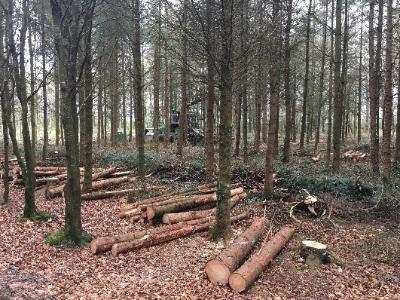
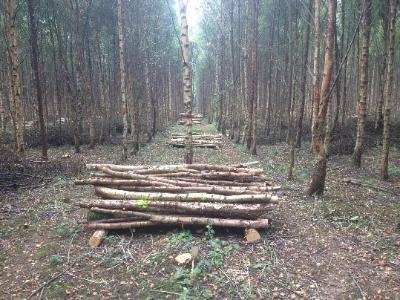
Figures 1 & 2; Harvesting in conifer and broadleaf forests
As well as that, of course, trees produce timber and the demand for timber is increasing. The Food and Agricultural Organisation forecasts that the consumption of primary processed wood will grow 37 percent by 2050. The clear benefit of timber in substituting carbon-intensive products such as steel and concrete in construction is likely to be a further strong driver for increased future demand. With energy supply challenges, firewood has become a valuable product and a direct use of thinnings from woodlands. The replacement of emission-heavy fossil fuels (e.g. coal and oil) by sustainable wood-fuel is a net gain to the environment.
Shelter / animal welfare
Trees on the farm also provide shelter for buildings and livestock. This may become even more important as extreme weather events increase in number. For example, Gregory (2015) and others described the shelter and protection provided by well-placed trees, with the potential to reduce lamb losses by up to 30 percent and increase overall productivity. Trials carried out by McAdam et al of AFBI in Loughgall, Co Armagh showed that the use of silvo-pastoral agroforestry, which combines trees with sheep farming, increases the ability of the soil to sustain grazing through enhanced soil trafficability and water permeability. Trees in pasture also provides extensive flock health and welfare benefits, resulting in better production outputs. This is because the trees protect both the grazing animals and the grassland from the elements; grass grows for longer periods and animals can stay out longer. There may be no significant loss in overall grazing if trees are planted with careful planning and attention.
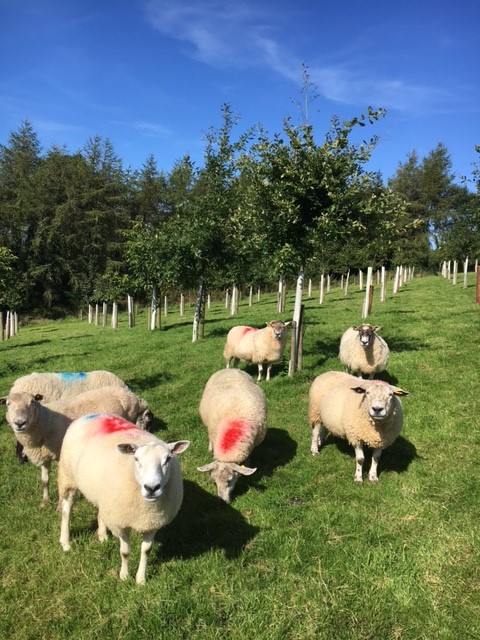
Figure 3: Silvopasture, combining trees and sheep production
Tree leaves also contain a range of minerals that are vital to animal health. For example, willow leaves have high levels of zinc and cobalt, and allowing animal’s access to these forage sources can reduce the need for supplements and licks ( UK Woodland Trust (2019). Have you ever seen the way sick cows or sheep will eat ivy leaves?
Water quality protection and enhancement
Another important service that trees provide is soil protection and enhancement. The canopy and the roots of the trees stabilise the soil and lessen the eroding effects of heavy rain and wind. The presence of trees can increase percolation of water into the soil, and so has a powerful effect on limiting runoff from land. UK Forestry Commission research indicates that creating woodland between the field edge and a river can reduce sediment run-off by 90-100 percent, nutrient losses by 20-80 percent, and reduce pesticide loss in run-off by 60-100 percent. In this way, trees improve water quality in rivers, streams and lakes. This is, of course vital, for the healthy functioning of ecosystems but also vital for human water supplies and for those of us who seek out these places for fishing, boating or just to relax beside clear, clean water.
Forests for recreation and well-being
The importance of the wooded landscape for recreation was very evident during the Covid-19 pandemic when thousands of people used these places to rest and relax from the stresses of lockdown life. There is irrefutable evidence of the effectiveness of regular physical activity in the prevention of several potential chronic diseases. These include cardio-vascular diseases, diabetes, hypertension, obesity and osteoporosis. According to the HSE, being physically active can reduce your chances of developing a chronic disease by up to 50 percent as well as reducing the risk of premature death by 20 to 30 percent. Mental Health Ireland reported findings of an improvement in well-being in its Woodlands for Health Evaluation Report 2020.
As the poet Mary Oliver puts it:
“When I am among the trees,
especially the willows and the honey locust,
equally the beech, the oaks and the pines,
they give off such hints of gladness.
I would almost say that they save me, and daily”.
This connection to the trees is reflected in the many placenames in Ireland that allude to trees or woods, including the enduring allure of fairy trees.
Forest foods and biodiversity
Trees can nourish us in other ways also. There is an interest, probably for the first time in Ireland, in wild food harvesting, and especially mushrooms, from woodlands. This has the potential, given the proper management, to be an additional economic asset. For example, according to De Frutos et al (2016), in Andalusia in Southern Spain, an estimated 9,000 tonnes of wild edible mushrooms, with an approximate value of €43 million are harvested by foragers. Fungi are an important, healthy and tasty food source. But they also provide multiple environmental services to farm and forest especially in terms of soil health and nutrient cycling. Other potential food products from forests are of course nuts and fruits, for example hazel nuts, apples and the reliable blackberry.
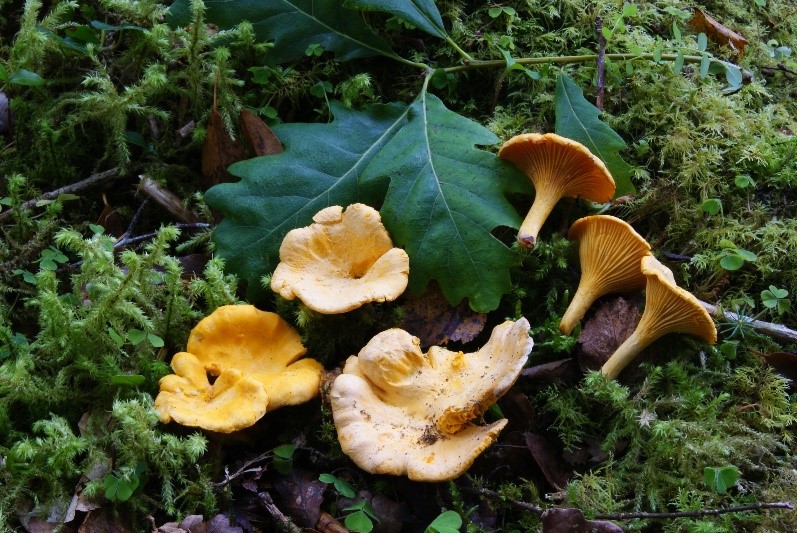
Figure 4: Cantarellus fungi species
Bees naturally live in hollow trees in forests. Hollow trees are not so common nowadays and a specially made log hive is a good alternative and guarantees a healthy, stress free population of pollinator bees in your woodland. Conventional honey-producing hives can also be dispersed through your woods, offering another possible income stream as well as enhancing overall biodiversity.
Another way of enhancing biodiversity in your woodland is by creating small clearings. These open spaces provide vantage points for birds for example and habitat for a range of wild flowers.
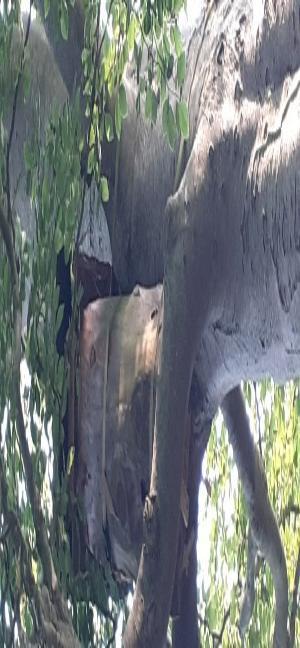
Figure 5: Conservation bee hive in a tree
Carbon sequestration
And of course, carbon sequestration! Trees capture and store carbon very efficiently. Sustainably creating, growing and managing our forests can deliver excellent carbon benefits. As trees grow, they absorb carbon dioxide. On average, one hectare of forest can lock up between 1 and 10 tonnes of CO2 per annum, depending on factors such as species, soil type, growth rate and forest management approach. When trees are sustainably harvested and used to make wood products, the carbon remains stored in the wood for the life of those products. One cubic meter (m3) of processed wood can store up to 900kg of CO2 equivalent. The Shared National Vison puts forestry at the centre of the circular and green economy, with Irish-grown timber the material of choice for the appropriate substitution of carbon-intensive building materials for new Irish homes.
In fact growing trees is recognised as one of the most efficient and helpful measures in terms of climate change. The Climate Action Plan 2021 for Ireland describes afforestation as the single largest land-based climate change mitigation measure available. And managing our existing forests also provides opportunities to increase carbon stores.
A role for trees on the farm?
In the Republic of Ireland, agriculture accounts for 59 percent of the total land area – well above the European average of approximately 40 percent. Of this agricultural land, approximately 80 percent is devoted to grass (silage, hay and pasture). Agricultural enterprises are enhanced by the well-planned planting of trees. The Irish Government forestry policy perceives forests as a symbol of the transformational social, economic and environmental changes needed in this era of climate change.
Rather than forestry and agriculture being separate enterprises, perhaps the near future holds a picture of a mosaic of fields and woodlands that complement one another. A landscape where trees and woodlands are intimately mixed and both systems are seen as complementary, may be an option going forward. They support one another, offer resilience in the face of climate change, financially support farm families and enhance rather than degrade the environment. A food production system that results in any long term degradation of the environment, whether that is through soil erosion, water pollution or biodiversity loss, is by definition, not sustainable.
There are a growing number of examples of farms where production and environmental integrity are no longer competing forces but rather integral facets of the one sustainable land use model (see for example the “Farming for Nature Ambassadors” or Farm Forest Ireland). While there are different views on “forestry”, nearly all farms have room for at least some trees. Whether you call it agriculture, forestry, trees on the farm, organics, permaculture, close to nature farming, agroforestry, regenerative or sustainable, the tendency is towards integration, diversity and balance.
Food production and quality is enhanced by cooperating with nature. Agriculture and forestry can work together to create a sustainable, beautiful and productive environment. Perhaps in the end, it is all about reconnecting the threads and rediscovering that everything is connected and that everything plays a vital (if sometimes not so visible visible) role and that nature is not to be mastered, but worked with. Perhaps we begin to see also that technology will have a role in mitigating the worst aspects of climate change but that really it is more about an attitudinal change, a reconnection with nature and a taking of our place as a complementary cog in a bigger wheel.
Further Information
The Shared National Vision for Trees, Woods, and Forests perceives “a rich variety of diverse, resilient and healthy trees, woods and forests, established for multiple purposes and delivering multiple benefits for the environment, economy and society”. Teagasc Forestry Development Department staff are available to address your forestry research, advisory and training needs. Contact us directly to find out about our latest research and to get answers to all your questions on farm forestry. You can also visit the forestry section on the Teagasc website for easy access to comprehensive information.