
15 November 2024
Lowering Feed Cost: Picking the Low-Hanging ‘FCE’ Fruit
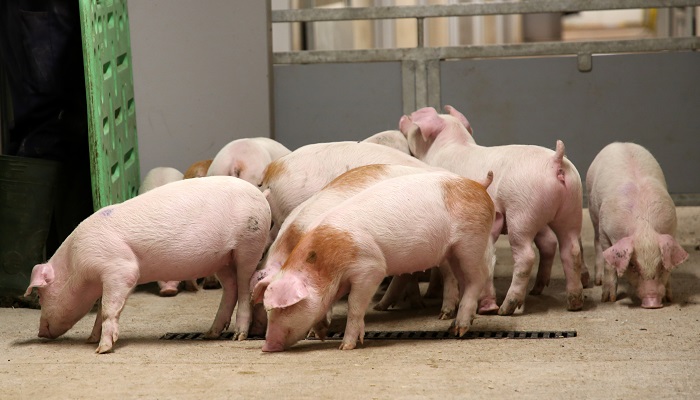
Gerard McCutcheon, Michael McKeon, and Laura Boyle, discussed strategies to enhance feed conversion efficiency to improve cost competitiveness, focusing on health, feed access, and minimizing stress at mixing, at the recent Teagasc Pig Farmers’ Conference.
One of the four pillars of sustainability is financial sustainability and a key component of financial stability is cost competiveness. Pigmeat exports are a key element of the Irish pig sector giving it a strong foundation of cost competiveness and scale. Feed is the largest single cost in pig production (~75%) and therefore has the biggest impact on competiveness. However, a pig farm or country with very good KPI’s may generate very high output but this may not be achieved at the optimum economic efficiency.
A recent Teagasc Pig Feed Cost Competiveness Report highlighted that Ireland, when compared to Denmark, Spain and the Netherlands, had a higher feed cost of between 8 to 13 cent in feed cost per kg of pigmeat produced, when the feed cost per tonne was equalised. Pigmeat is now a global commodity and Ireland exports a high percentage of its output (63%) on the International market. Therefore, an 8 to 13 cent / kg cost differential against our major international competitors places the Irish pig producer/sector at a significant competitive disadvantage. One of the paths to reduce this differential is to improve Feed Conversion Efficiency (FCE) at farm level. However, there are many factors affecting FCE, so which area should you target?
It is important to quantify the potential FCE savings arising from some of the main factors and to rank these by potential impact. Using Teagasc research trial data and commercial on-farm case studies, data was modelled against the average national pig performance output (Teagasc Profit Monitor Report, 2023). The factors were then ranked numerically according to their impact on wean-sale feed conversion (Figure 1).
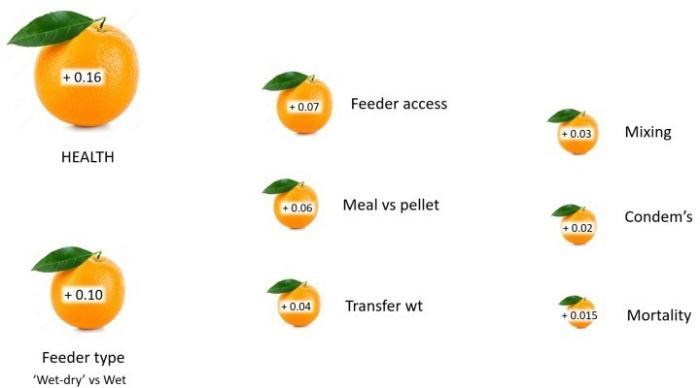
Figure 1. Effect of Selected Factors on Wean-to-Sale FCE
In this modelling ‘Health’ & ‘Feeder type’ are shown to have the largest negative effect / highest ranking, and mortality/condemnations the lowest. However the FCE deterioration for condemnations and mortality, of 0.02 and 0.015 respectively, is based on a per 1% change in the mortality / condemnation rate. Therefore, a spike in the incidence of mortality for a period of time on your pig unit, could move mortality significantly up the rankings to one of the biggest factors that negatively affects the feed efficiency on your unit. In the interest of brevity, this paper will address three factors, which the authors believe are readily obtainable ‘low hanging FCE fruit’ (figure. 2).
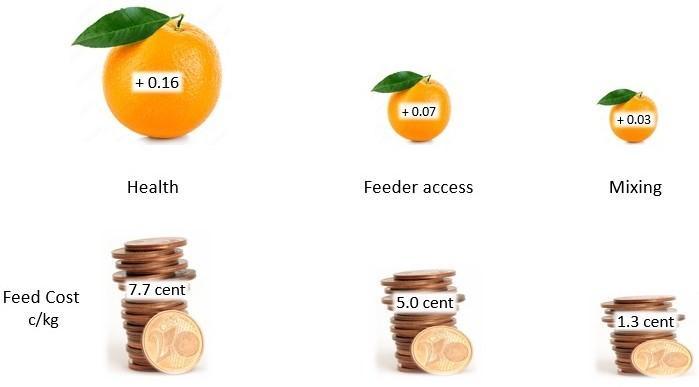
Figure 2. Selected ‘low hanging FCE’ factors.
Herd Health
Of the eight factors listed above, ‘herd health’ had the largest negative effect on FCE. Surveillance and performance data from the Teagasc PathSurvPig research project, indicated a wean-sale FCE deterioration of 0.16, when negative swine influenza herds were compared to positive-vaccinating herds. Herds that were positive and vaccinating for PRRS and Pneumonia (M.Hyo.) also showed a significant deterioration in FCE when compared to negative herds. The scale of the FCE deterioration will depend on the clinical stage/ effects of the disease and the level of control. In general, the FCE deterioration indicates that monitoring and controlling herd health, or ideally having a negative herd, for these three diseases will generate the greatest improvement in feed conversion. Can your herd’s immunity be boosted by better colostrum intake and a flexible/responsive vaccination program? Are all sows given pain relief medication at the end of farrowing to stimulate colostrum let-down, and do piglets get a colostrum suckle within 6 hours of birth? Could your piglets be pre-mixed into their post weaning batches in the 2 weeks prior to weaning, to reduce stress and aggression at weaning?
Vaccination programs play a huge role in controlling these diseases but these programs need to be fine- tuned on a continuous basis as infection levels can rise and fall. Monitoring and controlling the herd health requires slaughter-line checks, PCR blood sampling and blood / saliva rope sampling at regular intervals throughout the year to obtain a continuous herd health profile, rather than just blood testing when a spike/outbreak occurs. Being pro-active rather than reactive helps to identify potential health problems. Active implementation of ‘Bio-Check’ recommendation, especially for internal biosecurity, could also help to control/minimise disease transfer, this includes strict all-in and all-out.
Feed Access
If pigs do not have optimum access to feed then their growth, rates could decrease with a corresponding deterioration in feed efficiency. In recent years, the increase in the prolificacy of the Irish sow herd and higher finisher sale weights has resulted in pigs on some units having sub-optimum access to feed.
A recent case study on a commercial pig unit illustrated this point sub-optimum feed access leading to a deterioration in feed efficiency. The pig unit was an average size herd, with very good feed, housing and management, but a disappointing finisher feed efficiency of 2.81 (figure 3). To pinpoint the issue on this unit pigs were weighed on-trial at the start of the finisher period, at the midpoint and the day prior to sale. In addition, the feed dispensed through the wet feed valves were also recorded during this period. This illustrated that pigs performed well in the grower stage (FCE 2.3) but there was a performance decrease in the latter half of the finisher stage (FCE 3.24). The latter period corresponded with the finisher pigs moving from grower feed to a lower specification finisher feed (figure. 4). The blame was initially attributed to this finisher diet. However, in a subsequent trial when the pigs were kept on the grower diet for the total finisher period, the FCE was still poor in the latter stage.
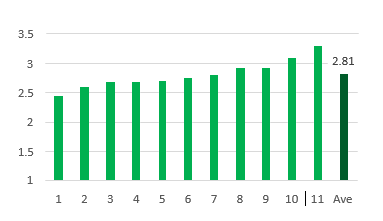
Figure 3. Finisher FCE Over the Total Finisher Period
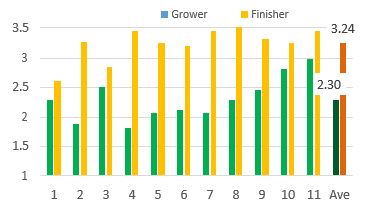
Figure 4. FCE in the grower & finisher period respectively
Further trials confirmed the issue was related to suboptimal feed trough access. A second trial conducted in July reduced the number of pigs per pen by 15% in the finisher stage, leading to improved feed intake and overall finisher FCE, which dropped from 2.6 to 2.45. This change translated to an overall wean-to-sale FCE improvement of 0.07. This case study underscores the importance of accurate data in diagnosing and resolving performance issues, showing that small changes can save over €100,000 annually in feed costs.
Mixing in Finisher / Split Selling
Mixing pens of pigs is generally discouraged due to the fighting that occurs as they establish a new hierarchy or pecking order. However, many people do not realize that reducing or “splitting” a pen of pigs can have similar negative effects, namely, increased fighting, reduced growth rates, and a decline in Feed Conversion Efficiency (FCE). Research from Moorepark (Montoro et al., 2021) has shown that mixing pigs on entry into the finisher stage led to a deterioration in FCE, with reductions of 0.08 and 0.03 for finisher and weaning-sale stages, respectively. If these pigs had been mixed earlier, during the second stage of weaning, the negative impact on FCE would likely have been even greater.
Removing any pig from a pen can disrupt the established pecking order, affecting FCE. This is particularly problematic during transfer to the finisher stage or just before sale.
Transfer to Finisher
In many pig units, weaners are kept in large group sizes, which are then split into smaller pens for the finisher stage. For example, a pen of 60 weaners might be divided into two pens of 30 finishers. Although mixing is not ideal, the adverse effects are more pronounced as pigs get older because they may fight for longer, increasing the risk of injury. Additionally, older pigs have higher daily feed intake, and the stress from mixing can lead to wasted feed. For instance, a pig mixed at weaning may consume 250-280g/day, while a 40kg weaner entering the finisher stage may consume around 2kg/day. If it takes 48 hours for the pen to settle after mixing, the feed wasted could be approximately 4kg per pig for finishers, compared to about 0.5kg at weaning.
Moorepark’s trial highlighted the impact of mixing pigs at the finisher stage.
Effect of mixing on entry into the finisher stage and space allowance on performance.
| Space Allowance (m²/pig) | Mixed | Non-mixed | Mixed | Non-mixed |
|---|---|---|---|---|
| Sale Weight (kg, 21 wk) | 102.1 | 106.4 | 101.7 | 108.2 |
| Average Daily Gain (g) | 983 | 1,034 | 955 | 1,052 |
| Average Daily Feed Intake (g) | 2,150 | 2,222 | 2,125 | 2,257 |
| FCE | 2.18 | 2.12 | 2.19 | 2.11 |
The results indicate that pigs kept with the same pen mates from the weaner stage had better ADG and finisher FCE (2.12 vs 2.18). Interestingly, when mixed pigs had a larger space allowance (0.96m²), the reduction in ADG was only 50g/day, suggesting that if mixing is unavoidable, providing more space per pig can mitigate the negative impact on growth rate. If splitting pens on your unit is necessary, it is better done during the second stage of weaning rather than at the finisher stage, to minimize adverse effects on performance, injury risk, and FCE.
Prior to Sale
Another common practice is to “split” pens before sale by removing the heaviest pigs (referred to as “Tops”) to avoid overweight pigs at sale. However, removing any pig forces the remaining pigs to re-establish the pecking order, which can cost at least one day’s feed intake, about 2.8-3kg per pig. On some units, “Tops” are removed in two separate weeks before sale, resulting in approximately 6kg of wasted feed per remaining pig and an increased risk of injury or tail biting. If “Tops” are removed just one week before sale, the remaining pigs only benefit from increased space allowance and feeder access for about 6 days. In contrast, if “Tops” are removed three weeks before sale, the remaining pigs benefit for about 20 days.
Research by John Deen illustrates this issue well. The trial compared pen performance when some “Tops” were removed at 20 days (d0) and at 10 days (d10) prior to sale.
Effect on Performance from the sale of ‘Tops’
| Pens | Pigs/Pen | Day 0 Removal | Day 10 Removal | Space/Pig (m²) | Total Pen Gain (kg) | Total Pen Feed (kg) | Total Marketed Weight (kg) | Marginal ADG (kg) | Marginal Average Daily Intake (kg) | Marginal Gain
Ratio |
|---|---|---|---|---|---|---|---|---|---|---|
| 1 | 25 | 0 | 0 | 0.67 | 458.1 | 1,320 | 3,128 | 0.92 | 2.64 | 2.88 |
| 2 | 25 | 2 | 0 | 0.72 | 465.8 | 1,261 | 3,139 | 1.01 | 2.74 | 2.71 |
| 3 | 25 | 2 | 2 | 0.8 | 459 | 1,251 | 3,124 | 1.04 | 2.84 | 2.73 |
| 4 | 25 | 2 | 4 | 0.88 | 446 | 1,226 | 3,123 | 1.06 | 2.92 | 2.75 |
| 5 | 25 | 2 | 6 | 0.98 | 442 | 1,168 | 3,123 | 1.11 | 2.92 | 2.64 |
The trial found that the highest overall performance (Total Pen Gain) occurred when “Tops” were removed just once, 20 days before sale. If you are selecting “Tops” on your pig unit, it is best to “do it once and do it right” at three weeks before sale to minimize the negative effects on FCE. Never re-mix the remaining pigs after the “Tops” are removed, i.e., do not amalgamate stragglers from multiple pens.
Conclusion
Many factors affect your FCE and therefore your feed cost and competiveness. To improve your FCE requires assessing the negative FCE factors that are pertinent to your unit, quantifying the potential savings arising from each factor and then selecting which factors are the ‘low hanging FCE fruit’ that you can readily tackle.
Read the full Teagasc Pig Farmers’ Conference 2024 Proceedings