
11 October 2024
Reducing stress at Weaning
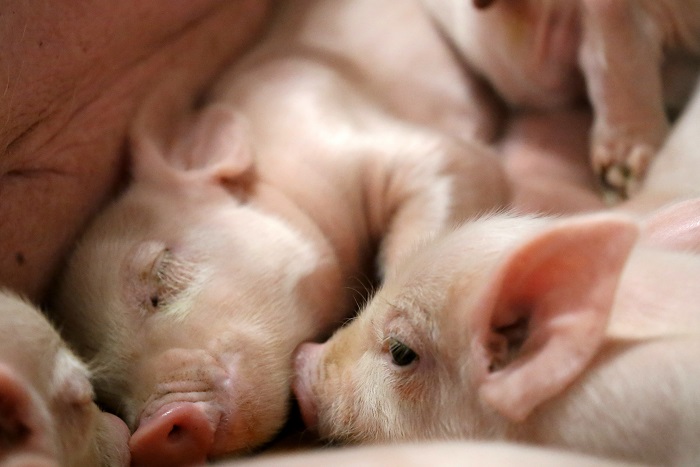
Gerard McCutcheon discusses the challenges and management strategies involved in weaning piglets, emphasizing the benefits of older weaning, reducing stress, and potential future developments to improve piglet growth and well-being.
Pigs at weaning have great potential for growth; however, they are very vulnerable at this time and some of this potential can be lost if conditions are not correct. The impact of incorrect management at the early stage of life may lead to problems post-weaning.
In the wild piglets are mixing with other litters from two weeks of age onwards. They fight very little and spend a lot of time rooting the ground and eating roughage or fibre such as grass, and/or other plants in the area where they live. When they are completely weaned they are well over nine weeks of age.
In our indoor systems we had an average weaning age for piglets of 27 days in 2000 and this figure has now increased to 31 days in 2023 (reference: Teagasc Profit Monitor). The weaning age is an average figure so this means that back in 2000 although the weaning age was reported to be 27 days some piglets were being weaned as young as 21 days on some farms. Now our weaning age has increased to 31 but similarly this still may allow some piglets to be weaned below 28 days. By weaning an older piglet we are giving the piglet a better chance to thrive as their digestive tract is more developed, and, they are more likely to have consumed a greater amount of solid feed in the farrowing room.
Weaning is a huge transition in the life of the piglet. The pig goes through a number of different changes from feed changes, to a new housing environment, and new pen mates. Inevitably some level of fighting occurs as the group “pecking order is established”. This may be overcome somewhat by allowing piglets mix in the farrowing rooms. A small number of farms have started allowing litters mix with other litters in the farrowing rooms. There are a number of advantages to doing this. If you can allow the groups that are to be weaned intermingle (by leaving the sow in her crate but allowing the piglets to mingle in the groups that they are going to be weaned with) – it reduces the level of fighting post weaning and also seems to encourage greater creep intake, as the pigs at weaning are heavier.
Another development that is on the horizon is to farrow sows in rooms and then wean the sows out of the room (at normal weaning time) but leave the piglets in the pens until they are ready to go onto finisher feed. Effectively the farrowing room is now the weaner section also. This is now beginning to happen throughout Europe, with the aim of reducing the stress on the piglets and achieving a better feed performance throughout the pigs’ lifetime. While it sounds far-fetched – it may be worth considering in future developments on farms (especially where farrowing pens are being designed for loose lactation in the future).