
27 June 2024
Farm Fresh Turkeys Biosecurity
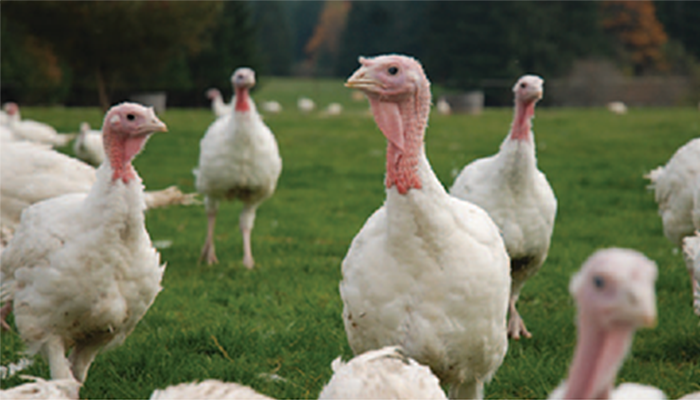
As we approach the time for considering placing Christmas turkeys on farm, it is important to be prepared for these young birds arriving. It is crucial to consider the management and biosecurity around these new stock on your farm. Rebecca Tierney, Poultry Adviser, tells us more.
What is biosecurity and what does it mean for my turkey rearing enterprise?
Biosecurity is a set of preventative measures put in place to reduce the risk of introducing harmful bacteria, viruses or pathogens (external biosecurity); and minimise the spread of already present disease causing agents throughout the farm (internal biosecurity).
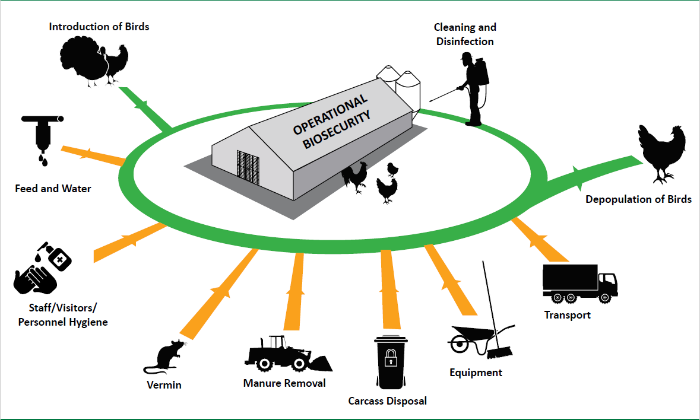
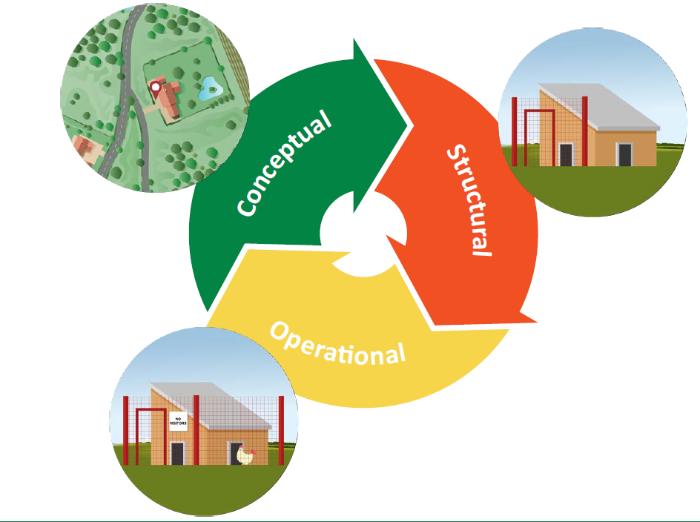
When you think about your own farm and biosecurity there are two key areas to consider – structural and operational biosecurity.
Structural Biosecurity
The structural biosecurity refers to the house itself and the equipment within the house. Before any birds arrive, it is crucial to consider the shed or house where these birds will live for the duration of time on your farm.
- Can this shed be fully cleaned and disinfected?
- Is there sufficient ventilation?
- Is it warm enough? Is there any chance of draughts?
- Is it rodent and vermin proofed?
In some cases, there may be other species of animals present on the farm, and this may include other poultry types. It is important to consider disease cross-over between different species of animals including pets. If there is more than one type of poultry on-site, they must be housed and range separately.
If you intend to raise the turkeys as free range, the land must not be grazed or ranged by any other type of animal or poultry for a minimum of 4 weeks before the turkeys gain access to the range.
Rodent Control
It is really important to control mice and rats on farm. These can carry and spread disease which can impact both animal and human health. This should be carried out prior to cleaning the site. Rodent control is not solely the use of rodenticides, i.e. poisons. A suitable rodent control plan should be in place.
You should begin with preventing access to the house. A poultry house provides 3 key requirements – nesting area, feed and water. Any small access points should be repaired and covered over with a suitable material. This may include under doorways, ventilation points or damage to the building. Ensuring feed is cleaned up if spilled is key to avoid attracting vermin, as well as wild birds; along with avoiding water build up. A clean and tidy farm yard helps by preventing nesting areas. All weeds and vegetation should be cleaned and sprayed to prevent regrowth. The farm yard should be free of debris also, a build-up of rubbish provides a nesting area for these vermin to reproduce, increasing the issue.
Where rodenticides must be used, they must be applied by a licensed individual. An individual can complete a short training course to obtain the skills to do this task, or a rodent control company can be employed.
Wild Birds
Wild birds should not have access to the housed birds. Any access points should be covered with a suitable material such as nettings, plasterboard, etc. to prevent access to the house or storage areas where feed or bedding may be kept.
Using suitable deterrents in free range areas may aid in keeping wild birds from mixing with the turkeys. It is also crucial to avoid pools of water which can provide a drinking source for wild birds. No feeding should take place outdoors.
Operational Biosecurity
The next step is to consider the day-to-day management of the farm and preventing the spread of disease on the farm, to the turkeys, or to other farm animals on site. You will need to begin with a clean turkey site.
Cleaning & Disinfection
The house/shed needs a full cleaning and disinfection prior to birds arriving.
Step 1
You should commence with a dry clean. This is the process of removing all dirt and manure from the house. All litter removed from a previous flock must be removed off site. All the feeders and drinkers need to be removed for cleaning and disinfection also. If there is feed left over from a previous flock, this should be removed also. All dust must be blown down/removed as this can carry bacteria over from an old flock to a new one. Be mindful of cracks, crevices, inlets, pipes, ledges, etc. when removing dust.
Step 2
The next step is to thoroughly wash the house/shed with the aid of a detergent to remove all organic matter before you apply a suitable disinfectant. By using cold water, fat/grease/biofilm will not be broken down and removed, therefore, you will need to use a detergent. A detergent will remove the organic material through its cationic effects.
Pre-soaking the house and then applying the detergent will give best results. You should wash from the top to bottom. This would include all ceilings, ledges, rafters, and all surfaces within the house.
If there is an automated drinker system, the header tank should be drained and cleaned. The water lines and drinkers should also be cleaned using a suitable disinfectant.
At this point it would be important to repair any damage to equipment or the housing structure. Where there may be holes, or cracks where a mouse/rat can access the shed or feed store, those holes should be repaired with a suitable material, metal, cement, etc.
It would be advisable to cover over any side wall inlets with suitable mesh to prevent access via these points.
If feeders or drinkers are damaged, it would be important to repair these if possible. If not, replacement equipment should be purchased to ensure sufficient feeding and drinking space for birds.
Once the shed has been thoroughly hosed down and repairs completed you can move to disinfecting the shed.
Step 3
It is very important to speak to your local Private Veterinary Practitioner (PVP) surrounding the appropriate combination of detergent and disinfectant. When selecting a disinfectant, you should choose a broad spectrum disinfectant with proven efficacy for salmonella control.
Another crucial point to note is that disinfectants will only be effective on clean surfaces, therefore, it is crucial to complete the cleaning and wash down phase of this process. The shed should be allowed to dry fully before applying the disinfectant as excess water will dilute the disinfectant beyond the recommended rate and become ineffective.
It is important to consider the below points when selecting a disinfectant:
- What material is the house constructed from? Is it possibly to fully remove all organic material if it is an older building? Some active ingredients will work better on various building materials over others.
- It is very important to correctly dilute the disinfectant to the correct rate. While, extra disinfectant is not necessarily helpful, too little of the disinfectant could be detrimental.
- Disinfectant needs to be applied to all surfaces within the shed. This includes, walls, ceilings, wooden beams/posts, ledges, drinkers and feeders all need to have disinfectant applied as the bird may will come into contact with these.
It is best to select a broad spectrum disinfectant to cover most potential bacteria. It is vital to the successful application of a disinfectant to dilute the product with clean water. The pressure washer or sprayer being used to apply the disinfectant should be set to a low pressure. The house and equipment should be sprayed adequately. The house should be allowed to dry and closed off to prevent further contamination before the birds are housed.
Step 4
The shed must be allowed to dry out before any bedding material/litter is placed on the floor. The longer the period between flocks the better, as the risk of carry-over between flocks is reduced.
Step 5
It would also be worth considering using an insecticide. This can help eliminate flies, beetles or other insects which could transfer Salmonella or other diseases.
Once a full cleaning and disinfection has been completed, the house should not be entered without considering your biosecurity plan.
Feed
For smaller enterprises it is likely feed will be purchased in bags. These bags are not capable of being resealed. Therefore, they are an easy feed source for vermin or birds. You should consider purchasing a bin which is sealed and vermin proof. Examples can be seen in Figure 1, there are two different sizes which can suit different size production systems. If feed is spilt, it must be cleaned up immediately. Feed should not be given outdoors.
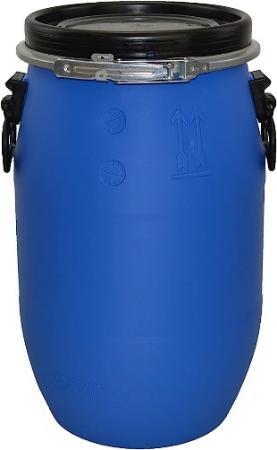
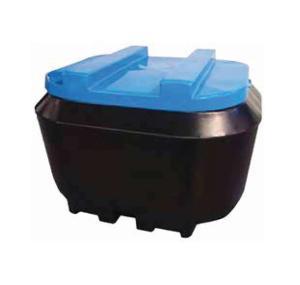
Examples of sealable meal bins
Water
Water is a crucial nutrient for all birds. The water supplied to birds must be clean and potable. It is advisable to have the water tested, whether from a mains source or bore well. Rainwater is not a suitable source of drinking water for your birds. The birds should not be given access to water outdoors. If there are any pools/puddles of water outside on the range, these should be filled in. Stagnant water can be a source of bacteria and a drinking source for wild birds/vermin.
Equipment
It is important to avoid sharing equipment between houses, where there is more than one house. Also, it should be avoided between enterprises, i.e. cattle to poultry, sheep to poultry, etc. If equipment is to be shared between houses, it must be thoroughly disinfected before and after each use.
Entering the House
Foot Dips
A foot dip should be available for use at the entrance to the bird house. The container itself must be capable of being cleaned thoroughly. This should be kept covered to avoid dilution with rain water. It must be kept clean and replenished as often as is required. At a minimum, it must be changed once a week. Where the foot dip contains organic matter or debris, the disinfectant becomes neutralised. It would be advisable to clean the organic matter off the boots prior to using the foot dip.
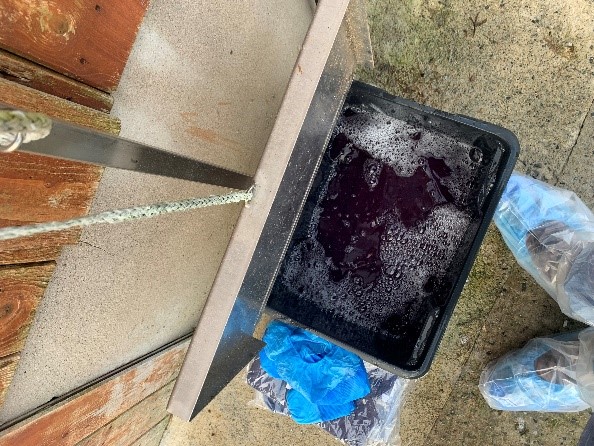
Simple foot dip at entrance to bird house
Clothing & PPE
It is important to have house specific clothing and footwear. This may be a pair of wellies or boots designated for this house or the use of disposal boot covers. A pair of coveralls or disposable coveralls should also be worn. This Personal Protective Equipment (PPE) is to prevent disease being carried from outside the house into the birds or out of the house to other enterprises.
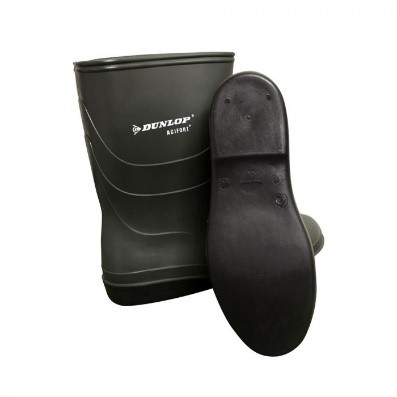
Biosecure boots
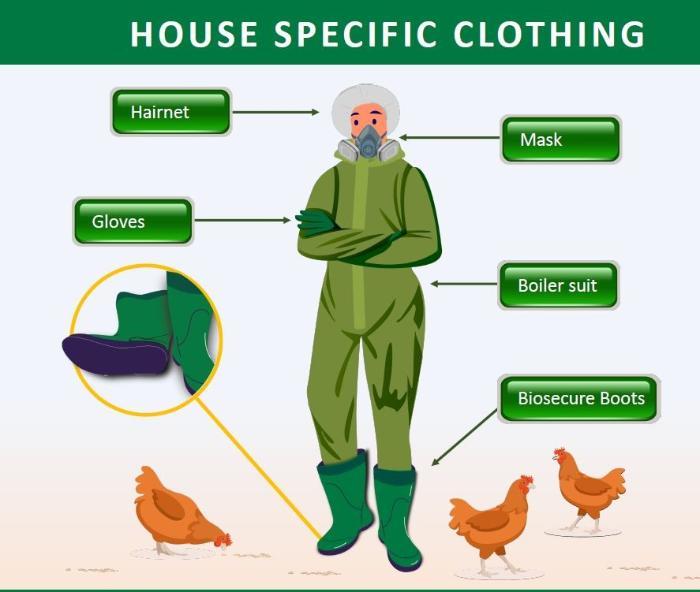
House specific PPE
Hand Washing
If hand washing facilities are not available upon entry to the house, disposable gloves should be worn when entering the house. A hand sanitizer should also be used on entry and exit of the house.
Visitors
It is advisable to limit the number of people entering the house. If a visitor must come to the site and into the bird house, they must be provided with disposable PPE and use the foot dips provided. It is also advisable to record details of the visitors who enter the house or range area.
It is also important that any vehicle which comes on site is disinfected before entry.
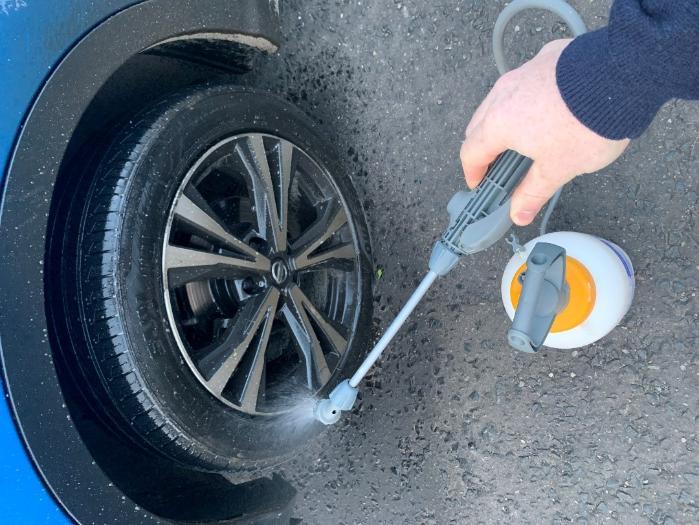
Disinfecting vehicle wheels upon entry
Step Over Barrier
A step over barrier creates a designated point to change the footwear and clothing before entering the house. This will create a clean and dirty zone. The clean zone is the area where the birds are housed and range. The dirty zone is the lobby area and outside of the house.
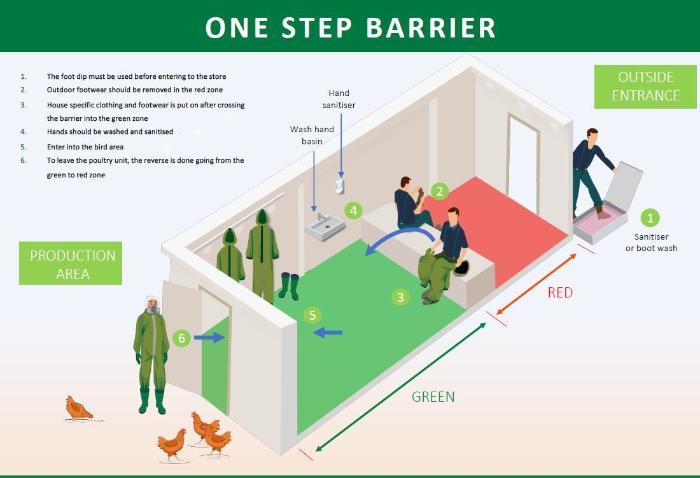
One Step-over Barrier How to Guide
Range Management
If the birds will be free range, it is crucial that the land is left idle for a minimum of 4 weeks prior to the turkeys gaining access to this. The land must also be fenced to prevent any other livestock or poultry mixing with the turkeys. This fence will also aid in deterring predators coming in contact with the birds.
The range should be kept in good condition, where grass becomes over long it should be topped to prevent cover for predators.
Any potholes created by the birds must be filled in to stop pools/puddles of stagnant water which is a drinking source for wild birds, vermin or predators.
Bedding
If additional bedding is being stored on the farm, it should be stored in a sealed shed where wild birds or vermin cannot access.
Dead Birds
Dead birds are highly likely in this enterprise, therefore dead bird management is key. These should be stored in a locked bin, or inside a locked shed to prevent access to vermin or pets. This bin should be marked with a Category 2 Waste sticker.
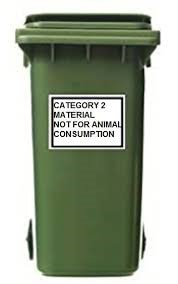
Fallen bird bin with category 2
For more information on this topic, contact our poultry adviser
Rebecca Tierney | 087 101 7815 | rebecca.tierney@teagasc.ie