
04 February 2023
Good work organisation can reduce farm work hours
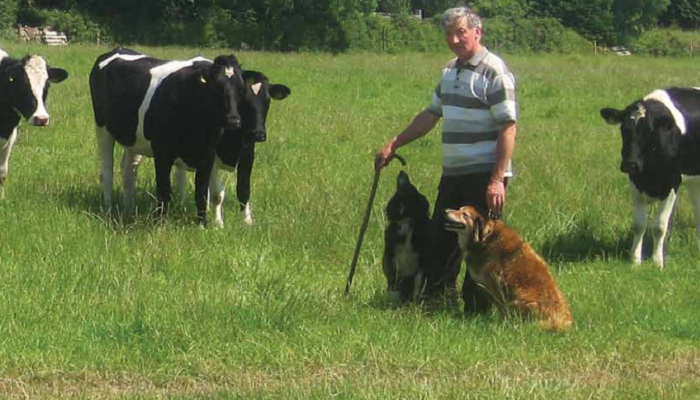
Bernadette O’Brien, Conor Hogan and Marion Beecher discuss how good work organisation can reduce farm work hours
A declining workforce combined with recent expansion has exasperated work demands on pasture-based dairy farms, and this is compounded by the intense spring/ summer workload coinciding with calving and breeding. There is a growing appreciation of the resulting issues that can arise, e.g. stress, mental health issues and difficulties for farmers in maintaining an adequate quality of life. This in turn can detract young people from considering a career in farming, leading to further issues. These challenges need to be addressed, while ensuring that dairy farms are also profitable and environmentally sustainable.
Work organisation is well recognised as a key element underpinning any business, with important consequences for productivity, innovation, working conditions and worker well-being. Thus, it was considered that a focus on work organisation on-farm could assist in mitigating against the negative consequences of the relatively large workload during the spring/ summer period. A sample of 55 spring-calving dairy farms with labour input data available were examined in this study. Studying work organisation in other industries and within agriculture allowed us to identify three key characteristics or measures of work organisation, i.e. efficiency and productivity, flexibility and standardisation. It can be a challenge to manage time on farms when a range of tasks need to be carried out, often in a non-structured manner (except for routine tasks, such as milking). Flexibility is important in terms of achieving a balance between work and personal life which is challenging on farms due to the repetitive nature of tasks such as milking and calf care; the consequent effects of which mean farmers often work 7 days per week. Standardisation refers to the sequence and structure of tasks to ensure high standards of work quality. When each of these measures was interpreted within the context of the on-farm labour study, efficiency and productivity was associated with farm hours worked per cow and farmer hours worked per day; flexibility was described by the length of the farmers’ working day and the number of days off for the farmer between the start of calving and end of breeding; and standardisation was expressed as the number of different tasks completed by the farmer per day and the finish time of the farmer.
All 55 farms were ranked for work organisation effectiveness. The top and bottom 25% had:
- Average herd size of 112 and 113
- labour efficiencies of 17.4 and 20.9 h/cow labour input from February to June;
- farmer hours worked/week of 51.2 and 70;
- total length of working day of farmer 4 and 13.2 hours;
- time off for the farmer between the start of calving and end of breeding of 2 and 1 days;
- number of tasks completed by the farmer/ day of 9.6 and 12.5; and
- farmer finish time of 18:25 and 19:58, respectively.
Thus, the higher ranking farms for work organisation effectiveness all showed positive labour indices, e.g. higher labour efficiency, lower labour input, shorter work days and earlier finishing times.
Some of the savings in hours worked is likely due to those farms having labour-saving facilities, technologies and work practices as well as effective work organisation. The data generated allowed us to identify patterns of good organisation which we can describe as ‘the ideal working day’. ‘The ideal working day’ was characterised by:
- Later start and earlier finish times (than the average farm)
- Having more free evening time through earlier and fixed finish times
- Fewer different tasks completed during the day
- Longer non-farm activity time during the working day
Improvements in work organisation can have positive outcomes for job satisfaction and optimise business performance, particularly through improved labour productivity and efficiency which was observed here. A small sample of farms had profitability data available, and among these farms, the best or most effective for work organisation had higher profitability than the least effective farms. Finally, this study allowed us to detail patterns of work organisation and identify work organisation strategies effective in improving work life balance on the farm.