
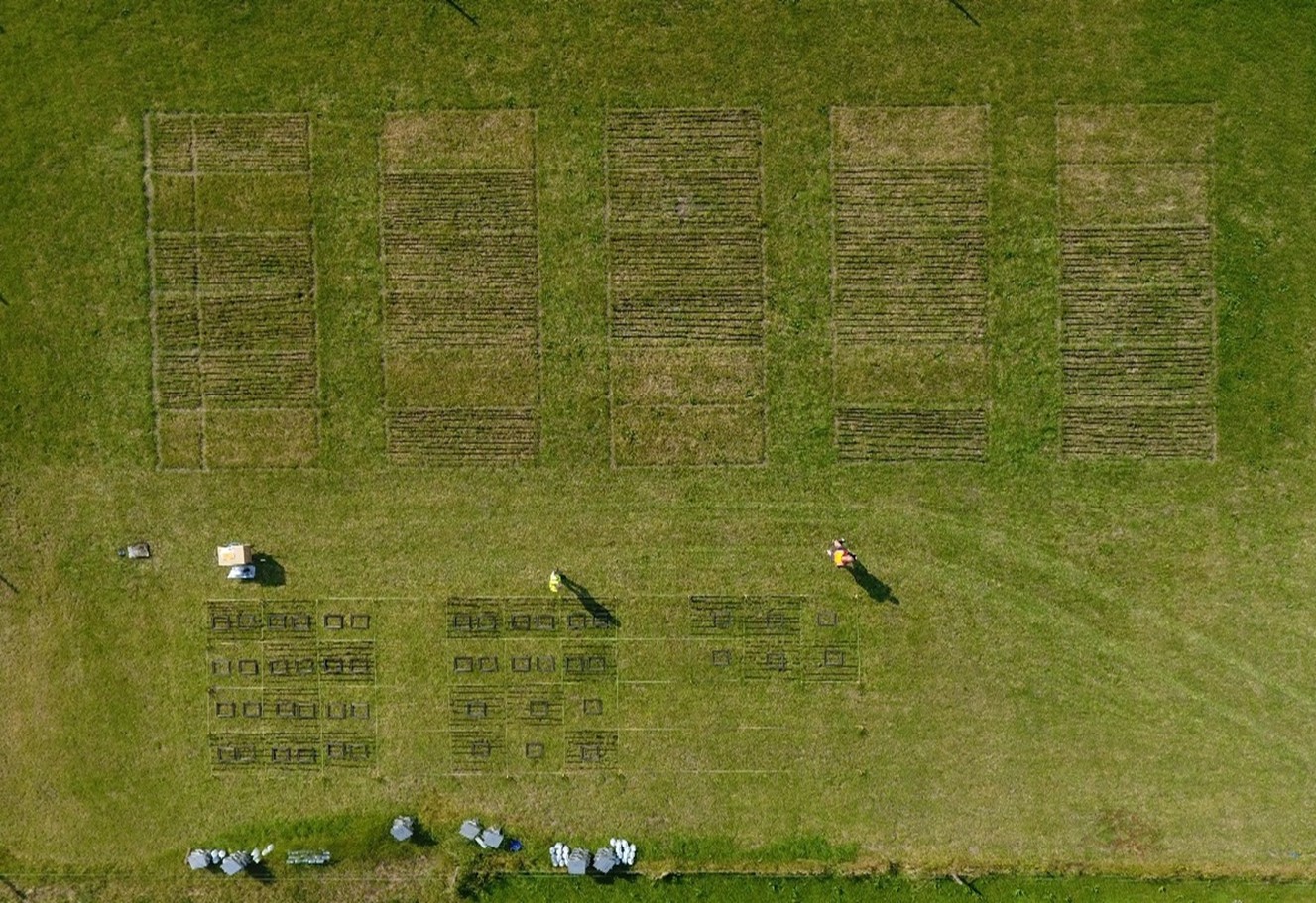
Ammonia (NH3) is an atmospheric pollutant that also contributes to loss of biodiversity, public heath issues and indirect greenhouse gas emissions. A recent workshop hosted by Teagasc presented the latest research and policy directives relating to ammonia emissions from Irish agriculture.
The workshop was the culmination of a four-year project, Triple A, led by Teagasc researcher, Dominika Krol.
The Policy Perspective
99% of ammonia emissions in Ireland come from agriculture, with 90 % from animal manure. This includes emissions from manure management (in housing and storage), slurry applied to soil, emissions from dung and urine deposited at pasture by grazing animals and emissions from application of synthetic fertilisers. The reduction in ammonia emissions is directed by the National Emission Reduction Commitments (NEC) Directive. In 2023, ammonia emissions decreased by 4 %, bringing it within compliance of the directive. However, with stricter limits coming into effect in 2030, continued uptake of measures such as Low Emissions Slurry Spreading (LESS), reduction in nitrogen fertiliser and use of low emission fertilisers is needed.
What does the research show?
A significant amount of research has been dedicated to calculating the emission factors of ammonia from cattle production under Irish conditions. As part of Triple A, a review of previous research in Ireland was performed to assess the effectiveness of various measures that could reduce ammonia emissions. Ammonia emissions vary by housing, manure management, diet, and climatic conditions. Among the measures that reduce the emission factors of ammonia were the inclusion of urease inhibitors with urea fertilisation on grassland, immediate cleaning of concrete yards and slurry amendments such as acidification. Emissions from urine and dung patches during grazing were also lower than emissions from animal housing, therefore extended grazing can reduce emissions. LESS reduced emissions although not to the same extent as in other countries, most likely due to milder weather. Other ways to reduce spreading emissions were to spread slurry in evening times, diluting slurry or separating liquid and solid fractions and spreading of the liquid fraction. Follow up research is focused on providing more up-to-date information on the specific efficacy of various LESS methods. This work is still on-going.
Another experiment assessed various slurry additives at meso-scale (20L) and pilot-scale (660L) for their effect on emissions in storage and spreading. Additives such as acidifiers showed potential to curb emissions significantly – up to 75% for ammonia and 30% for methane – while also maintaining manure nutrient value and increasing grass yield. The study highlighted that acidification has promise in reducing ammonia emissions. However, there are barriers to adoption, such as the large volume needed and cost.
Complementing the environmental focus, the project highlighted the public health consequences of agricultural ammonia emissions. Ammonia reacts in the atmosphere to form fine particulate matter (PM₂. ₅), which is linked to respiratory and cardiovascular diseases. There is a disproportionate health burden on rural communities, however this type of air pollution can travel long distances and affect people’s heath far from its source. There is a need for integrated policies that align agricultural practices with air quality standards.
What’s Next?
Many of the measures mentioned above are already in the Teagasc Marginal Abatement Cost Curve (MACC). Adoption of certain measures from the MACC can not only aid in reducing agriculture’s greenhouse gas (GHG) emissions but also ensure Ireland stays compliant with the NEC directive. Future research will focus on investigating the trade-offs between ammonia and GHG mitigation measures, refining and validating emission factors in large scale studies and investigating novel strategies in manure management such as precision application and digital tools.
Acknowledgements
The Triple A project was funded by the Department of Agriculture, Food and the Marine (DAFM) and the Department of Agriculture, Environment and Rural Affairs (DEARA) of Northern Ireland. This research was conducted as part of the Teagasc Climate Centre.
Publications
- Owusu-Twum, M.Y., Kelleghan, D., Gleasure, G., Forrestal, P., Lanigan, G.J., Richards, K.G. and Krol, D.J., 2023. Ammonia emission factors from cattle production systems in Ireland–a review. Irish Journal of Agricultural and Food Research, 62(1), pp.75-95.
- Owusu-Twum, M.Y., Kelleghan, D., Gleasure, G., Connolly, S., Forrestal, P., Lanigan, G.J., Richards, K.G. and Krol, D.J., 2025. Mitigation of ammonia and methane emissions with manure amendments during storage of cattle slurry. Waste Management & Research, 43(4), pp.568-579.
- Wyer, K.E., Kelleghan, D.B., Blanes-Vidal, V., Schauberger, G. and Curran, T.P., 2022. Ammonia emissions from agriculture and their contribution to fine particulate matter: A review of implications for human health. Journal of Environmental Management, 323, p.116285.