
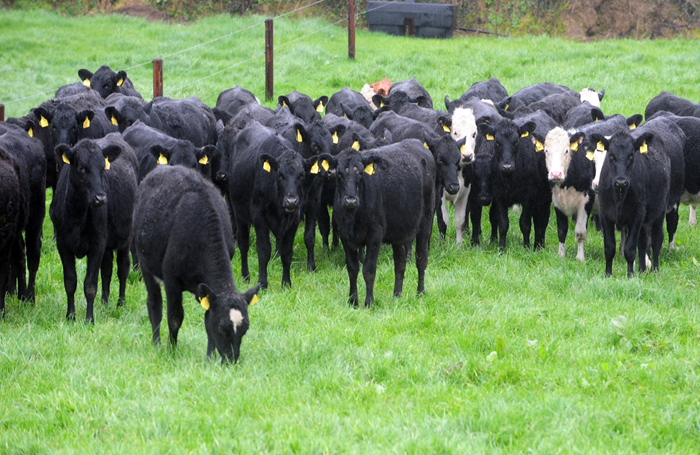
As we head into the second half of the year, DairyBeef 500 Advisor, Gordon Peppard reminds us of the importance of monitoring dairy beef heifer performance in order to optimise performance and achieve desired finishing weights.
Setting appropriate mid-summer weight targets for dairy beef heifers helps farmers monitor progress, plan a feeding system to ensure heifers meet carcass specifications in terms of carcass weight, carcass fat and conformation at finish, and ultimately improve profitability on their farm.
So, what are the target weights for my dairy beef heifers?
Table 1: Target weights for a March 1st born heifer calf
| 1st March born heifer calf – birth weight of 40kg | ||
| 1st May | 80kgs | 8 weeks |
| 1st June | 100kgs | 12 weeks |
| 15th October | 200kgs | Pre housing |
| 1st March | 300kgs | Turnout |
| 1st July | 400kgs | Mid summer |
| 1st September | 450kgs | Start of finishing |
| 1st November | 510kgs | Finish |
Above are the target guideline weights of where a 1st of March born dairy beef heifer (typically Angus and Hereford type stock) should be, at different stages during their lifetime.
What then are the key requirements to ensure heifers are meeting their target weights at each stage?
1). Importance of having weight targets
Weight targets serve as a benchmark to assess whether animals are growing at the expected rate. This helps farmers identify any nutritional or health issues early, allowing for timely interventions. By tracking weights, farmers can adjust their grazing management, health plan or add supplementation if necessary to keep animals on track toward finishing goals.
Maintaining good growth rates during mid-summer is particularly important. This period often represents the peak grazing season, when pasture quality and availability should support good weight gains. Failure to hit target weights by mid-summer can lead to longer finishing times and increased production costs.
2). Expected growth rates
During their second grazing season, dairy beef heifers should typically achieve a live weight gain of greater than 0.9kgs per day. By 1st July, these February / early March born animals should ideally have reached around 80% of their target finishing weight and should be around 400kgs. Supported by high-quality pasture and reflecting healthy growth, this target is critical for achieving finishing weights of >500kgs at 20 months of age.
3). Grass quality and management
Pasture quality and availability during mid-summer play a pivotal role in meeting these target weights. High-quality, leafy grass, high in energy is essential to sustain daily weight gains of over 1kg. Farmers should monitor pasture covers and maintain high quality grass ahead of animals at all times. Entering covers of 1400/1500 kgs dry matter per hectare is ideal. Ensure heifers are not in the one grazing paddock for more than three days, so adjust stocking rate or paddock size to achieve this.
4). Monitoring weights
Regular weighing is crucial to accurately track growth and compare it against targets. Weighing animals every 4 to 6 weeks allows for early detection of underperformance. It also helps farmers make informed decisions regarding feeding strategies and animal management.
Weight records are an excellent way to improve efficiencies on farm. Animals can be batched according to weight and fed accordingly. Groups can then be targeted for further time grazing grass without concentrate supplementation or targeted for intensive feeding for finishing.
5). Animal Health
Good animal health management directly influences growth rates. Parasite control, vaccination and disease prevention measures should be maintained throughout the grazing season to ensure animals convert grazed grass into weight efficiently. Sick animals or animals with parasite burdens can significantly reduce feed intake and growth.
Additionally, managing and minimizing stress on the heifers improves welfare and supports uniform growth. Providing clean water, shelter from extreme weather conditions and reducing competition at feeding troughs contribute to better overall performance.
6). Planning for the finishing phase
Mid-summer weights provide a critical check for planning the finishing phase, informed decisions can be made as to whether animals will be finished at grass with/without supplementation or finished on silage and concentrates indoors. If animals fall short of mid-summer targets, farmers may need to extend the finishing period or increase feeding inputs to reach target slaughter weight on time.
For more tips and advice on dairy beef finishing systems, visit the DairyBeef 500 webpage here.