
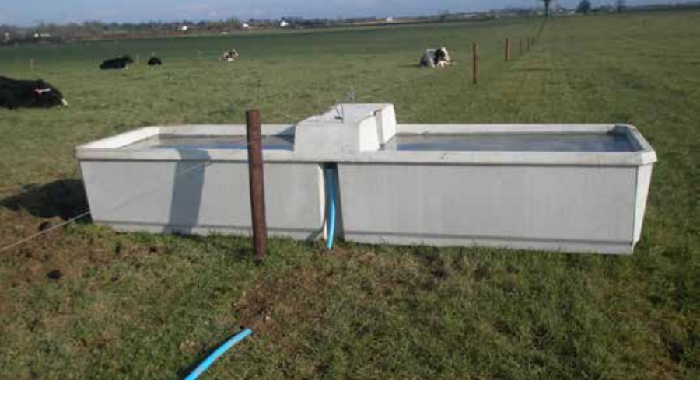
Hot and dry grazing conditions are causing dairy cows to drink more water. This increased demand may strain water systems, especially where trough capacity or reserves are limited.
Under normal Irish conditions, typical intakes of around 60-80 litres of water per day when cows are at grass are witnessed. However, when weather conditions are dry in summer, the dry matter content of the grass starts to increase from the more typical 16-18% to over 20%. As presented in this week’s Grass10 newsletter, dry matter percentages of 25% were recorded in Moorepark, 16% in Grange, 18% in Ballyhaise, 18% in Athenry and 22% in Oak Park on Tuesday of this week.
The combination of higher temperatures and increased grass dry matter can result in a rise of water intake, that can exceed 100 litres per cow per day, thus resulting in pressure on water systems where trough reserve or size or flow rates are sub-optimal.
Recommendations for water
As part of the Moorepark Open Day on July 2, Tom Fallon and Paul Maher encouraged farmers to ask themselves the following questions when assessing their current water supply to paddocks:
- Are pipe sizes adequate?
- Are ballcocks restricting flow?
- Are water troughs big enough and correctly located?
- What water flow rate is needed for your herd?
Some the of the recommendations they provided included:
- A flow rate of 0.2 litres per cow per minute and a trough volume of about 5-7 litres per cow is generally recommended. For example, a flow rate of 20 litres per minute and approx. 600 litre (160 gallons) troughs per 100 cows.
- Don’t be tempted to solve water supply problems with very big troughs; focus on flow rates and larger pipe sizes instead.
- Aim to minimise pressure loss due to friction in water pipes so that enough pressure is available to overcome elevation changes and maintain a good flow rate in troughs.
- Err on the high side with pipe size bore. A ring main (loop system) is a cost-effective way to enhance water flow rates and ensure an even flow rate to troughs.
- Main pipe size bores should typically be 25 mm, 32 mm or 40 mm and branch pipe bores to individual troughs should be 20 mm, 25 mm or 32 mm.
- Use “full flow” type ballcocks in all new troughs. These ballcocks typically have 9-12 mm jets, providing a good flow rate even with low pressures at the ballcock. A standard high pressure ballcock jet (3 mm diameter) is very restrictive even where pressure at the ballcock is high.
- Troughs should be level and have no leaks. Isolate, monitor, locate and repair leaks.
- Allow trough space for at least 10% of the herd to drink at once.
For more recommendations on grazing infrastructure, visit here.