
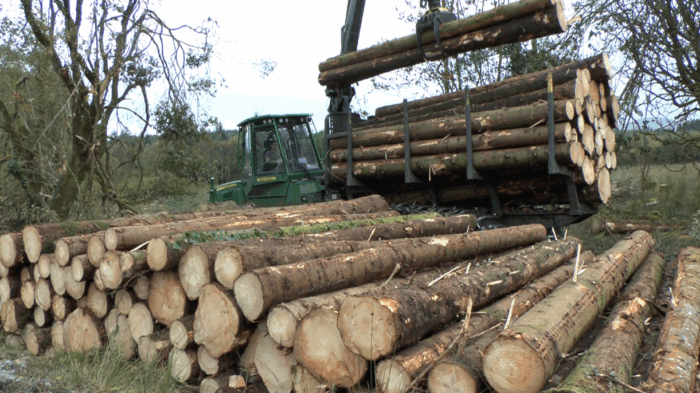
With harvesting of timber affected by previous storms ongoing, it is in every forest owner’s interest to be in control of timber harvesting and sales processes.
Teagasc forestry advisors are available to provide objective guidance and support to forest owners. In this third article in a series of eight, Teagasc forestry advisors highlight the importance payment schedules for timber sales.
Coniferous forests, particularly those consisting of species like spruce, are a key resource for timber production in Ireland. The efficient management of timber harvesting operations, particularly payment schedules, is critical for ensuring fair transactions and smooth operations and merit careful consideration.
How timber is sold
In the private forest sector, timber is typically sold by weight. Options will be covered in a follow on article. The three main ways of selling timber are:
- Standing sales – this is selling timber as it stands in the forest at an agreed price (e.g. per tonne) in advance of harvesting. The buyer is responsible for harvesting, extraction and transport to the market.
- Roadside sales – this selling timber at an agreed price per tonne to the buyer on the forest road. The seller pays the harvesting contractor. The buyer covers the haulage.
- Mill gate sales – in this case the buyer pays for the timber delivered to their yard or sawmill at an agreed price per tonne. The seller arranges and pays for the harvesting and haulage cost.
It is very important, when selling by weight (tonnes), that the timber is removed from the forest within an agreed timeframe. Harvested timber that is not collected promptly from the forest or roadside stacks will lose weight and this will reduce your payment.
In general, timber payments are made after the timber is harvested and delivered to the mill or storage site, though some agreements may include initial payments made ahead of harvesting. The final payment is typically made upon delivery and inspection of the timber, which could take several weeks to months. Payment periods vary from 30 to 90 days from the final delivery, depending on the buyer and terms of the sale. Forest owners are recommended to seek timely advice and guidance.
Best practice for managing payment schedules
The importance of having clear, written agreements is paramount. Landowners and timber buyers should outline payment schedules, deadlines, and any contingencies in the contract to avoid misunderstandings or disputes. To ensure timely payments, timber owners should negotiate and agree penalties for delays in the contract.
For timber owners, understanding the timing of payments is crucial for managing cash flow, particularly for long-term operations. Planning for any delays in payments and structuring the harvest around these expectations can help mitigate financial challenges.
Factors influencing payment schedules
- Timber quality and volume: The quality and quantity of timber harvested will influence the payment structure. Higher-quality timber might secure more favourable payment terms.
- Contractual agreements: The specifics of the payment schedule depends on the terms of the sales contract. Negotiations will cover issues such as payment amounts, timing, and conditions. Advance payments may be agreed upon for large volumes or in cases where the timber owner is financing the harvest operation.
- Market conditions: Timber prices fluctuate based on market demand, which affects payment schedules. When demand is high, buyers may be willing to pay more upfront or offer faster payments. Conversely, in times of market uncertainty, payments may be delayed, or terms may be less favourable.
- Harvesting and logistics: Payments are often tied to logistical stages. Delays in harvest logistics can influence when payments are made.
- Financial Considerations: Payments and schedules are also influenced by adherence to sustainability guidelines and forest certification standards. Timber sales can also have tax implications for landowners, and payment structures must comply with taxation laws and regulations. Financial advice is often sought by landowners to ensure that proceeds from timber sales are managed properly and in the context of total earnings of the forest owner.
In summary
Payment schedules for timber harvesting and sales in Ireland depend on various factors, including timber quality, market conditions, and contractual agreements. While lump-sum payments are common, progressive payments offer flexibility, depending on the harvest and delivery logistics. Timber harvesting and sales in Ireland offer significant financial returns but require careful planning to ensure that payment schedules are fair and manageable.
Understanding the market and securing sound contracts are key to maximizing profitability in the timber industry. By aligning with industry best practices and market trends, timber owners in Ireland can help ensure sustainable and profitable forestry operations.
Teagasc provide independent and objective advice on all forestry issues. For further information, contact your local Teagasc forestry staff and visit the forestry section of the Teagasc website.
Other articles in the series include: