
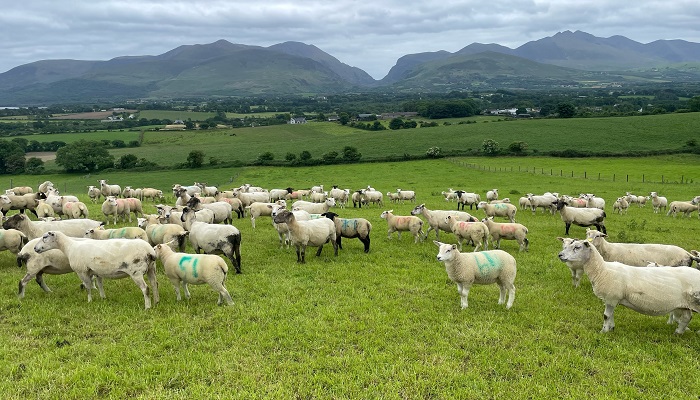
Michael Gottstein, Head of Sheep Knowledge Transfer, Teagasc gives practical advice on managing lamb drafting and sales. He outlines strategies like prioritising grass quality, sorting lambs by weight, targeted concentrate feeding, and staying on top of flock health.
What a difference a year makes. Compared to 2023 and 2024 this year has been much better in terms of giving lambs a good start in life. On many farms lambs are more forward than in the previous two years and lamb price is also ahead of previous years. So what are the most cost-effective options for getting lambs off farm.
A reasonably positive grass growth year has resulted in most farms having adequate grass for most of the grazing season to date. Grass quantity is however only one part of the story. What about grass quality. Quality grass is what lambs need and at this time of year (post weaning) farmers should allocated the best quality grass to lambs and use other categories of stock to graze out the fields/paddocks.
Planning Lamb Drafting and Sales on Your Farm
Depending on stocking rate, current grass growth and the overall farm cover (Days of grass ahead), it is a good idea to have a plan in place for drafting lambs. In years when lamb growth is slower or not as good as usual, the biggest challenge is getting lambs off the farm without leaving your ewes short of grass. Feeding lambs on grass that the ewe flock will require doesn’t make sense, it’s robbing Peter to pay Paul.
Sorting Lambs by Weight Categories
Weigh your lambs regularly and figure out how many fit into the different weight categories:
- Under 25kg: These are very light lambs that won’t be ready to finish this year. Feeding these lambs lots of concentrates probably won’t pay off. The best bet is to let them grow on grass or forage until they reach 35kg. Once they get to that weight, you can start them on concentrates and finish them economically.
- 25 – 30kg: These lambs are still on the light side and need time to grow before going onto a concentrate-based finishing diet. Depending on grass supply this could be a group of lambs that could be sold as store lambs on heavily stocked farms that are under pressure for grass.
- 30 – 35kg: These are your faster-growing, better-performing lambs. Ideally, you want to have drafted the last of these by the end of October. As lambs in this group hit over 35kg, you can move them onto the finishing group.
- 35kg and over: This is your finishing group, your fastest growers. With good grass, good flock health, and some concentrate feed, these lambs should put on weight quickly, gaining around 1.5 to 2kg a week. The best rate of concentrate feeding here is between 500 and 750 grams a day, depending on the quality and availability of grass.
By targeting concentrates only to the finishing lambs, you save on feed costs compared to feeding all lambs. As lighter lambs grow and reach 35kg they can then be moved into the finishing group resulting in a steady flow of lambs ready to draft.
Keep an Eye on Health
Don’t forget that health issues like lameness, parasites, and mineral deficiencies, especially cobalt, can seriously hold lamb performance back. There’s no point in feeding expensive concentrates to lambs that are lame, full of worms, or short on minerals. Keeping on top of these problems will help your lambs perform their best.