
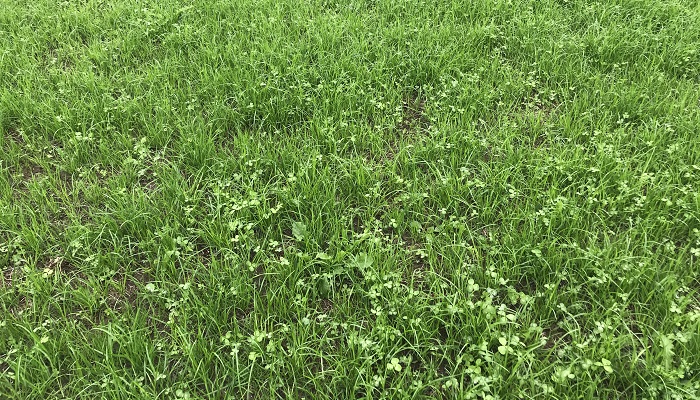
The main advantage of reseeding grassland is that it increases both the quantity and quality of grass grown. Michael Donoghue, B&T Dairy Advisor, Teagasc Galway/Clare, outlines the key steps to ensure a successful reseed.
Estimates vary but new reseeds should grow in the region of 20-40% more grass and importantly, a lot of this extra growth will occur in the spring and autumn. Increased animal performance, improved responsiveness to nitrogen and a great opportunity to establish clover are all additional benefits of reseeding. However, at roughly €400/acre it represents a significant investment, while also been without the field for between 5-8 weeks. Thus, the importance of a successful reseed is vital.
Drainage
Before spending money on reseeding any drainage issues must be addressed first. Drains should be cleaned and if shores are required, they should be installed. Ploughing can help with drainage and levelling badly damaged fields but be aware the “good soil” with the high fertility is been buried and this make take some years to be built back up again.
Grass Varieties
Use the Pasture Profit Index, PPI, to select suitable grass/clover varieties. These varieties have been tested under Irish conditions for important traits to Irish farmers, like spring/ autumn growth, herbage quality & grazing utilisation. In short if the variety is not on the PPI list it should not be used. Take some time to select varieties that are best suited to what you want the new sward to do, grazing, silage or a mix.
Timing
In general, the rule is, the earlier in the growing season reseeding is done the better. The reason for this is that post seeding management, grazing off the sward and post spraying, can be difficult once we get into later into the year. Also, successful clover establishment is a lot easier with April or May reseeding.
Spraying
A young grass/clover plant is not very strong and will struggle badly with competition from weeds. Thus, it is essential to spray off the old sward. Any of the glyphosate products are effective but rates need to be carefully checked as they can differ a lot. Most of the products need 7+ days to fully absorb the chemical. After the plant is dead the sward can be cut for silage or grazed.
Fertility
Ensuring adequate Phosphorus (P), Potassium (K) and Lime is essential for successful reseeding. The most accurate way to judge a soils requirement for these is to do a soil test, but this can take 3 weeks to get results back, so plan in advance.
If the soil is not being ploughed and a min-till method is been used, i.e. discing or power harrowing, lime will need to be applied, 2t/ac, to counter act the acid that will be produced as the old sward decays.
As a general rule of thumb 3 bags of 10:10:20 per acre are required for reseeding but this will depend on the soil test results and if a farm is allowed to buy in Phosphorus. FYM or slurry can both be used to reduce or replace bag fertiliser.
Fine and Firm Seedbed
There is sometimes a lot of debate about ploughing or using min-till. The decision will depend on a number of factors including cost, stoniness of ground, equipment available etc. All the methods can give excellent results, but the basic requirement does not change, which is a fine firm seedbed. After sowing the field should be rolled to ensure good soil to seed contact and preserve the moisture in the soil. If clover is important make sure this is on the surface.
Post Spraying
Thistles, nettles, red shank and docks commonly emerge after sowing. These should be sprayed, preferable with a clover safe spray, 5-6 weeks after sowing/ when grass is at the 2/3 leaf stage.
Pests like fruit fly and leather jackets can attack reseeds and should be sprayed early if present. These tend to be more of a problem when there is a lot of trash left on the surface.
Clover
In more recent years clover has become an increasingly important way to help agriculture to meet its environmental obligations. By supplying N to the sward that otherwise would be supplied by artificial N. Also, clover improves the mid-season digestibility of the sward, this helping to improve animal performance. If clover is been targeted to be active in the new sward, particular care must be taken with post emergence spray, soil fertility has to be high, and the sward has to be well grazed frequently with a low pre grazing cover (<1,000 Kg/Ha).
Post Reseed Grazing
As a guide graze the reseed once the plants do not pull out of the ground. If weather allows swards should be grazed by cows, as they will graze it off very quickly. However, if conditions are poor calves or sheep can be used, but try to get field grazed as quickly as possible. It is very important that autumn reseeds are grazed before the 1st winter, to help ensure clover survival and avoid a very heavy cover the following spring.
Reseeding is an expensive investment but in general offers an excellent return on investment. However, for the investment to succeed attention to the above detail is vital, thus giving the young delicate grass/clover plant every chance to establish.
More from Teagasc Daily: Use the Pasture Profit Index when reseeding