
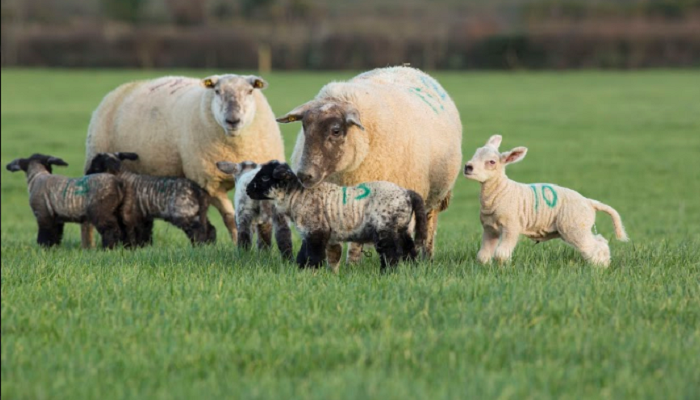
Andy Ryder, Drystock Advisor, Teagasc Westport, outlines key tips for managing lambs at weaning to boost performance.
Over the next few weeks farmers will be weaning the lambs from the ewes. Weighing lambs at this stage will give you valuable information that you can use in the future. Firstly, it will tell you how well lambs performed from birth to weaning. Poor weaning weights should prompt you to assess what caused this and plan to avoid some of the potential issues below next year.
Pre-Weaning Problems
- Did ewes lamb in poor condition?
- Was post lambing nutrition poor for a period?
- Was parasite control pre-weaning adequate?
- Was there sufficient availability of quality grass for ewes & lambs pre-weaning?
Current indications from farmers that have weaned so far this year is that lamb weaning weights are better than last year.
Ideally for a mid-season lambing flock we would like to see:
- 20-25% of lambs over 35kg liveweight.
- 25% over 30kg live weight.
- The rest of the lambs should be over 25kg live weight.
- A very small percentage of lambs should be below 25kg live weight.
Every farm is different but having this information will allow you to decide what you are going to do with these lambs.
The Options Include:
- Finish lambs off grass with or without concentrates.
- Sell as store lambs.
- Run lambs on for hogget trade.
Regardless of how you move lambs off the farm the priority post weaning is to keep lambs thriving and putting on weight.
Grass Quality
Good quality grass can deliver 1.2 to 1.5kgs liveweight gain per week for the months of July and August. This will drop to 1kg/week liveweight in September and drop further as the year goes on. Lambs should be offered the best quality grass available. Draft lambs on a 2-3 week interval, selecting lambs on weight and fat cover. Kill out percentages will fall after weaning so adjust drafting weights upwards after weaning. Draft regularly to avoid selling overweight lambs.
Parasites
To maintain lamb performance and thrive keep on top of parasite control. Most farms are using pour-ons for external parasite control with long cover periods. Internal parasite control programme should have regular faecal samples taken to determine dosing requirement. Lambs will benefit from mineral supplementation during this period also.
Lameness
This is often one of the main reasons why farmers get poor lamb performance post weaning. It often results in having lambs on the farm longer and more lambs having to be finished with meal.
Lambs need to be herded regularly and have a simple system in place to treat and try to prevent lameness. Over the past few years there has been a big uptake in sheep handling facilities through TAMS so put this equipment to use now.
Concentrate feeding
If lambs are not fat at drafting weight look to boost energy by introducing some meal. Try not to use it to replace poor grassland management. 300g/head/day will reduce slaughter age by one month and ensure all lambs have a correct fat cover.
It is recommended to put a feeder group in place consisting of lambs over 36-38kgs liveweight with the aim of a quick finish period. Regular drafting is essential to avoid overweight lambs. Unless lambs are marketed through marts farmers do not get paid currently for lambs with a carcass weight over 21-21.5kgs. Add more lambs to this group as you sell.
Best of luck with your farming enterprise over the coming weeks.