
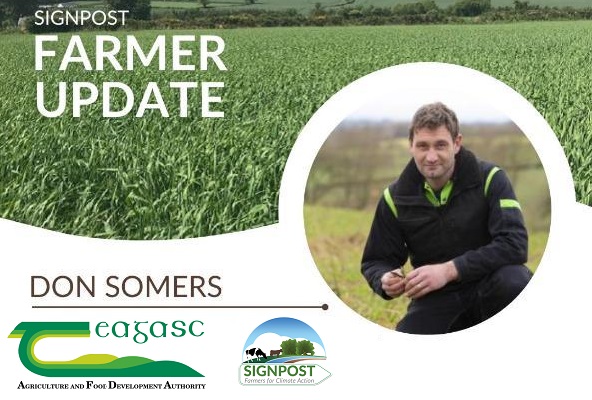
Don Somers, Signpost Tillage Farmer, talks us through the progress he’s made with harvest 2025 and looks ahead to his cropping plan for 2026.
Winter harvest
At harvest, winter barley on light, sandy soil yielded 3.4 tonnes per acre while on heavier clay soil, it did 4.0 tonnes per acre. A lack of soil moisture attributed to the lower yield on the lighter sandy soil. The heavier clay soil has been cultivated to create a stale seedbed prior to drilling winter oilseed rape in the last week of August.
The oilseed rape will receive a light dressing of chicken manure to drive the crop canopy and realise savings on chemical nitrogen next spring.
The lighter ground has been drilled with a short-term cover crop mix of phacelia, vetch and crimson clover. Under the Farming for Water European Innovation Partnership, I will receive a payment of €173 per hectare to leave the cover crop undisturbed until the 1st of October. I plan to drill a crop of winter rye into the standing cover crop in early October.
Spring crop harvest and weeds
Crops of spring barley have improved during the growing season but have got badly tossed with wind and rain in recent days. Crops are tin as a results of low soil moisture levels during tillering which will have an inevitable impact on yield.
While walking crops of spring barley, I have noticed more corn marigold present than usual. Hopefully, this is not the development of a resistance issue. I plan to collect seed from the plants and forward them to Teagasc in Oak Park for resistance testing.
Intercropping
The pea/bean intercrop is uneven in maturity due to variations in soil type within the field. The crop has leaned substantially and is currently 600mm in height. Hopefully it remains off the ground to facilitate ease of harvesting.
I submitted the maximum area of 40 hectares into the straw incorporation measure, securing a guaranteed payment while realising the benefits of returning carbon back into the soil.
Market returns
Poor grain prices currently will challenge the cereal grower. Knowing how different crops perform financially on your farm this harvest is ever more important in the planning process for the coming year. I plan to drill winter oilseed rape, winter rye, winter barley, winter wheat and winter oats. The only spring crop planned for 2026 is spring beans. Drilling break crops such as oilseed rape and beans help to keep problematic grass weeds under control, reduce the demand for chemical nitrogen while also offering soil health benefits.
Don Somers is a participant in the Teagasc Signpost Programme. The above article first appeared in the Farming Independent as part of a Signpost Programme update.
Find out more about Don Somers’ involvement in the Signpost Programme here.