
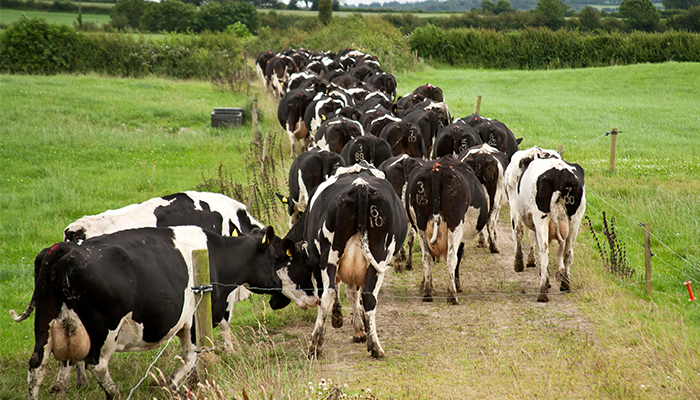
Increasing the proportion of grazed grass in the diet of the dairy cow keeps costs down and reduces greenhouse gas emissions. Leonard Betts, Climate Action & Sustainability Advisor, Clonmel, Co. Tipperary, shares some key points to consider when managing autumn grass.
Good autumn grassland management ensures that there is sufficient grass available at the start of the grazing season next spring. Relying solely on winter growth to grow sufficient cover does not work unless enough grass is left in the first place. An average closing cover of between 550-700 kg DM/ha is required – the higher closing covers are required at stocking rates of 2.5 cows/ha or greater. Here are some key points to consider:
- Build grass covers: Start building up grass covers from mid-August. This involves increasing the rotation length to more than 35 days by mid-September. Farm cover should peak in mid to late September, with a target of up to 1,200 kg DM/ha on farms stocked at >3.5 cows/ha and 1,000 kg DM/ha on farms stocked at 2.5 cows/ha
- Grazing management: Begin the last rotation in early-mid October – this will depend on the growth rate after that October grazing and the target closing cover.
- Nitrogen application: Blanket spread the last application of NBPT protected urea by mid-to-late August to support grass growth. Chemical nitrogen (N) applied in August will give a better response than that applied in mid-September.
- Rotation length: Extend the rotation length by two days per week, starting from 25 days in mid-August up to a maximum of 40 days by October 1st.
- Supplementation: Where farm cover is below target, supplement with high-quality bale silage and concentrates to maintain full intake.
- Use of temporary fencing: Use temporary electric fencing to help maintain the recommended rotation length and achieve post-grazing cover targets. During July’s Irish Grassland Association (IGA) summer tour, Cork dairy farmer Mike Bermingham said that he uses strip wires for the first and last grazing rotations of the year.
Finally, subscribe today and receive the weekly Grass10 Newsletter directly into your inbox every Tuesday afternoon. Each week, you will receive PastureBase Ireland growth figures, Grass10 Weekly Tips, grass growth and soil temperature predictions. Follow the advice to improve your grassland management skills, increase profitability and reduce emissions in the process.
Subscribe to the Grass10 newsletter here.
The Teagasc Signpost Advisory Programme
Leonard Betts is a Climate Advisor working on the Teagasc Signpost Advisory Programme. The Teagasc Signpost Advisory Programme provides enhanced advisory and training support to farmers to help them to select and implement climate and sustainability actions that are appropriate and impactful on their farms.
Sign up to the free Signpost Advisory Programme by clicking here, or alternatively scan the QR code below:

More from Teagasc Daily: Measure performance to drive a reduction in emissions