
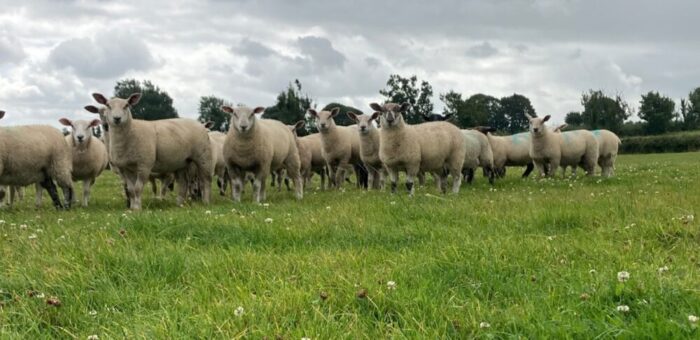
The store lamb trade is currently strong across marts, keen demand has created good prices, Sean Mannion tells us more.
Some farmers will be asking themselves the question whether they should sell stores or finish their lambs on farm. 2025 has been a good year for grass growth and many farms have surplus grass and sufficient fodder already harvested. However, there are many factors that need to be taken into account, availability of good quality grass for the finishing period, suitable animal housing if needed to finish indoors, number and weight of lambs, estimated time to finish and on farm cash flow.
Farmers running a store lamb finishing enterprise are figuring out what they can afford to pay for store lambs coming onto the farm and still allow for a decent margin on their investment. In both cases one must prepare a budget in advance and assess all options.
Prices
Lowland cross lambs 35-40kg liveweight are currently costing in the region of €130 – €148. Depending on breed, sex, presentation, level of fat cover etc.
Prepare a Budget
Whether finishing homebred lambs or buying in lowland or hill lambs to finish, the first important step is to have a plan in place. While the price received is largely outside of the producer’s control, the cost of getting the lamb to the point of sale can be controlled. It’s important to be realistic about the weight gains and when stock will be finished as outlined in table 1.
Table 1. Typical performance of lowland terminal sired lambs on good quality pasture
| Time period | ADG – (g/day) | Kg gain per week |
| Aug/Sept | 160 | 1.1 |
| Oct/Nov | 115 | 0.8 |
A useful tool to estimate the cost of finishing store lambs is the Teagasc Store Lamb finishing calculator. It will also give a good estimate of when lambs will be fit for market. This excel programme allows you to input figures such as lambs liveweight and price of lambs, concentrate price per tonne, target carcass weight as well as standard costs for veterinary, transport etc. The estimated finish date along with total concentrate required will be calculated with slaughter value of lamb being based on historic prices paid in previous years on the estimated slaughter date. farmers can also input predicted carcass prices to predict potential margins.
For example, purchasing a 35kg lamb this week for €135. Commence meal feeding at grass on Nov 1st it is expected that lamb will be ready for sale in mid – December. A breakeven price of €169 or €7.35/kg for a 23kg carcass is required. In the same example if one predicted a carcass price of €8.5/kg in mid-December. This would generate a margin of €27.5 on a 23 kg carcass. Sheep. (Please note these prices are subject to the inputs used e.g. concentrate price, vet costs, transport costs, mortality rate, target carcass weight etc.)
High Concentrate Finishing
Concentrate supplementation is the biggest cost in many lamb finishing systems. Aim for high quality ingredients and ensure the feed is specifically intended for intensive finishing of lambs. It should be balanced for minerals and include 0.5% ammonium chloride to help avoid issues with urinary calculi. Pelleted feed is less attractive to birds. This also prevents lambs sorting and selectively leaving behind certain ingredients as can happen with a coarse ration. Where lambs are to be finished on ad-lib concentrates, it is important that they are gradually build up to ad-lib feeding levels. Increase the amount offered by 200g/day every three days until lambs are ad-lib feeding. Ensure lambs have access to a source of long fibre (straw, hay or silage). Where lambs are housed indoors ensure the sheep shed is well ventilated and adequately bedded where necessary. Good ventilation will lead to dry sheep, reduced bedding and improved performance. Animal performance will vary by breed and sex but, on average crossbred lambs will be growing in the range of 280-350g/day or putting on 1.9-2.5kg live weight per week. Regular weighing will ensure lambs are drafted at the correct weight and assessed for muscle and fat cover prior to being drafted for slaughter.
Animal Health
Developing a comprehensive animal health plan for store lambs is crucial to ensure their well-being and optimize growth during the finishing period, diseased lambs won’t thrive. Stomach worms in particular are a significant concern for store lambs. Regularly monitor lambs for signs of stomach worm infestation, such as scouring or ill thrift. Anthelmintic resistance is a concerning and growing issue. Best practice is to conduct routine faecal egg counts to assess the worm burden and inform treatment decisions. Farmers can also use faecal egg counts to assess product efficacy. Thus, farmers can ensure effective worm control and maintain the health and performance of their store lambs. Sheep lameness is a big issue and animal performance is directly impacted. Don’t house lame sheep. Footbath lambs as required, Isolate lame sheep and repeat treatment until cured. Shearing of lambs increases feed intake but does not improve performance.
Tips
- Complete a budget on the store lamb calculator
- Assess grass situation – supply and demand
- Ensure there is good quality grass in the diet
- Treat lame sheep – do not ignore
- Keep on top of internal parasites – mainly stomach worms
- Draft lambs as they become fit