
Understanding how to spot the early signs of heat stress and taking proactive steps before, during and after the heat wave can make all the difference, Dr. Dana Simpson of St David’s Poultry Team shares some key advice.
We have experienced a heatwave in recent weeks. These high ambient temperatures can strongly impact bird welfare, health and performance. Coupled with high relative humidity (RH), the impact can become critical. This is known as heat stress and can result in suffering and death. Minimising heat stress should therefore be a priority.
What is heat stress?
Heat stress occurs when birds have difficulty balancing body heat production and body heat loss. This can occur at all ages and in all types of poultry.
When heat production exceeds maximum heat loss either through acute heat stress or through chronic heat stress, heat stress occurs.
It is important to realise that the flocks’ welfare is likely compromised before mortality commences.
Figure 1: Poultry heat stress
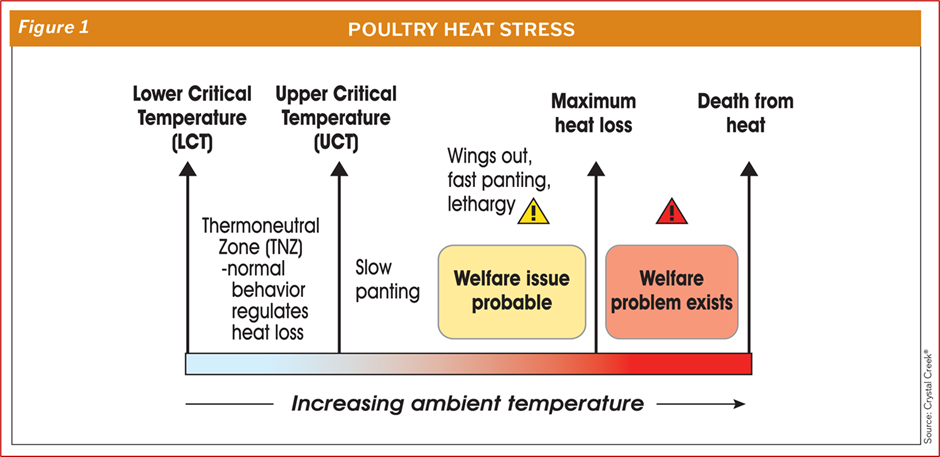
The figure above shows the lower and upper limits of the thermoneutral zone. This is temperature range in which the bird can regulate her internal body temperature and is free from temperature related stress. In most poultry, the thermoneutral zone is around 20-27°C. Once the ambient temperature rises above the threshold of the thermoneutral zone, the welfare of the birds starts to become compromised.
The more productive a flock is, for example during peak lay (29-33 weeks) or peak egg mass output (42-45 weeks), the greater the metabolic activity and heat production are.
How do your hens try and control their body temperature?
Chickens do not sweat, instead hens lose body heat through conduction, convection and radiation.
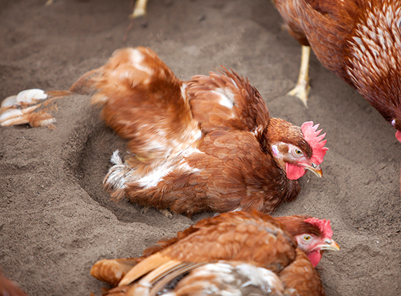
Conduction: The hen transfers heat from her body directly to nearby objects such as litter or cooler surfaces. Hens will use deep litter to transfer some of their body heat to through dustbathing.
Convection: When the hen’s body temperature is higher than her surroundings, she can transfer some heat from her body through radiation to the air around her. The hen will spread her wings out to allow for more air flow to reach larger areas of her body, allowing for increased heat loss through radiation.
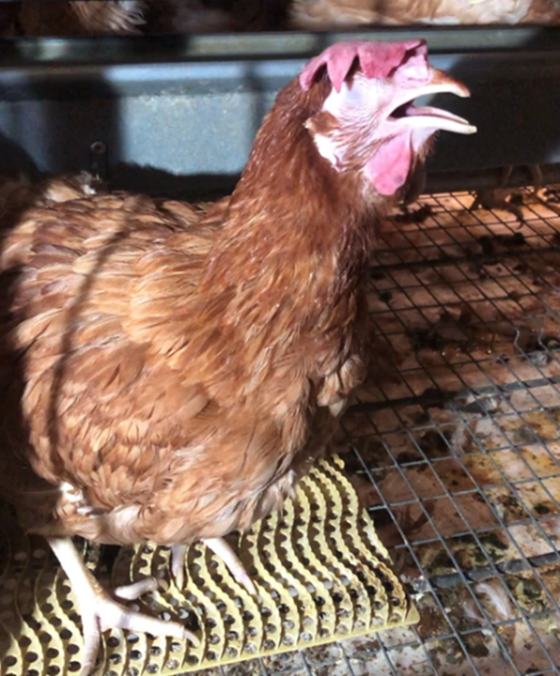
A common form of convection is evaporative breathing. This is when the hen transfers heat through rapid, shallow panting evaporating water and Carbon Dioxide (CO2) from the mouth and respiratory tract.
Radiation: The skin will radiate heat to the nearby cooler objects such as the concrete floor or walls.
In addition, the birds will eat less to reduce metabolic heat production and drink more.
Humidity
Most heat related deaths occur in high temperatures in combination with high relative humidity. As a general rule, for every 10% increase in humidity, the perceived temperature for the hens increases by 2 °C.
The sum of the temperature (F) and the relative humidity (RH) equals the heat index (HI)
E.g. if the temperature is 80F (27°C) + 50% RH = HI 130
When the heat index exceeds 160, the birds will suffer from heat stress.
Consequences of heat stress
Heat stress causes a reduction of reproductive hormone circulation and feed intake which ultimately results in a production drop.
As a result of the loss of moisture through panting, dehydration and reduction in egg size is often observed.
The increase in CO2 loss through panting results in an electrolyte imbalance and raised blood pH (respiratory alkalosis). This in turn reduces the available Calcium (Ca) circulating in the hen’s blood, resulting in reduced shell quality.
The hen will redirect her blood flow to her extremities to increase heat loss, this will result in less blood going to the intestines which in turn can lead to (oxidative) stress.
This localised stress leads to local inflammation at gut level resulting in translocation of bacteria (leaky gut syndrome). Bacterial translocation in turn will result in systemic bacterial infection and mortality.
Other organs, such as the liver and shell gland, are also affected by heat stress resulting in depression of the immune system and reduced internal egg (albumin) quality.
Figure 2: A graphic depicting thermal neutral (A) and heat stress (B)
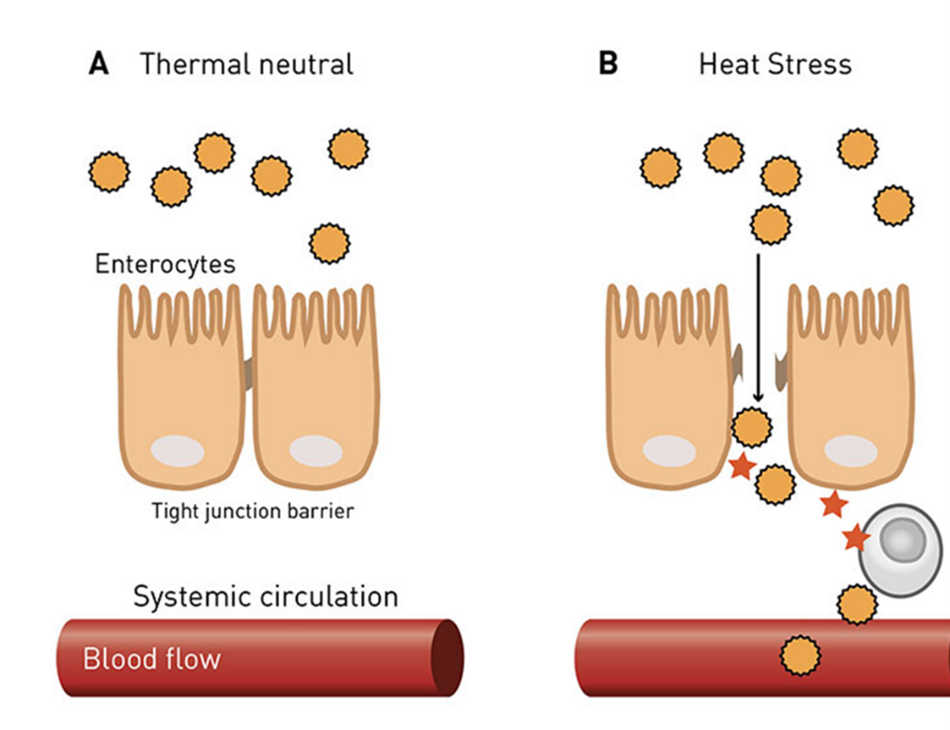
The figure on the right depicts Bacterial translocation through ‘leaky gut syndrome’ due to heat stress.
Heat stress prevention and supportive measures
1). Ensure all fans are in full working order and increase ventilation
The benefits of increasing airspeed over the birds are;
- Removes the boundary layer of hot air around the birds, aiding heat loss.
- Removes humid air from around the birds’ heads, making panting more efficient.
- Makes the birds feel relatively cooler than the actual temperature and helps reduces breathing frequency
* aim for an airflow of at least 0.7 m/s
* Maximum ventilation rate is 9000 m³/ hour / 1000 birds
2). Keep the water supply cold
Evaporative breathing results in increased water loss from the lungs. Cold water can prevent dehydration and help reduce internal body temperature.
3). Maintain good litter quality
Friable litter will help the hens diffuse body heat when dustbathing.
4). Nutraceutical support
Both in feed and in water products are available to help minimise the effects of heat stress. It is advised to start these in the days prior to an expected heat wave and for the duration of the hot spell. In water electrolyte products such as Heat stress® plus or Biostarter® help prevent dehydration. In feed products can help reduce the negative effects of oxydative stress on the intestinal tract.
In addition, it is advised to avoid disturbing the hens during the hottest part of the day and adjusting feed times allowing the hens to feed during the cooler parts of the day if possible.