
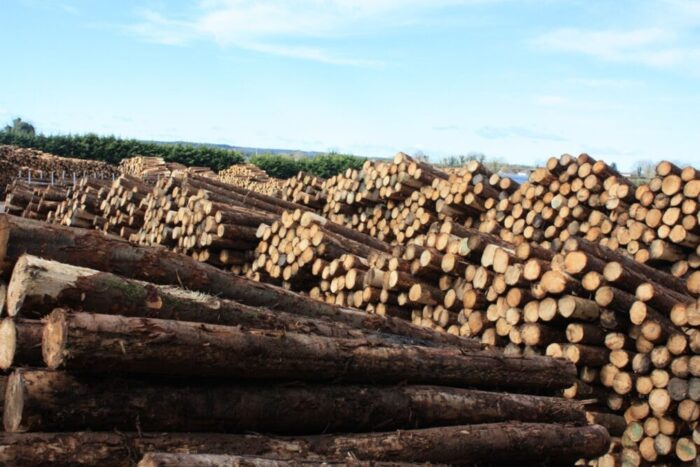
Timber is generally sold either by weight (tonnes) or volume (cubic meters, m³). When comparing weight and volume measurements, it is essential to understand that timber's weight can change, but its volume generally remains the same.
In this, the seventh of eight articles in a series, Teagasc Forestry Advisors provide further insights into the use of timber weight and timber volume when products from the forest are being sold. This topic, an many other aspects of timber sales are can also be discussed at one of the ongoing series of One-to-One Forestry Support Clinics running up to September 23.
Selling timber by weight
Timber can begin to dry out as soon as it is felled. If timber is left sitting on the roadside, moisture evaporates, and the timber loses weight. This should be kept in mind if timber is being sold by weight. If it is not transported to its destination soon after harvesting, this weight reduction may result in loss of income to the owner.
Timber weight per unit volume can vary depending on several factors including the following:
- Tree species,
- Length of time at the roadside,
- Log size,
- Weather conditions.
To avoid potential loss of income when selling timber on a weight basis, the owner should agree and document, through the terms of a timber sales contract, that the logs are moved from the harvest site to the weighbridge within an agreed period of time.
Volume/Weight Measurement
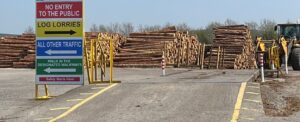
A system for measuring timber by volume may be facilitated at the sawmill weighbridge. Where appropriate planning, coordination and resources can be put in place, timber arriving at the mill may be sampled and converted from weight to volume using a correction factor that takes into account the weight loss post harvest. Volume/weight measurement has the potential to produce highly acceptable levels of precision in timber sale volume measurement.
When compared with alternative methods, volume/weight measurement is quite intensive with the sampling for volume/weight factors carried out when the timber lorry is entering the processing facility. This means that volume/weight factors used are directly representative of the status of the timber as it crosses the weighbridge.
Where applied, volume/weight sampling is carried out over the whole duration of a sale of timber. Therefore, the volume/weight factors also remain relevant over the duration of a sale. The conversion rate from weight to volume is calculated by sampling a selected number of lorry loads from which representative log samples are taken. These logs are each measured for weight and volume from which the conversion factor is calculated. This can then be applied to every load from the specific harvest after it is weighted at the weighbridge.
Challenges of a volume/weight system
Volume/weight measurement requires coordination of resources at a certified weighbridge over the period of a sale. This can represent a considerable cost although this can be significantly reduced if these resources are deployed over larger timber volumes e.g. over a number of sales proceeding concurrently.
Volume/weight measurement will require pre-harvest measurement information which also will be a cost to the seller.
In terms of timber security, a volume/weight system does not stand alone and must be used in conjunction with other security measures e.g. timber dispatch system and adequate harvest supervision.
Economies of scale
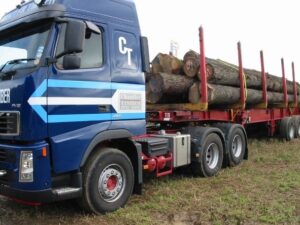
Volume/weight measurement is suitable for both standing and roadside sales and is particularly suited to larger sales and in situations where a number of sales are simultaneously being sold by a single concern to a single processor. This can present a challenge to owners of smaller forests. However, this challenge may be alleviated by cooperation of forest owners selling to the same buyer, for example through a forest owner group or through a forester coordinating a group of timber harvest sales.
Teagasc forestry advisors are available to provide objective guidance and support to forest owners. For further information, contact your local Teagasc forestry staff and visit the forestry section of the Teagasc website.
View the full series of fact sheets on controlling a conifer harvest here
Why not engage with your local forestry advisor by booking a free appointment at one of the current series of One-to-One Forestry Support Clincs with a focus of providing guidance for storm-impacted forests.