
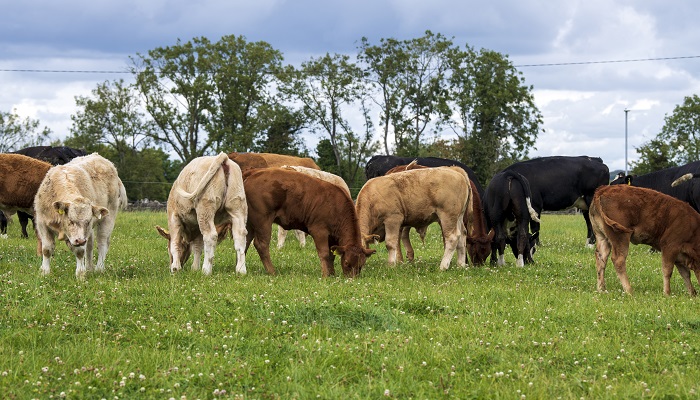
Farm incomes are set to rise this year, with cattle farms leading the way. Ross Fitzgerald outlines how to prioritise smart, long-term investments.
Farm income levels are predicted to jump this year by as much as 39% compared to 2024 figures. Cattle rearing farms are likely to see the biggest jump in average income this year, with a forecast 85% increase to €25,000. In light of this, it is crucial to give strategic farm investments first priority this autumn. Many farms are likely to have extra cash on hand, but caution must be exercised to ensure that these investments yield a positive return on investment rather than just being a financial burden. Although there is a temptation to invest as much as possible with cash flow, borrowing money for longer-term investments (farm buildings) is frequently more prudent.
In the event that the decision is made to invest in the farm, which investments should be given priority?
Among the best investments you can make are those in grazing infrastructure, reseeding, and soil fertility.
Grazing infrastructure
Improving grazing infrastructure will allow more days at grass, provide easier management of grass at times of peak growth and make grazing less weather dependent. In order to achieve 10 grazings/paddock/year grazing infrastructure must be improved on most farms.
Paddock systems: Implement a paddock system with a minimum of 7-10 paddocks for each grazing group. This allows for better control of grass, increased grass growth, and improved animal performance.
Water troughs: Ensure adequate positioning of water troughs in paddocks to provide easy access to fresh water for all animals. Troughs should be located centrally in middle of the field, allowing paddocks to be split further depending on group size and grass demand.
Temporary fencing & fencers: Invest in temporary fencing resources, such as reels and pigtails, to manage grazing efficiently and adapt to changing conditions. Ideally, a powerful, good quality electric fencer should be installed that is suitable for the length of fencing to be electrified. Consider installing solar-powered fences on out-blocks of land to enhance grazing management where no power source is available or alternatively battery powered fencers can be used.
Reseeding
The primary benefit of reseeding grassland is that it produces more grass of higher quality and quantity.
Timing In general, the rule is, the earlier in the growing season reseeding is done the better. The reason for this is that post seeding management, grazing off the sward and post emergence spraying. Although it is late in the year to reseed currently a plan can be put in place for reseeding next spring.
Grass Varieties: To get the best results from your reseed it is important to use the PPI index and a general rile of thumb is that if the variety is not listed on the PPI list it should not be used. These grass/clover varieties have been tested under Irish conditions for important traits to Irish farmers, like spring/ autumn growth, herbage quality & grazing utilisation.
Fertility: Ensuring adequate Phosphorus (P), Potassium (K) and Lime is essential for successful reseeding and a return in investment. The most accurate way to judge a soils requirement for these is to do a soil test.
Other advantages of reseeding include better animal performance, enhanced response to nitrogen, and an excellent chance to establish clover. But at approximately €500 per acre, it’s a big investment, and you won’t have the field for five to eight weeks. As a result, a successful reseed is essential. Reseeding, more than anything else, offers the highest return on investment if you’re wanting to increase grass performance and output while spending money on the farm.
Rectifying soil fertility
Good productive soils are the foundation of any successful farming system and key for growing sufficient high-quality grass. Therefore, the management of soil fertility levels should be a primary objective of every farm. Over 90% of soils in Ireland are deficient in either Lime, Phosphorus (P) or Potassium (K). If the average beef farm was to rectify their soil fertility and grow an additional 25% more grass this would mean approximately €100 of additional profit per acre. Therefore, any investment made to rectify soil fertility this autumn will return an investment in years to come.
Liming: For mineral soils, a soil pH of 6.3 is recommended for grassland. Ground Limestone can be applied all year round so it is important to take every opportunity that arises during the year to apply ground limestone to correct soil acidity (after silage harvest / grazing/ reseeding). Liming soils alone will bring major benefits in terms of soil nutrient availability (esp. N & P) and the more efficient use of applied nutrients (N, P & K) as either organic or bag fertilisers. This will result in extra grass production of 1 to 1.5t DM/ha (+ 5 to 8 bales/ha of grass silage per year) from a small annual investment (€30/ha) in ground limestone.
For every €1 invested in lime, it will return €4-€7 in the form of extra grass growth, reduced N usage, and increased soil fertility.
Potassium (K) The best option to build K Index is Muriate of Potash (MOP) which can be applied all year round similar to Lime. The chemical name for this is Potassium Chloride, a compound which contains 50% potassium (K). This is the cheapest and most commonly used form of straight potassium. If not done already, there is a good opportunity now to assess offtakes on silage ground this year and what fertiliser/slurry was applied to see if a top up application of MOP is required to set up your silage ground to maximise its performance in 2025. Potassium (K) is not restricted and similar to lime can be spread all year round.
Phosphorus (P) While it is late in the year it is important to put a plan in place to rectify paddocks low in P in 2026. Phosphorus is important for crop establishment and root development, and it also plays an important role in the nutrition of livestock. Phosphorus is central to plant energy and driving fast and efficient grass growth Phosphorus is very important in reseeded fields to achieve good grass establishment.
Investing in a Nutrient Management plan will offer advice on using the right product coupled with the right rate at the right time in the right place.
NMP online is an online system for developing nutrient management plans for environment and regulatory purposes. It is available to all agricultural professionals.
Find out more about NMP online here.