
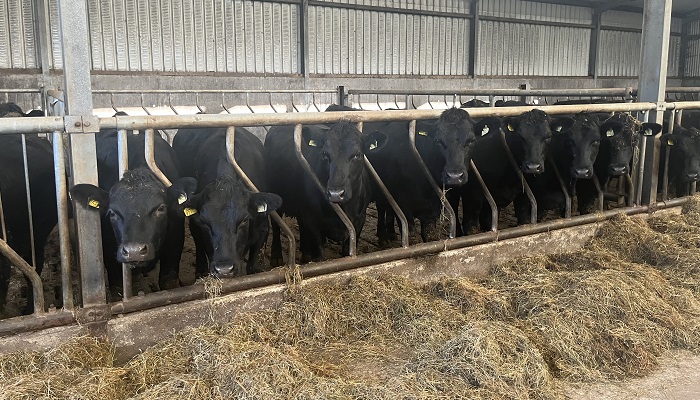
As we head into the second half of September and with the days getting shorter and colder, it is time to start thinking about being ready for when animals need to be housed for the upcoming winter period. DairyBeef 500 Advisor, Gordon Peppard tells us more.
There are several key areas that preparation needs to complete in advance.
Pre-Housing Preparation
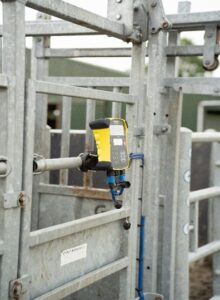 Weighing: Weigh every animal at the time of housing to establish an accurate baseline weight for the winter months. Plan to reweigh the animals six to eight weeks later to effectively monitor growth rates and adjust management accordingly.
- Grouping: Sort animals by sex, weight, and age. This reduces competition for feed and lying space, minimizes bullying, and allows for more tailored and effective feeding strategies.
- Health Check: Perform a comprehensive health assessment on all animals. Look carefully for signs of lameness, poor coat condition, respiratory distress, or any other indications of ill health that may impact performance.
- Vaccination: Coordinate with your local vet to implement an appropriate vaccination schedule. Vaccinate against common respiratory pathogens such as RSV, Pi3, IBR, and bacterial agents like Mannheimia and Pasteurella ideally 2 to 4 weeks before housing, to ensure immunity is well established at housing.
- Dosing: Administer treatments targeting internal parasites (e.g., stomach worms, lungworm) and external parasites (lice, mites). This should be based on routine schedules or guided by faecal sampling and risk assessments. Dose calves at least two weeks before housing to allow for immune response development and to reduce stress at housing. Once all animals are housed a treatment for lice and mites should be administered.
- Gradual Diet Transition: Introduce the winter diet gradually, moving animals onto silage and concentrates to minimize digestive disturbances and ensure smoother adaptation.
- Clean Environment: Thoroughly clean and disinfect all pens before housing. If using straw bedding, ensure it is fresh and dry to maintain hygiene and animal comfort.
Housing Design & Space Requirements
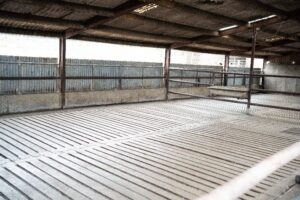 Pen Space: Provide a minimum of 2.0–2.5 m² per animal for calves up to 300 kg. As animals grow, either increase pen space per animal or reduce stocking density accordingly. Finishing animals will require between 2.5 and 3.0 m² per head.
- Feeding Space: Allocate at least 350 mm per weanling, 450 mm per store, and 650 mm per finishing animal at the feeding trough to reduce competition and ensure all animals can feed simultaneously without stress.
- Feed Troughs: Clean feed troughs daily to prevent feed spoilage, encourage consistent intake, and reduce the risk of disease.
- Lying Area: Provide ample, dry lying space using straw bedding or rubber mats to encourage rest, rumination, and joint health.
- Grouping Stability: Maintain stable groups during housing to reduce stress. Avoid mixing animals once housed as this can lead to bullying and increased disease risk.
- Drainage & Flooring: Ensure excellent drainage and install non-slip flooring to prevent hoof problems and maintain a clean, hygienic environment.
- Lighting: Adequate natural or artificial lighting is essential to support animal health, welfare, and ease of management, particularly during shorter daylight hours.
Feeding & Nutrition
 Silage Quality: Aim for silage with a Dry Matter Digestibility (DMD) above 70%, low Neutral Detergent Fibre (NDF), and good preservation quality. Test silage well in advance of winter housing to adjust concentrate levels appropriately. Avoid very wet or mouldy silage as these reduce intake and increase the risk of listeriosis.
- Bale Variation: Monitor differences in bale quality resulting from variations in cuts, fields, and harvest timing, and adjust feeding plans accordingly.
- Concentrate Feeding: Feed weanlings between 1 – 3 kg/head/day depending on silage quality. For finishing heifers, provide 4 to 6 kgs and finishing steers feed 5 – 8 kgs of high-energy concentrate rations. Use high-quality, energy-dense rations for finishers, and balanced energy/protein rations for younger growing stock.
- Feeding Frequency: When feeding concentrates above 4 kg per head per day, split the feed into two daily meals to improve intake consistency and reduce feed sorting.
- Monitor Intakes: Regularly check feed refusals and adjust rations to maintain appetite, optimize growth, and prevent waste.
Ventilation
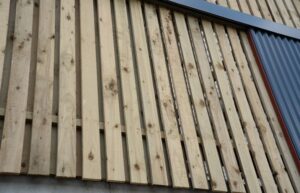 Airflow: Provide steady ventilation with fresh air flowing above animal level to avoid draughts at their height. Use stock boarding to direct airflow effectively.
- Stack Effect: Ensure sufficient inlet and outlet areas in the building design. Roof outlets should allow warm, moist air to escape, promoting the draw-in of fresh air and preventing the accumulation of ammonia and airborne pathogens.
- Temperature Management: Avoid sudden temperature fluctuations, especially cold drafts, as calves and young animals are particularly vulnerable to cold stress.
- Dust Control: Minimize dust from bedding and feed, which can increase respiratory irritation.
- Monitoring: Use smoke tests or CO₂ monitors to assess air movement and ventilation effectiveness regularly.
Water
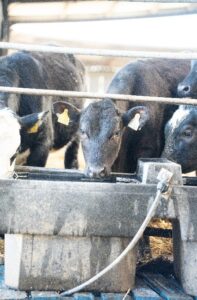 Water Access: Provide fresh water at all times. Weanlings require a minimum of 5–10 litres per day, while finishing animals may need between 25 and 40 litres per day. Animals on ad libitum diets may require even more.
- Trough Hygiene: Clean water troughs at least twice weekly to prevent algae growth and contamination with dirt or feed.
- Trough Availability: Ensure there is at least one water trough per 10–15 animals to reduce competition and stress.
- Freeze Protection: Insulate pipes and install frost-proof drinkers to maintain water availability during cold weather.
Summary
- Weigh animals pre housing and batch by weight/sex.
- Give booster vaccinations for pneumonia, IBR and clostridial.
- Dose approx. 10 days to two weeks prior to housing with ivermectin to ensure animals are clean from parasites at housing.
- Further dose may be required after housing for worms, fluke and lice.
- Clean out and wash all animal housing allowing adequate time to dry.
- Test silage and feed appropriate concentrate amounts and protein levels to match desired average daily gain targets.
- Ensure a good supply of fresh clean water.
- Ensure adequate lying and feeding space for all animals.
- Ensure good ventilation with no draughts at animal level.
- If feeding fodder beet, ensure to balance for protein and minerals.