
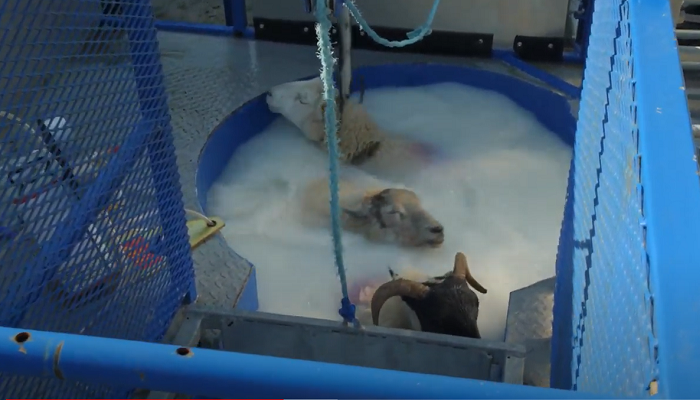
Sheep dipping is vital for parasite control, but products like organophosphates and pyrethroids pose risks to water quality if not handled correctly. Sinéad Devaney tells us more.
The practice of sheep dipping in summer or winter or both, is an important annual practice on sheep farms. Sheep dips, such as Organophosphates and Pyrethroids, are extremely effective but must be safely disposed of afterwards to protect aquatic life.
Sheep dips such as Organophosphates (active ingredient = diazinon) and Pyrethroids (active ingredient = cypermethrin) are extremely effective in eliminating and preventing a number of serious sheep ectoparasites, namely blow fly (bluebottle) strike, lice, keds, ticks and sheep scab. Parasites such as bluebottles are insects and the sheep dipping products used are called insecticides, which effectively target and kill their target organism.
Best practice when using sheep dips has gained increased attention in recent times, primarily due to active ingredients, such as cypermethrin being detected in our waterways. When cypermethrin is detected in our streams and rivers, we can be confident that the aquatic living insects will have been eliminated. This has serious consequences for the health of other species (fish, birds, small mammals, humans) that are reliant on aquatic insects as part of the overall food chain.
Water quality in Ireland is under the spotlight from a National and EU perspective. The insects in our streams are monitored by catchment scientists to inform, on how healthy the state of the water actually is. This is further backed up by chemical analyses, by confirming the presence of sheep dipping active ingredients. So, before you go organising your next sheep dipping day, please follow the best practice sheep dipping guidelines with the protection of water in mind.
Best practice sheep dipping guidelines
- Make sure you choose a cool, dry day, with relatively good drying conditions.
- Identify your holding field/ paddock for your sheep after dipping, there should be no open drain or watercourse within or adjacent to this area.
- Check that your dipping tank is sound and leak-proof, with no structural cracks or defects and has no outlet pipe or valve at the base of the tank.
- Sheep should be allowed to stand for 10-15 mins. in the adjoining drip pen standing area (concreted) when they emerge from the dipping tank, to allow dripping solution funnel back to the tank.
- Sheep should be kept in the holding field/paddock for at least 24 hours to make sure that they dry effectively, to prevent any chance of any sheep accessing or crossing watercourses and product ending up in a drain or watercourse.
- After dipping – wash and brush the dung from the adjoining drip pen stand thoroughly to ensure that no debris including wool enter any drain or waterbody. The brush used should be soaked in water a number of times and rinsed well.
- Empty dip containers and opening caps/ foil should be safely disposed of after use, following the manufacturer’s instructions on the data sheet.
- Spent sheep dip should be mixed 1:3 parts either with slurry or water and land spread by a tanker at a rate not exceeding 5,000 litres/ha (440 gallons per acre) of spent dip, equivalent to 20,000 litres/ha (1760 gallons per acre) of diluted dip
- In no circumstances should spent dip be disposed of if there is no facility or slurry tanker available to hold or spread the dip safely. In hill areas some farmers may not have access to a slurry tank on the farm, however, sheep dip must be disposed of to a tank for dilution and spreading.
- These recommendations also relate to pour-ons which use active ingredients such as cypermethrin. Pour-ons when sprayed on fleece should be allowed to dry effectively before allowing sheep go back to open hill or mountainous areas or any lowland areas where watercourses are present. As with dipping, sheep should be kept in the holding field/paddock for at least 24 hours before return to hill or lowland areas containing watercourses.
- Injectable products to control ectoparasites should be considered where dipping is not feasible. Please check and consult with your local veterinary practitioner for advice.
- Mobile showers or dipping is also an option, and the same principles above apply.
- Unwanted concentrate must be disposed of to a licensed specialist waste disposal contractor. Contact your local authority for more information on licensed contractors.
Spent sheep dip must never be disposed of to a soak pit or dumped on sacrificed land. If you require more information on sheep dipping and best practice around safeguarding our water courses please contact your local Teagasc advisor for further advice.