
The impacts of environmental shifts are not only reshaping the forests we manage but are also directly reshaping the wood market, Dr. Ian Short, Senior Forestry Research Officer, explores the importance of building resilience in Irish forests.
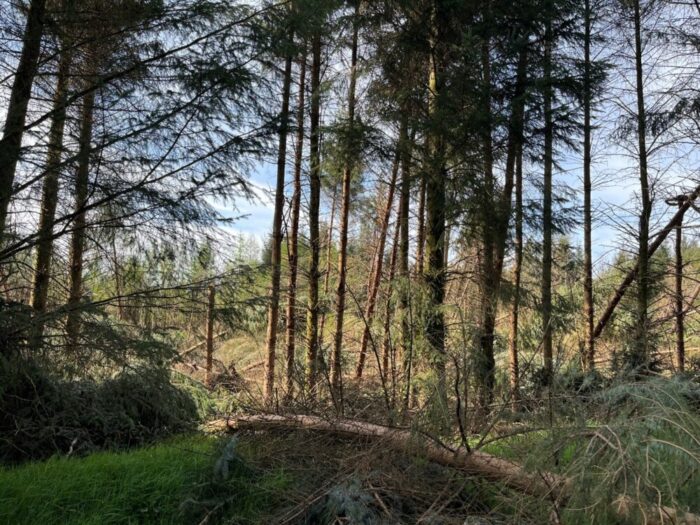
Recent weather events, such as Storm Éowyn in January 2025, have served as stark reminders of the increasing challenges climate change poses to our forests. Across Europe, and here in Ireland, storms are getting stronger, droughts are lasting longer, and forests are being challenged by threats from disease and pests. Bark beetle outbreaks, for example, have had recent severe impacts at European level.
The impacts of environmental shifts are not only reshaping the forests we manage but are also directly reshaping the wood market. For Irish forest managers and owners, understanding these changes and how to adapt and build forest resilience is essential.
Over the last four years, the European Forest Institute-led RESONATE project, which included Forestry Researcher Ian Short and Forestry Advisor Jonathan Spazzi from Teagasc Forestry Development Department, has explored how forest management and value chains can adapt and become more resilient to ensure forests continue to thrive under these changing conditions.
Immediate Impacts: Market disruptions after storm events
One of the most immediate and challenging effects of disturbances like Storm Éowyn is market disruption. Severe weather events necessitate timely and appropriate logging operations – harvesting windblown trees quickly to reduce the risk of wood degradation or ecological harm.
Significant windthrow can lead to a surplus of wood on the market, much of which may have been harvested prematurely. The resultant challenges for the forest sector include resolving the oversupply of windblow trees in a timely and efficient manner. This involves development and employment of mitigation measures at the various stages of the supply chain to adjust the supply rate to supply chain users while minimising, as a whole, the impacts on stakeholders and Ireland’s forest health status.
Long-Term Adaptation: Shifting to more resilient forests
While dealing with the immediate aftermath of a storm is challenging, in the long term, it is crucial to adapt our forests to climate change, and this adaptation is best addressed sooner rather than later.
RESONATE researchers underline the importance of consideration of the option to transition, in appropriate circumstances, from predominantly softwood forests, which are common in Ireland, to a more balanced mix of trees, including hardwoods. Mixed forests, ideally with three or more species of both softwoods and hardwoods, are better equipped to handle the stresses brought on by changing weather patterns, pests and diseases. Hardwoods, for example, are typically more resistant to drought and pests.
Transforming a suitable even-aged softwood stand into a structurally diverse, multi-species forest takes time and proactive management. Introducing new species, particularly hardwoods, involves decisions not only about which types to plant but also how to manage them, as mixed forests may require more frequent interventions. However, proactive management, while more expensive upfront, reduces future damage.
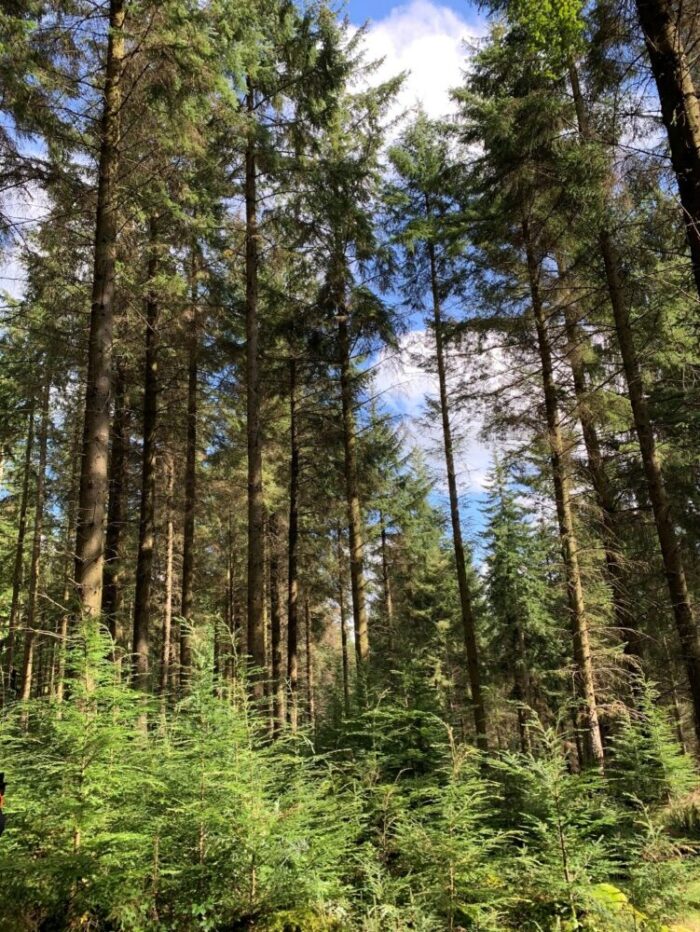
Figure 1. Proactive management to transform an even-aged stand to a multi-structured, multi-species, continuous cover forestry system takes time and patience
Recovery periods after disturbances like Storm Éowyn can open a valuable window of opportunity for increasing species diversity and promoting more climate-adapted species. Utilising natural regeneration after disturbances boosts biodiversity and can reduce replanting costs. It might also be helpful to complement natural regeneration with selective planting of species known to be more climate-resilient. Furthermore, employing forest management techniques that mimic natural disturbances, such as including post-disturbance structures like older trees and deadwood, can help boost forest resilience and biodiversity by providing habitat and enhancing soil health. Controlling wildlife browsing is also important after disturbances to facilitate successful regeneration with increased species diversity. Finally, selective logging can help to maintain forest diversity and reduce vulnerability to pests and diseases.
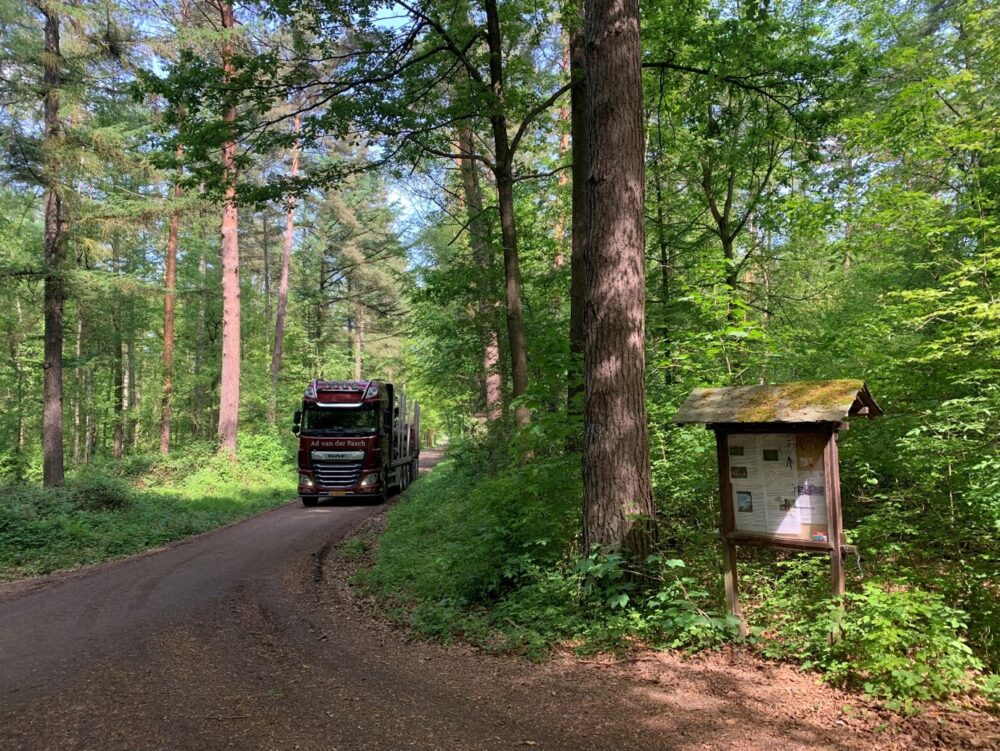
Figure 2. Harvested logs being transported from a close-to-nature managed forest in the outskirts of Cologne, Germany
Biodiversity: A key tool for resilience
RESONATE research emphasises that biodiversity should be more than just an ecological priority – it’s a vital tool for building resilient forests. For forest owners, maintaining a suitable and diverse range of tree species, structures and wildlife contributes to increased tree productivity over time and helps to ensure long-term productivity and profitability. A forest with a variety of species can better withstand extreme weather events like storms because different species react differently to drought, storms, and pests. As a result, while some species may struggle during an event, others may thrive, thereby supporting overall ecosystem stability.
Challenges for Irish forest owners (especially small-scale)
The RESONATE project also identified a significant risk gap between forest owners and the wood industry. Forest owners face the immediate and direct effects of disturbances like windblow from storms. While the wood processing industry may have more capacity to absorb market fluctuations, often at a regional or national level, small-scale forest owners in Ireland may feel the pinch even more than larger landowners. They may have fewer resources to manage the damage from a storm, undertake the necessary transition to more resilient forests, or respond effectively to the changes on the wood market. RESONATE research found that many small forest owners in Europe have been reconsidering their management strategies, with some even questioning active forest management entirely, where profitability is an issue.
Pathways forward: Cooperation and innovation
Finding solutions is crucial. Possible approaches could involve new ways of cooperating with other forest owners and the wood processing industry. Joining partnerships like cooperatives or producer groups and sharing knowledge, tools and infrastructure across the value chain can help mitigate and/or spread costs and risks more evenly. Additionally, risk-sharing agreements like price guarantees or insurance schemes between forest owners and wood traders can help support this effort.
RESONATE research suggests it is important that policymakers are aware of the difficulties that forest owners face, particularly after major disturbance events. It is beneficial to offer financial incentives for forest owners who manage their forests to mitigate climate change, protect water resources, or conserve wildlife habitats. Recognising and supporting the provision of these critical ecosystem services, which are important for society and increasingly in demand, can provide much-needed support.
Preparing for market shifts: Diversification and innovation
As our forests across Europe shift towards a more diverse mix of species, the demand for wood is also changing. Consumers and industries are looking for more sustainable, high-quality wood products. This means the wood industry must start now to develop and invest in new ways to process and use diverse wood species, especially hardwoods. Hardwoods need to be increasingly used in industries such as engineered wood products, bio-based chemicals, wood-derived carbon materials and textiles. Although still developing, these industries present exciting possibilities for forest owners willing to explore new markets or partnerships with innovative companies. Staying connected through forest management networks or industry clusters can help owners to stay informed about market changes and new opportunities.

Figure 3: Engineered hardwood end-grain floor tiles
By embracing adaptation strategies, diversifying our forests and market approaches, and fostering cooperation across the sector, Irish forest owners can build more resilient forests and help ensure the long-term viability and profitability of their operations in a changing climate.
Acknowledgement
The RESONATE project received funding from the European Union’s Horizon 2020 Research and Innovation Program under Grant Agreement 101000574.