
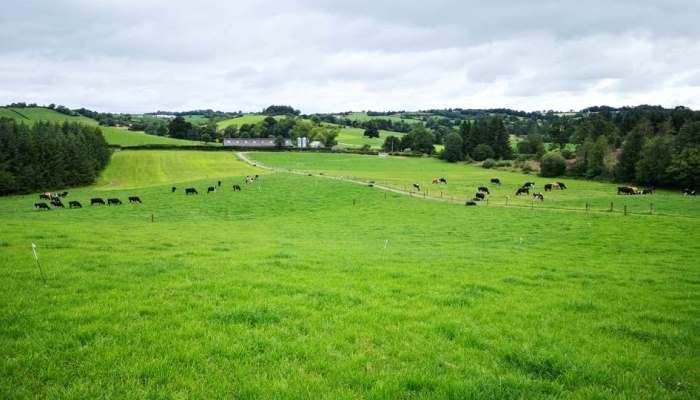
Failure to have adequate grass available in spring will lead to higher production costs and is also likely to result in lower milk revenue, Teagasc Dairy Specialist, Mark Treacy shares his key tips for autumn grassland management.
Grassland management decisions taken from now on this year will have a large impact on the quantities and quality of grass available for your herd next spring. Take time now to put a plan in place for how you are going to approach closing your farm this autumn.
A critical consideration is how much grass do you require in the springtime. On well stocked farms which expect to be able to graze in February, an opening average farm cover of at least 1000kg DM/ha on February 1st will be required if you wish to maximise grass intake.
Failure to have adequate grass available in spring will lead to higher production costs, as more supplementary feed will be required, and is also likely to result in lower milk revenue.
Hitting opening cover targets
To calculate the required average farm cover for your farm on December 1st, consider what the expected growth rates will be for your farm over the winter period. For example, if the typical average growth rate on your farm over the December/January period is 3 kg DM/ha/day, you can expect farm cover to increase by about 180 kg DM/ha over this period.
To achieve the target opening cover of 1000 kg DM/ha you will require 820 kg DM/ha of an average farm cover on December 1st. Therefore, grazing will have to cease at an appropriate time and cover to ensure that this cover is on the farm on December 1st.
A grass budget is a very useful tool to plan and monitor changes in grass supply over the autumn period and is available on your PastureBase Ireland account.
Research has shown that delaying the start of closing will reduce the expected spring opening cover by 15 kg DM/ha for every day delayed. Therefore, it is critical to start closing your farm on time. If growth rates over the autumn period are higher than expected, it is easy to come back and graze off one of the first closed paddocks again. Target having at least 60% of your farm closed by the end of October, with highly stocked farms needing to target 70% closed.
Autumn closing order
Finally, put some thought into the order in which you close up the paddocks on your farm. The first closed paddocks will have a high cover of grass on them over the winter period and therefore need to have a clean base now to ensure acceptable quality in the spring. These paddocks will be grazed in the middle of the spring grazing period and will need reasonable access.
The first grazed paddocks in the spring will require a moderate cover on them and should be closed towards the end of October. Ensure you include several paddocks in this group which will be more suitable to graze in difficult grazing conditions with good roadway access.
The last grazed paddocks in autumn will generally be the last to be grazed in spring and can include paddocks with poorer soil types and grazing infrastructure. Paddocks where clover is being encouraged should ideally be grazed towards the end of autumn period as a low overwinter cover will allow light down to the clover plant – reducing overwinter loses and encouraging its development in spring.
More from Teagasc Daily: New programme to tackle lameness in dairy herds
More from Teagasc Daily: Changes to ICBF Evaluations in September 2025