
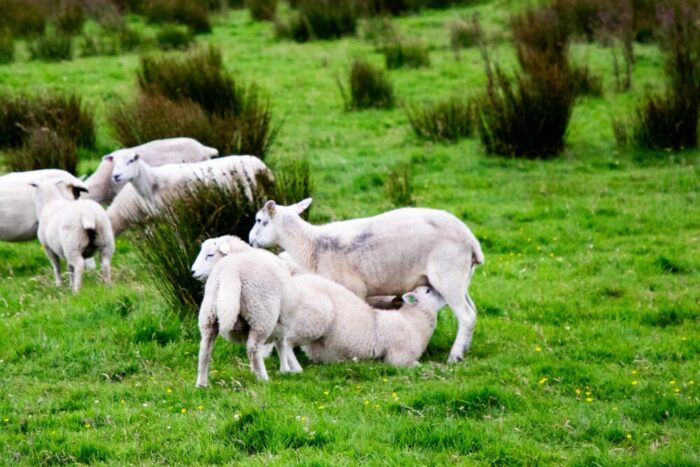
With our wet climate, liver fluke is a parasite that thrives in this country. Glen Corbett, Teagasc Tuam, outlines what sheep farmers need to know about liver fluke this winter.
It has undoubtedly been a good year for sheep farmers, prices obtained for lamb, breeding stock and cull ewes have been well above average. While this is true, something that always remains an issue and will not go away is the range of ailments and diseases that sheep are prone to. The dry summer months are gone and we have now seen a sharp increase in rainfall levels across the country. I will cover one of the most common sheep ailments, which is closely linked to wet winter weather, namely liver fluke, in this article.
Liver fluke – background
With our wet climate, liver fluke is a parasite that thrives in this country. It is an issue in both cattle and sheep, but sheep are often hit hardest by it. It affects all ages of sheep as it is picked up off the grass when sheep are grazing. This commonly occurs in the autumn and winter months. As all farmers know, it is farm, year and even field specific, meaning that there are numerous factors that can make the incidence of liver fluke in a flock more or less severe.
To understand liver fluke, it is important to know a small bit about its lifecycle. At its mature stage, it is what is called a flatworm, no bigger than your fingernail. There are several stages where the fluke lives outside of the primary host (sheep). It also needs what we call an intermediate host (mud snail) to survive. The mature fluke in the sheep produces eggs that are excreted from the sheep, typically in springtime. These eggs hatch and contain what are called miracidia, which penetrate into the mud snail. The mud snail itself needs damp conditions to survive, such as marginal land, flooded areas or in fact most land if the weather is wet enough. The fluke lives in the mud snail for most of the summer going into the autumn, at which stage it leaves this host. It is shed from the snail as what we call cercaria and it migrates up the grass leaves waiting to be picked up by grazing livestock.
That is all fine so far, but when it is ingested by the sheep the problem starts. It completes its lifecycle over the course of 10 to 12 weeks inside the sheep. It starts as what we call an early immature fluke then after about four weeks we call it immature and after nine weeks it is mature. As it migrates to maturity, the immature stage can cause severe liver damage. Untreated it can cause reduced performance, poor thrive in lambs, loss of liver value and eventually death.
As we know the lifecycle so well, we can use this to try to reduce infection rates and slow down or prevent it. Dosing routines in the winter and spring can prevent fluke eggs getting onto pastures. In summer and autumn, we can prevent sheep from grazing high risk or wet areas of the farm. We can go to the level of draining localised wet areas to reduce snail numbers and even fence off these areas within a field, particularly in high risk periods.
Treatments – watch out for resistance issues
There are six common families of active ingredient (A.I.) used to treat liver fluke and each in turn has several common brand names that contain those actives. The six active ingredients are triclabendazole, closantel, rafoxanide, nitroxynil, oxyclozanide and albendazole. The active ingredients in question are sold under different brand names and are useful against different stages of the worm. For example, closantel based products will target liver fluke from approximately weeks 4 to 12 inside the animal. It is important to know what stage the dose you are using is targeting. Check the manufacturer’s label and use as directed. The time of year can be used to predict what stage of fluke you need to treat for. Most farmers will need to dose more than once over the course of the winter and spring. As a farmer at a discussion group said last week, it is an insurance policy. The number of doses you give over the winter is dependent on several conditions and if in doubt seek veterinary advice. It is useful to look for feedback from the factory on the status of livers of ewes or lambs you send for slaughter. It will be a good indicator of how effectively fluke is being controlled on your farm.
To prevent resistance building up against the doses you are using on your farm, try to use different active ingredients, remembering that just because you change brand name does not mean you have changed active component. An example here is that Flukiver and Duotech have the same A.I. So, if you change from Duotech to Flukiver you are still using the same flukicide. Also interesting to note is rafoxanide and closantel are related, and side resistance has been reported, that is where resistance to one has meant resistance to the other. Therefore farmers need to be careful about using a rafoxanide product as an alternative to closantel as it is not a true alternative.
Also, on a related theme, current advice is not to worm dose ewes unless there is a demonstrated need. Avoid using fluke and wormer products for ewes. It is fine for lambs but watch withdrawal. This is related to halting resistance issues with worm doses.
A local case study
Liver fluke is undoubtedly a major economic drawback on sheep farms in Ireland. One client of mine, at this time of year a few years ago, had 40 ewes left out to the ram. They were in a wet area of land. They got severe liver fluke damage. The farmer lost 12 of the 40 ewes in one go with acute liver fluke damage, a further 20 did not prove in lamb with the remaining eight lambing but because of poor body condition, they were extremely difficult lambings, what he described as a nightmare.