
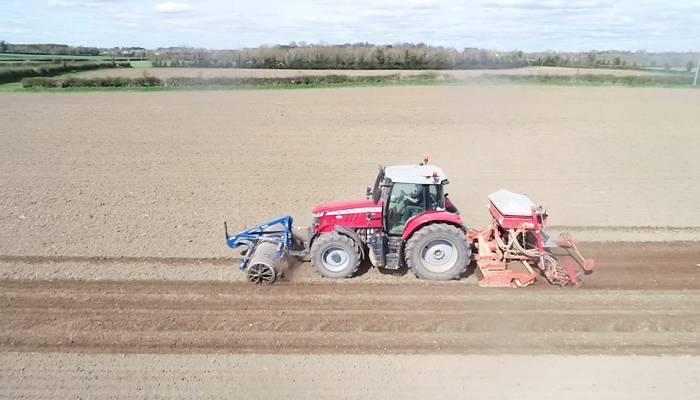
With winter cropping underway, Crops Specialist at Teagasc, Shay Phelan shares essential advice on establishing winter barley and wheat crops and provides a timely reminder on the importance aspects of pre-emergence herbicide applications.
Winter barley
Winter barley drilling is in full swing with some September drilled crops now at the 1-2 leaf stage. Establishment rates in most of these early drilled crops are reported to be very good as they were planted in ideal conditions. However, there are isolated reports of slug damage in some crops, so continue to monitor them over the next week or so; if there is significant damage, then apply some slug pellets.
Pre-emergence herbicide
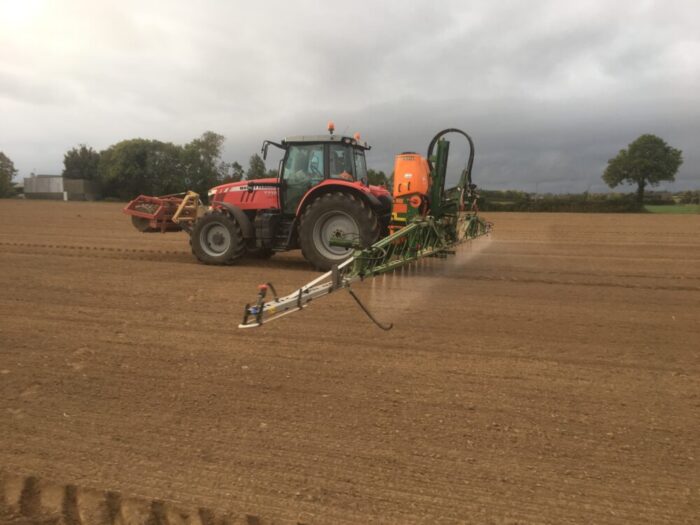
In crops that have only been drilled in the last few days, there is still time to apply a pre-emergence herbicide. These have been shown to give better control of key weeds than waiting until the 2-3 leaf stage when applying an insecticide.
Products containing flufenacet (Firebird etc.), prosulfocarb (Defy etc.) or pendimethalin (Flight, Stomp etc.) will work better at controlling grass weeds when applied pre-emergence, although they will still work quite well when applied post emergence. The addition of DFF (Diflanil) will broaden the weed spectrum or increase the effectiveness of the mixture. Avadex Factor will give good control of grass weeds when used in a programme with flufenacet, but it must be applied as a pre-emergence option. Remember that Firebird Met is in its use period and must be used up by November 24th.
BYDV risk in winter barley
Early drilled barley will be at more risk from BYDV – even the tolerant varieties. There is a temptation not to apply an insecticide to the likes of KWS Joyau, Molly, Integral and KWS Orcade, as they are seen to be less affected than conventional varieties. However, where these are planted in September, they may benefit from an insecticide application. If they have been drilled in October then, generally, there is little benefit in applying an insecticide.
September drilled conventional winter barley varieties should receive two insecticides, although not ideal, while October drilled varieties should only need one. Over the last number of years, some growers have decided not to apply insecticides and, in some years, have not seen much impact from BYDV, so the decision whether or not to apply an insecticide will depend on your attitude to the risk of infection.
Winter wheat
A lot of first wheats have been drilled in recent weeks, although storm Amy has delayed some growers as conditions are not good again in most areas. Where second wheats are planned, wait until mid-October to drill to reduce the risk of take-all. Use latitude dressing on all second wheats and – if at all possible – consider rolling.
Where possible, consider using pre-emergence herbicide applications to control weeds – especially if grass weeds are a problem. Recent trials in Oak Park show that there is an increasing problem with annual meadow grass resistance to ALS herbicides such as Pacifica Plus, so treat early to avoid the problem.
Teagasc Weed Researcher, Vijaya Bhaskar recently published the video below explaining the issue:
Where you opt to apply a pre-emergence herbicide, the options are similar to barley. However, there are some spring applied options for post emergence where grass weeds are a problem, such as Pacifica Plus, Broadway Star, Monolith etc., to winter wheat in the spring. However, we are seeing more cases of resistance developing to these products each year so growers would be advised not to rely on them solely for weed control.
When drilling into mid to late October remember to keep seed rates up. This is necessary as ground conditions will start to deteriorate, and establishment rates will begin to drop. Typically for a variety of 50 TGW, seed rate for mid-October should be 175 – 180kg/ha (up to 11.5 stone/ac).
Winter oilseed rape
Crops are growing well in the last few weeks, and the higher-than-normal temperatures have helped crops to catch up despite the later drilling. Phoma is evident in many crops and treatment with Proline 0.4 l/ha will be needed if it continues to spread.
Some crops still have to get a graminicide as volunteers and grass weeds are competing with the crop at the moment. There are also some crops that have received no herbicide, with growers intending to use Kerb or Astrokerb when temperatures drop later in the season. Remember, grass weeds will be competing with the crop and should be treated as soon as possible, even though Astrokerb will also control grass weeds.
Tillage Edge podcast
On this week’s podcast Michael Hennessy spoke to Dr. Veronica Nyhan, Plant and Soils Specialist with Teagasc, to discuss core soil tests, key soil properties, and how tracking changes over time can show whether your practices are really helping your soils.
Listen in below: