
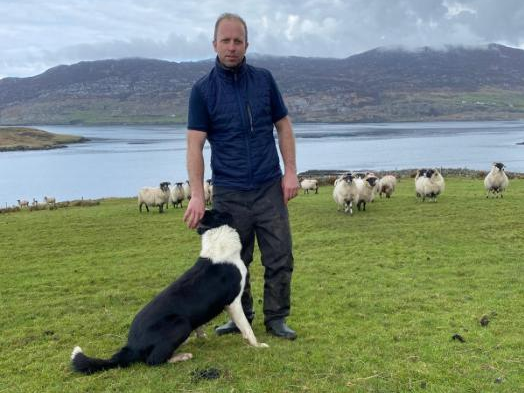
A participant in the Teagasc BETTER Farm Sheep and Signpost Programmes, Tomás O’Toole fills us in on the latest happenings from his farm in Co. Galway, where tasks ahead of the breeding season have taken priority.
I have been busy on the farm over the last number of weeks with certain tasks that have to be prioritised. In the past while, I have dipped all the sheep on the farm.
I have checked the lowland and hill flock ewes for body condition. At this time of the year before mating, the target average body condition score for a lowland ewe is 3.5 and to have no ewe less than 3.0 if possible.
For hill flocks, I target an average body condition score of 3.0 and no less than 2.5. The benefits of having ewes in better condition before mating means a higher litter size and a lower percentage of empty ewes. The data I have recorded over the past number of years with the BETTER Farm Sheep Programme have kept much of the flock around these figures, which I am happy.
The breeding season
I will be starting the mating season with the lowland flock on 15th October and for the hill flock the 1st of November. For the lowland flock, I will be using four rams (3 Suffolk/1Belclare), and Lanark rams for the hill flock. I am using a maternal sire breed to produce replacements, and terminal sire breeds with the focus on carcass production.
It is important to have good ram management during this time. It involves preparation, health checks, raddling and observation. I try to invest time into this so that it will boost the flock’s fertility and overall improve profitability. I also have a number of Sheep Improvement Scheme (SIS) approved Lanark ram lambs for sale, which I hope will be sold in the next few weeks. It is important that farmers are checking the year they need to purchase a qualifying ram for the scheme requirements and to also check the Sheep Ireland ram search to check eligibility.
Replacements
I have also picked out my replacement ewe lambs, which is a replacement rate of approximately 25%. I used data recorded to make my decisions and have retained some twin ewe lambs and looked at data collected on lambs born without assistance, lambs that were vigorous and up sucking quickly and did the dam have lots of milk and good mothering ability.
Climate Action
I try to focus on the Teagasc Signpost Programme 12 Steps – which focus on good farming practice which can lead to a reduction in GHG emissions and improve overall farm profitability. For example, on the farm, I am focusing on steps 8 and 9 which are to improve ewe replacement quality and target high prolificacy. Another focus would be building and maintaining soil fertility. The last soil samples taken on the farm were in March 2025. There are some areas to work on in relation to improving the soil P and K indexes and to focus on more liming. I am also preparing for winter by closing up paddocks for spring turnout, I currently have 15-20% of paddocks closed. This is important for good grassland management, the goal is to have a high percentage of the farm grazed and closed by mid-November, so that the farm is set up for the following spring’s grass supply.
Tomás O’Toole is a participant in the Teagasc Better Farm Sheep Programme and Teagasc Signpost Programme.
The above article was first published in the Farming Examiner.