
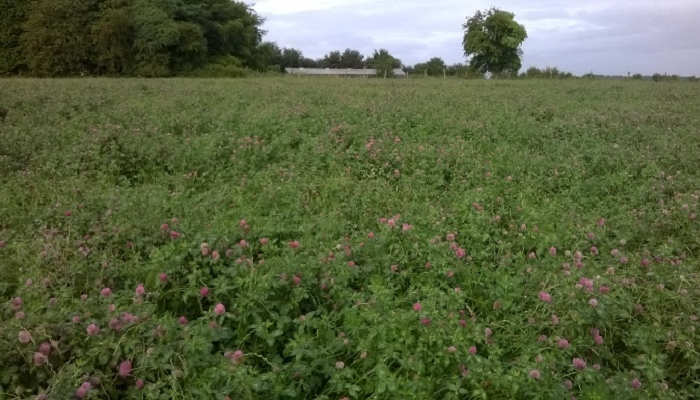
A recent experiment was undertaken at Teagasc Moorepark to investigate the effect of offering red clover silage to replacement dairy heifers during their first winter in comparison to grass silage diets.
Heifers were assigned to one of the following treatments:
- Grass silage only
- Grass silage + 1.5 kg/day concentrate
- Red clover silage only
- Red clover silage + 1.5 kg/day concentrate
The dry matter of the red clover silage was 29.6% while it was 31.7% for the grass silage. The crude protein and dry matter digestibility of the red clover silage was 16.1% and 76%, respectively compared to 13.4% and 72.7%, respectively for the grass silage.
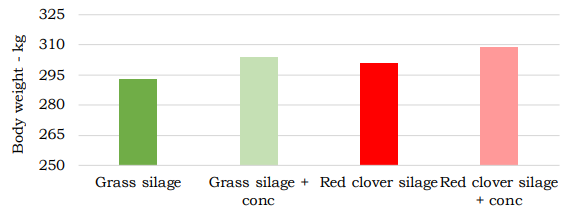
Dry matter intake was approximately 9% higher on the red clover diets than the grass silage. This combined with the superior nutritional quality of the red clover silage led to increased weight gain (Figure 1) and attainment of target weight at turn out.
The results showed that heifers offered red clover silage and no concentrate had an average daily gain (ADG) of 0.83kg/day, which was similar to the ADG of the heifers offered grass silage and 1.5 kg/day concentrate (0.86 kg/day). This suggests that if high-quality red clover silage is provided during the winter, concentrates may not be required in the over-winter diet, and heifers can still reach their target weights both at turnout and the beginning of the breeding season.
Figure 1. Body weight of replacement dairy heifers at turnout (22nd Feb) offered either grass silage or red clover silage, with and without concentrate during the winter housing period
Conclusion
Feeding high-quality red clover silage during the first winter can significantly improve heifer growth, enabling target weights to be met without concentrate supplementation. This supports efficient, cost-effective heifer rearing, promoting better fertility, longevity, and future milk production, while reducing reliance on purchased feeds during the housing period.
The above was prepared by Emer Kennedy, Marie McFadden and Hazel Costigan and first appeared in the Heifer Rearing: achieving target weights paper first published in the Moorepark 2025 Open Day book.
For more insights, view the full Moorepark 2025 Open Day Book (PDF) here.
More from Teagasc Daily: Grassland management for the 2026 spring period starts now