
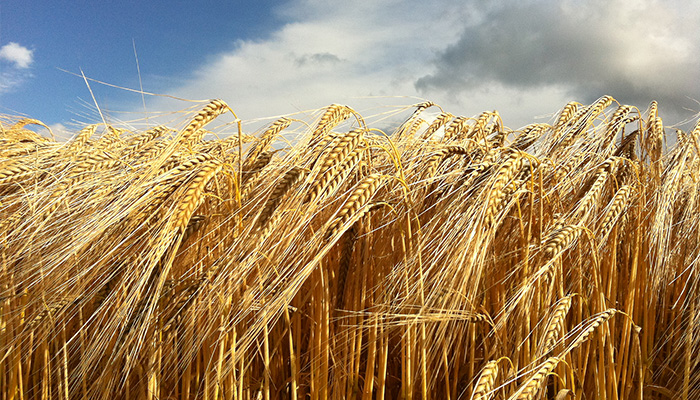
Kieran Keane, Teagasc Moorepark Feed Nutrition Lab, provides an early analysis of the 2025 barley and wheat harvest, highlighting trends in crude protein levels and implications for feed formulation.
With mostly favourable weather conditions during the growing season, yields for the 2025 harvest have been quite good overall. Despite these strong yields, early laboratory results suggest an increase in crude protein levels in both wheat and barley this year. Higher protein levels generally indicate improved grain nutritional value and can enhance flexibility in feed formulation.
The table below summarises the differences in crude protein content for barley and wheat since testing began at the Moorepark Feed Nutrition Laboratory.
Table 1: Crude Protein Results from Wet Chemistry Analysis
| Year | Barley (Average CP %) | Wheat (Average CP %) | Barley (Highest 10% CP) | Wheat (Highest 10% CP) | Barley (Lowest 10% CP) | Wheat (Lowest 10% CP) |
|---|---|---|---|---|---|---|
| 2023 | 9.87 | 10.50 | 11.22 | 11.60 | 9.21 | 9.33 |
| 2024 | 9.48 | 9.89 | 11.07 | 10.96 | 8.28 | 8.82 |
| Early 2025 | 10.14 | 9.95 | 11.40 | 10.53 | 9.19 | 9.22 |
The “Average CP %” column represents the mean crude protein value across all analysed samples of each ingredient per year. “Highest 10% CP” and “Lowest 10% CP” represent the average crude protein content of the top and bottom 10% of samples, respectively.
Barley: Strong Recovery in Protein Levels
Analysis of early 2025 barley samples indicates that crude protein levels have rebounded from the decline observed in 2024. The average protein content of 10.14% is more than 0.6 percentage points higher than last year’s average and now exceeds the 2023 figure. This return to double-digit crude protein levels is particularly encouraging, as 10% CP is often regarded as a key benchmark in barley feed formulation.
While additional samples from a wider geographic range are still being processed, early indications suggest that the combination of favourable growing conditions and more balanced nitrogen availability may have contributed to the higher protein levels. For nutritionists and feed compounders, this improvement may offer greater flexibility in feed formulation and potential cost efficiencies when balancing protein sources.
Wheat: Modest Gains, Still Below 2023
Wheat protein levels are also showing a slight improvement over 2024, with an early average of 9.95% compared to 9.89% last year. However, these figures remain below the 10.5% average recorded in 2023, a target value often used in feed formulations. Interestingly, the variation between the highest and lowest protein results for wheat has narrowed in 2025, which may reflect the smaller and more regionally concentrated sample base analysed to date.
As more data becomes available, it will be important to monitor whether this reduced variability continues. A narrower protein range typically indicates more consistent grain quality, which simplifies formulation work and supports predictable feed performance.
Looking Ahead: Monitoring and Adaptation
One noteworthy observation from the early 2025 data is that barley currently shows higher crude protein levels than wheat, an unusual trend, as wheat typically contains around 0.5% more protein than barley. While it’s too early to draw firm conclusions, this highlights the importance of ongoing feed analysis and communication with your nutritionist.
As the dataset expands, we’ll gain a clearer picture of how this year’s harvest compares regionally. For now, early signs suggest strong feed grain quality with slightly improved protein content, overall a positive outcome for feed efficiency.
Ultimately, continuous monitoring and fine-tuning of formulations based on updated data will be key to maintaining consistent feed quality and supporting optimal pig performance in the months ahead.