
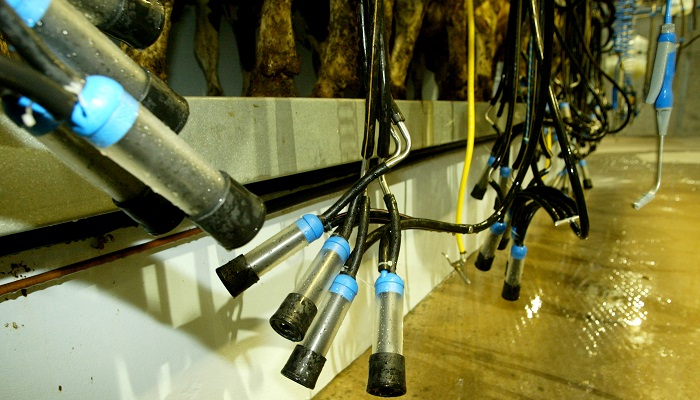
Standard Operating Procedures (SOPs) help improve work efficiency, consistency, and safety by clearly outlining how farm tasks should be done.
Running a successful dairy farm requires more than just hard work – it demands organisation, efficiency, and consistency. As dairy farms grow in size and rely on more hired or non-family workers, ensuring that tasks are done correctly and efficiently is becoming increasingly important.
One of the best ways to achieve this is through the use of Standard Operating Procedures (SOPs). These are clear, written or recorded instructions that outline the most effective way to complete key tasks on the farm. SOPs are widely used in industries such as healthcare and manufacturing, and research has shown they can offer significant benefits for dairy farms as well.
Why use SOPs on your farm?
SOPs help to ensure that farm work is done consistently, reducing errors and making training easier. A survey conducted of 313 Irish dairy farms (Table 1) found that:
- Only 31.3% of farms surveyed had written SOPs
- Farms with SOPs had larger herds (143 cows vs 117 cows) and employed more people than farms without SOPs
- Farmers with SOPs reported fewer frustrations about tasks being done incorrectly
Table 1. Level of agreement with statements regarding written SOPs across farms based on whether SOPs are present or not on the farm
| Item1 | Farms with SOPS (n=98) | Farms with no SOPs (n=217) | P-value |
| On our farm different employees complete the same work practices differently | 3.7 | 3.7 | 0.72 |
| Sometimes I get annoyed about employees not completing tasks the way I consider right | 3.6 | 3.8 | 0.04 |
| I have been thinking about writing down specific work processes in detail | 3.3 | 3.1 | 0.13 |
| I find it difficult to write down work processes | 2.7 | 3.2 | <0.001 |
| I do not have time to create SOPs | 2.5 | 2.9 | 0.004 |
1Mean responses were calculated based on the farmers level of agreement with the statement; from 1-5 where 1 = strongly disagree and 5 = strongly agree
Despite their benefits, many farmers do not use SOPs, often because they believe creating them takes too much time. However, research indicates that having SOPs in place can save time, particularly when training new staff or working with relief milkers and seasonal workers.
Key benefits of SOPs
- More effective work organisation and consistency in work – SOPs ensure that tasks are performed the same way every time, whether by the farmer, a family member, or an employee. This reduces errors, improves efficiency and helps to streamline farm operations, even during busy periods such as calving and breeding seasons
- Easier staff training – New workers, relief milkers, or seasonal workers can quickly learn farm procedures with SOPs, reducing supervision time required
- Improved communication – Miscommunication is a common challenge on farms, particularly when multiple workers are involved. SOPs provide clear guidance on how tasks should be performed, reducing confusion, frustration and ensuring consistency in task completion
- Health and safety – SOPs can contribute to a safer working environment by outlining best practices for tasks such as handling animals, machinery, and hazardous materials.
Where to start? Developing SOPs for your farm
Many farmers believe that writing SOPs is a complicated process, but it doesn’t have to be. Start by focusing on the most important tasks, such as:
- Milking – Ensuring that all workers follow the same steps for the milking process, parlour set up, and wash routine. This can support improved milk quality and is hugely beneficial for relief milkers
- Calf Rearing – SOPs for tasks such colostrum management, feeding routines, and hygiene practices
- Reproduction Management – Clearly outlining heat detection, AI procedures, and record-keeping can improve breeding performance and ease administration
- Health and Safety Protocols – SOPs for handling cattle, using machinery, and managing chemicals can prevent accidents and injuries.
To create an SOP, follow these simple steps:
- Identify a key task – Start with the most critical area for your farm.
- Write clear, step-by-step instructions – Use simple, lay person language.
- Involve workers in the process – Get input from family members, employees, and advisors to ensure the SOP is practical and usable.
- Use visuals where possible – Videos, photos or diagrams can help explain steps more clearly. For example, a clear video of a task can be really helpful for a relief miler coming to the farm.
- Review and update regularly – Work practices evolve, so SOPs should be adjusted as needed.
Conclusion
While a relatively low proportion of Irish dairy farms currently use written SOPs, the benefits are clear: better organisation, easier staff training, and reduced frustration over how tasks are performed.
By starting small and focusing on key areas such as milking and calf rearing, farmers can add and adjust SOPs over time. Some templates are available on the Teagasc website, and utilising your discussion group for ideas and templates can be beneficial.
Finally, while SOPs are often seen as a key part of operations on larger farms, they can be just as important on smaller farms where workers or milkers are more likely to be working casually and have less familiarisation with work routines.
The above was authored by Conor Hogan and Marion Beecher and first published in the Moorepark 2025 Open Day proceedings (PDF).
For more on the Teagasc People in Dairy Project, visit here.