
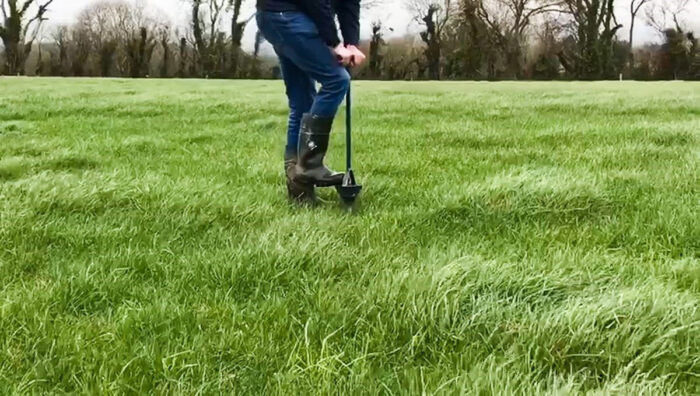
As we approach the end of the year, Signpost Climate Advisor, Margaret Farrell reflects on the importance of soil sampling and hedgerow management to aid the reduction in greenhouse gas (GHG) emissions and to improve biodiversity on Irish farms.
Soil sampling and lime
Winter is the best time to take our soil samples to ensure a sufficient gap between our last application of any chemical or organic fertilisers which may interfere with results. Lime can be then spread, if needed, as per soil sample results and if conditions allow.
Soils with correct pH will release up to 70kgs N/ha/year and reduce fertiliser N costs in 2026. This can result in 1.0–1.5 t DM/ha extra grass from lime alone. Lime can be spread at any time of year, but care must be taken to avoid spreading lime for 3-4 months before cutting silage, as fresh lime can adversely affect fermentation.
Care must also be taken with slurry if lime is applied first, wait about 3 months before spreading cattle slurry, as fresh lime on the surface accelerates N loss. Alternatively, apply slurry first and spread lime 7–10 days later. The target pH is 6.3 for grass and >6.5 for clover and take care to not exceed 7.5 t/ha in a single pass by splitting heavy rates.
Take Note: Lime is not recommended on extensively managed grassland IF the primary focus is to maintain species richness and maximise biodiversity.
Hedgerow management
Secondly, our native hedgerows provide shelter for livestock, food and cover for birds and small mammals, slow water flow in heavy rain, and function as nature corridors linking habitats. Bigger and denser hedges are better for biodiversity and carbon. A variety of hedge types is desirable: both topped hedges and treeline/escaped hedges have a role.
If cutting hedges this winter, aim to not cut topped hedges below 1.8m and with an A‑shaped profile and a wide base for dense growth at ground level. Avoid cutting back to exactly the same level every time. If possible, aim to trim in rotation approximately every 3 years so some hedges are left undisturbed each winter.
Retain and mark a thorn sapling (whitethorn or blackthorn) in every topped hedge to grow into a tree for blossom and berries.
Never top a treeline/escaped hedge side‑trim only for access and machine clearance. Agree the plan with your contractor in advance and keep cutting equipment sharp to ensure clean cuts and healthy regrowth.
Remember: Closed season is from March 1 to August 31 (bird‑nesting season; protected under the Wildlife Act).
These two actions – soil sampling with a targeted liming plan, and best practice hedgerow management – directly support Signpost and Better Farming for Water objectives: improved nutrient use efficiency, reduced nutrient loss to water, enhanced biodiversity, and a more resilient farm.
The Teagasc Signpost Advisory Programme
Margaret Farrell is a Climate Advisor on the Teagasc Signpost Advisory Programme. The Teagasc Signpost Advisory Programme provides enhanced advisory and training support to farmers to help them to select and implement climate and sustainability actions that are appropriate and impactful on their farms.