
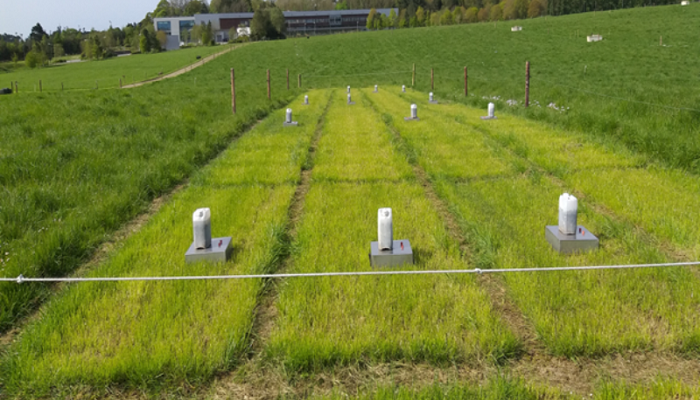
Water quality is in significant focus at the moment with Nitrates Derogation discussions ongoing but other key environmental focus areas are biodiversity/habitat improvements and emission reductions. The target on Green House Gas (GHG) emissions is a 51% reduction economy wide by 2030. Colm Kelly tells us more.
The agricultural sectors contribution to the national target is a 25% reduction in emissions compared to the 2018 year. As the Irish economy still has a significant agricultural output and has not been as industrialised compared to other economies, the agricultural share of total emissions is 38%, the largest individual sector. This puts significant focus on agriculture within the Irish reduction targets, comparable perhaps to New Zealand, whereas in other more industrialised countries agri-emissions may be proportionately less of the whole. A significant backing to the GHG emission targets is that it is signed into national legislation. This places a significant requirement on government to meet these targets as they are a ‘legally binding commitment’. Other targets are contained in the EU Effort Sharing Regulation and there are financial implications if the country misses these targets as policy stands.
What can we do?
When it comes to emissions the focus is on ‘doing what we do better’ as there is significant GHG reductions achievable. Protected Urea is a key technology that combines financial and environmental outcomes. A typical dairy farmer in Galway/Clare that I would meet could expect a 4-8% drop in projected farm emissions from switching to Protected Urea based products over CAN. A typical drystock farmer with lower total Nitrogen spread could expect to be in the 2-4% range. Switching compound type from standard Cut Sward/Pasture Sward to 18:6:12 or 10:10:20 is also associated with lower emissions as the makeup of the nitrogen is different in high phosphorus compounds. When switching to Protected Urea it is advised to consult the spread chart for your fertiliser shaker, which can be found on a manufacturers app or online, as there is particular settings for each fertiliser type and inaccuracies can lead to issues like striping. Protected Urea is also cheaper per kg of nitrogen bought compared to CAN which has been a big factor in its adoption so far.
Reducing the application of ‘surplus’ nitrogen is also a key practice as it is the nitrogen component of fertilisers that emit the GHG. Soil fertility is important as having land optimal for lime, phosphorus (P) and potassium (K) in particular means less nitrogen is required achieve the same response. An analogy I use is a situation where bales/acre might be declining in a field, sometimes farmers can go with more nitrogen, when declining P & K or pH could be the problem. This is a bit like trying to drive with the hand-brake up and improved soil fertility is an important building block of reducing the need for overall nitrogen. The use of sulphur is also a means optimise pasture performance.
On slurry management low emission slurry application is associated with reduced emissions but will have a more significant effect if used to offset chemical nitrogen. Targeting this slurry for damp moist conditions at rates matched to growth potential in the spring optimises the use of slurry as a fertiliser and allows a reduction in purchased nitrogen. Research would show potential for slurry additives that reduce emissions in the future on commercial farms.
Clover and multi-species swards offer the ability to grow forage using nitrogen from the air rather than purchased nitrogen. On most farms the challenge is getting persistence of clover swards over a number of years which requires good management. Typically the benefits of clover are the ability to reduce purchased nitrogen rates from mid-May to August and achieve the same growth. Animal performance has been reported at 12-15% better from the clover inclusion in the diet.
The focus to reduce livestock emissions is on genetic gain and animal management which improves carbon footprint but can also reduce total emissions. If there is an improvement in national beef cattle performance, that is likely to reduce average slaughter age which reduces total emissions. Performance can be summarised as having the genetic potential to perform with the health status and feed management to realise that potential. Dairy cows that can achieve more lactations reduces replacement numbers required. There is ongoing research into feed additives and genetic selection and the potential to implement these new technologies onto commercial farms. It is likely that genetics and reduced input lamb finishing through the use of clover or multi-species swards will be the main technologies used in sheep.
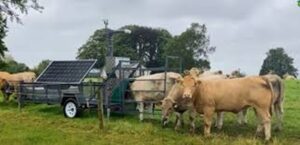
Research is ongoing on Green House Gas emissions in agriculture aiming to find solutions for farmers