
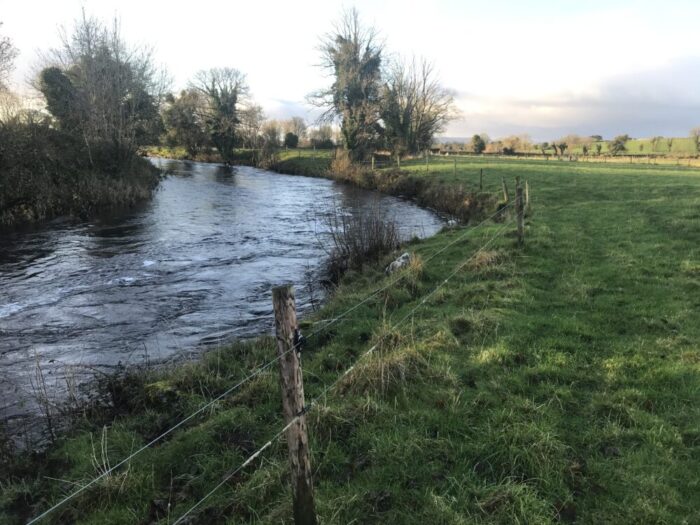
Enda Maloney, Drystock Advisor, Teagasc Westport, discusses some approaches farmers can take to review Mayo’s riverbanks, following a natural approach to boost biodiversity.
Healthy riverbanks are the lifeline of the West of Ireland’s landscapes. They protect waterways, shelter wildlife and sustain the region’s natural beauty. Yet, years of overgrazing, drainage and invasive species have weakened these vital zones. By restoring riparian areas (the strips of land beside rivers and streams), we can enhance biodiversity while supporting cleaner water and more resilient ecosystems. Many farmers may overlook how crucial these areas are for the flora and fauna that depend on them.
Eutrophication, the process by which water becomes overly enriched with nutrients like nitrogen and phosphorus, can trigger algal blooms that deplete oxygen and suffocate aquatic life. This problem is common in intensively farmed or densely populated regions where fertilisers and sewage enter waterways. Yet in Mayo, where farms are smaller and less intensive, nutrient runoff is less severe. Instead, the main pressures come from how land beside rivers is managed – through bank erosion, livestock access and vegetation loss.
According to the Environmental Protection Agency (EPA), just 52% of Ireland’s rivers and lakes are in satisfactory ecological condition, a slight decline from 54% in the previous reporting period. Agriculture remains the single biggest pressure, affecting over 1,000 water bodies, while the EPA highlights that “physical habitat damage” is an increasing concern in the west. The Local Authority Waters Programme (LAWPRO) has identified “Priority Areas for Action” across Mayo, where targeted riverbank restoration has led to average phosphorus reductions of around 20% in monitored catchments.
The first step in reviving riverbanks is to re-establish native vegetation. Trees such as willow, alder and birch stabilise soil and provide shade that cools the water for fish and insects. Plants like meadowsweet, sedges and native grasses filter runoff and offer nesting cover for birds and mammals. These natural filters trap sediments and absorb excess nutrients before they reach the water. Their roots prevent soil loss during heavy rainfall. Equally important is the control of invasive species such as Japanese knotweed, Himalayan balsam, rhododendron and giant hogweed. Once removed, native plants should be reintroduced to restore balance. Ideally, riverbanks should include a five-metre buffer zone of vegetation to trap nutrients and sediments.
Livestock can damage riverbanks through trampling and nutrient loading. Fencing off sensitive stretches is a simple but effective solution. Providing alternative drinking points – such as pasture pumps or controlled access areas – protects banks while maintaining animal welfare. Rotating grazing near river margins allows vegetation to recover, and water troughs should ideally be placed at least 20 metres away from any waterbody.
The Department of Agriculture, Food and the Marine’s ACRES scheme now supports nearly 34,000 farmers nationwide, providing over €147 million for actions such as riparian buffer zones and fencing livestock away from rivers. These measures show that local changes can deliver measurable environmental results.
Biodiversity also depends on the structure of the river itself. Working with bodies like Inland Fisheries Ireland or Mayo County Council, farmers can install woody debris or gravel riffles to improve fish spawning habitats. Reducing fertiliser and pesticide use, and installing sediment traps or small constructed wetlands, can further cut pollution. Many ACRES participants already report more wildlife after fencing off riparian zones.
Ten actions farmers can take to boost riverbank biodiversity
- Fence off riverbanks (minimum 1.5 m from the top of the bank).
- Create 5–10 m riparian buffer strips with native vegetation.
- Avoid spreading slurry or fertiliser near waterways (keep 5 m clear for slurry, 2 m for fertiliser).
- Plant native trees such as willow, alder, and birch.
- Control invasive species and replant native flora.
- Maintain mixed vegetation—grasses, shrubs, and wildflowers—for cover.
- Provide off-river drinking points for livestock.
- Avoid dredging or straightening river channels.
- Participate in ACRES or other future environmental schemes.
- Collaborate with LAWPRO, community groups, and neighbours to share knowledge and monitor improvements.